Picking a preschool is one of those decisions that sounds simple until you're actually doing it. You visit a few places, nod along, and then drive home more confused than before. Montessori schools are everywhere in the San Gabriel Valley, but they're not all the same, and knowing what separates a solid program from a mediocre one takes a little homework. If you're looking at a Montessori Preschool in Pomona CA, this guide will walk you through what the method actually involves, what questions to ask on a tour, and what red flags to watch for before you sign anything.
What Montessori Actually Means (And What It Doesn't)
A lot of parents assume Montessori is just a style word, like "play-based" or "nature-inspired." It's not. The Montessori method is a specific educational approach developed by Dr. Maria Montessori in the early 1900s, built around self-directed learning, hands-on materials, and mixed-age classrooms. Kids choose their own work within a structured set of options. The teacher observes and guides rather than lecturing from the front of the room.
That said, "Montessori" isn't a protected term in the U.S. Anyone can put it on a sign. So a school can call itself Montessori while doing very little that actually matches the method. This is why it matters to dig into specifics during your visit. Don't just ask if they're Montessori. Ask how the classroom day is structured, what training the lead teachers have, and whether kids get uninterrupted work periods of at least two to three hours.
Real Montessori classrooms look a little chaotic at first glance. Kids are moving around, working at low shelves, choosing materials. Honestly, it can feel weird if you grew up in a traditional school. But that independence is the whole point. Children build focus and self-regulation when they're trusted to manage their own time, within limits.
The Age Range and Classroom Setup
Most Montessori preschool programs serve kids from around age three to six. Mixed-age groupings are standard. Younger kids learn by watching older ones, and older kids reinforce their own understanding by helping younger classmates. It works better than it sounds.
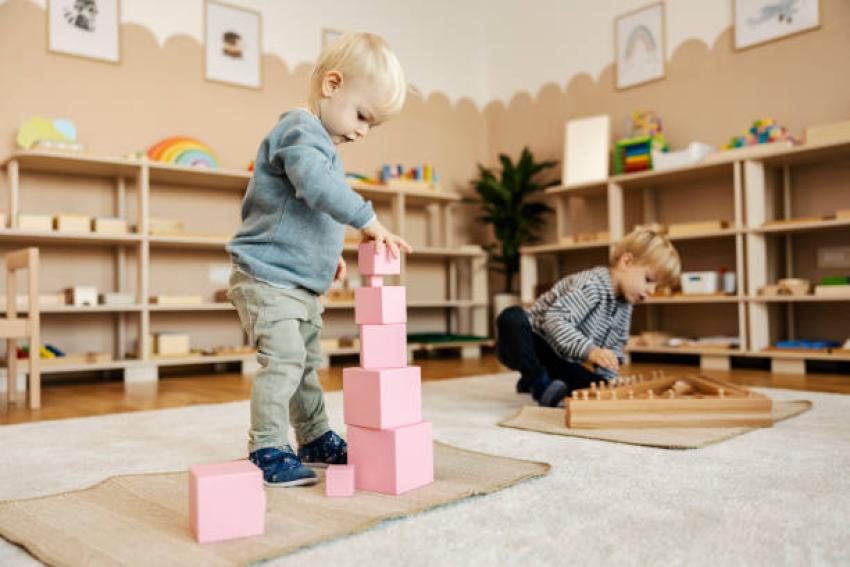
The physical classroom matters too. Authentic Montessori rooms use specific materials, things like the pink tower, sandpaper letters, and bead chains, that aren't just toys. They're carefully designed to teach specific concepts through touch and movement. If a school claims to be Montessori but the classroom looks like a regular preschool with a few extra rugs, that's worth noting.
According to the Wikipedia overview of Montessori education, the prepared environment is one of the core principles of the method. The room itself is supposed to do some of the teaching. That's not an accident or an aesthetic choice. It's structural.
What a Good Montessori Preschool Program Looks Like
A strong Montessori Preschool Program in Pomona CA will have a few things in common. Trained teachers, for one. Look for AMI (Association Montessori Internationale) or AMS (American Montessori Society) credentials. These aren't the same as a general early childhood education certificate. Montessori training is specific and takes real time to complete.
Low student-to-teacher ratios matter a lot. Montessori works because teachers can observe individual children closely and introduce new materials at the right moment. You can't do that with 25 kids and one adult. Ask the school directly what their ratio is, and don't accept a vague answer.
The other thing to look for is consistency. Montessori isn't meant to be a half-day enrichment activity. A real Montessori Preschool Program in Pomona CA gives children enough time each day to actually settle into their work. The uninterrupted work period, usually the morning block, is where most of the real learning happens. Short sessions or heavy interruptions for group activities undercut the whole approach.
Finding the Right Fit in the Pomona Area
Pomona and the surrounding cities have a handful of options. Some are affiliated with national Montessori organizations. Others are independent. Neither is automatically better, but affiliation does give you a baseline to check against. It's worth calling ahead before you tour so you're not wasting a Tuesday morning on a school that doesn't fit your schedule or budget.
If you'd rather not spend weeks comparing schools on your own, McKinley Montessori Academy is one option people look at in this area. They follow the Montessori method with trained staff and age-appropriate classroom environments. Worth putting on your list when you're doing initial research.
Budget is real. Montessori preschools are often more expensive than standard daycare because of the materials, training requirements, and lower ratios. Some schools offer sliding scale tuition or accept subsidized care programs. Ask about this upfront. A lot of families assume they can't afford it without actually checking.
Questions to Ask on Your Tour
Go in with a short list. You'll forget things otherwise.
What Montessori training do your lead teachers have, and when was it completed?
How long is the uninterrupted work period each day?
What's the student-to-teacher ratio in the classroom my child would be in?
Are the classroom materials AMI-approved or equivalent?
How do you handle children who struggle with the self-directed format at first?
Do you offer any form of financial assistance or accept subsidized programs?
Can I observe a classroom before enrolling?
That last one is important. Any school that won't let you observe a classroom before you commit is a school worth being cautious about. Most good programs are comfortable with parent observation because they know what you'll see is going to be reassuring, not alarming.
What the Transition Period Looks Like
Kids don't walk into a Montessori classroom on day one and immediately thrive. Some do. Most need a few weeks to adjust, especially if they're used to being directed by an adult all day. That adjustment period is normal and shouldn't be read as a sign the school isn't working.
Teachers trained in Montessori know how to handle this. They'll introduce a child to materials gradually, observe what captures their attention, and build from there. It's a slower start than traditional preschool. But the payoff, in terms of self-regulation, concentration, and genuine curiosity, tends to show up clearly by the end of the first year.
Talk to the teachers before your child starts about what the first few weeks typically look like. Good schools will have a clear onboarding approach and won't just drop your kid in the deep end. A Montessori Preschool in Pomona CA worth attending will have thought about this.
Frequently Asked Questions
Is Montessori preschool better than regular preschool?
Depends on the child and the school. Montessori works really well for kids who like to explore independently and don't need constant external direction. It can be harder for kids who thrive with more structure and teacher-led instruction. There's no universal answer, but the research on Montessori outcomes is generally pretty positive, especially for executive function and reading readiness.
How do I know if a school is truly Montessori or just using the name?
Ask about teacher credentials. AMI or AMS certification is the clearest signal. Also ask to see the classroom materials and observe a work period. A school using the name loosely will usually have vague answers to specific questions about method and training.
What age should my child start Montessori preschool?
Most programs start at age three, which lines up with a natural developmental window for the kind of independent learning Montessori builds on. Some schools take children as young as two and a half. Earlier isn't always better. What matters more is whether your child is ready to separate comfortably and engage with structured choices.
Are Montessori preschools expensive?
Often yes, compared to standard daycare. The cost reflects smaller class sizes, specialized materials, and teacher training. But prices vary a lot by school. Some programs offer financial aid or accept state subsidy programs. Always ask. You might be surprised what's available.
Can my child transition from Montessori to a traditional school later?
Yes, and most do at some point. Kids who've been through a solid Montessori preschool program tend to adapt pretty well. They usually have strong focus and self-direction, which actually helps in traditional settings. The transition can feel bumpy at first, but it's rarely a lasting problem.
The best thing you can do right now is visit two or three schools, bring your list of questions, and trust your gut about whether the environment feels right. Good schools are usually obvious when you're standing in them.