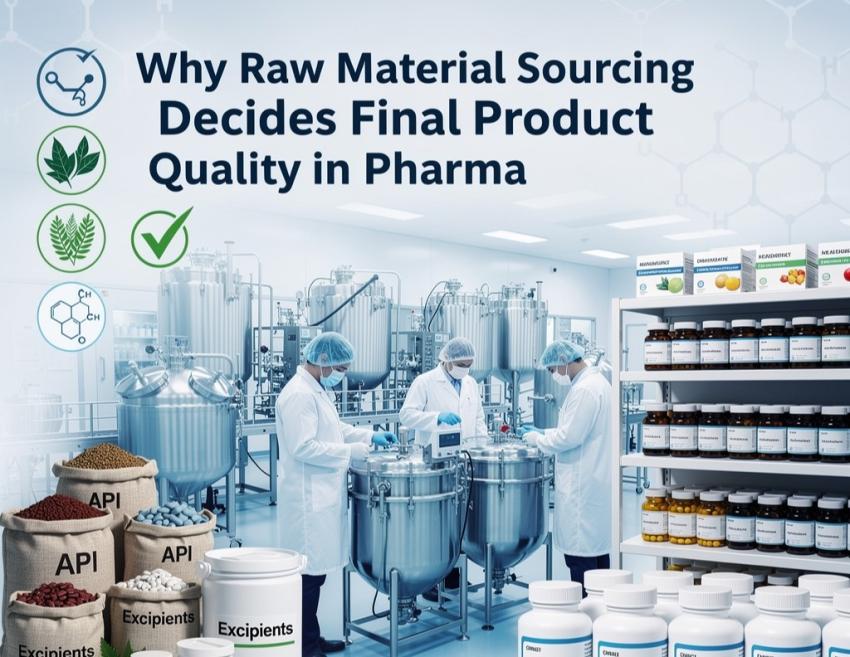
Most conversations about pharmaceutical quality focus on manufacturing equipment, testing labs, or final packaging. What often gets overlooked is something that happens much earlier in the process, choosing where and how raw materials are sourced. This single decision, made long before any actual production begins, quietly shapes everything that follows.
Why Raw Materials Are the True Starting Point
Every medicine, cream, or capsule begins as a combination of active ingredients and supporting compounds. If these starting materials are inconsistent, impure, or poorly sourced, no amount of careful manufacturing afterward can fully fix the problem. This is why a WHO-GMP Certified Brand In India places such heavy emphasis on raw material sourcing before production even begins, understanding that quality control starts here, not later in the process.
Manufacturers who overlook this stage often find themselves dealing with unpredictable results further down the line, wondering why identical processes produce slightly different outcomes, without realizing the root cause traces back to inconsistent raw materials.
Why Supplier Selection Requires Serious Diligence
Choosing a raw material supplier is not as simple as picking whoever offers the lowest price. Reliable manufacturers thoroughly vet their suppliers, checking certifications, testing sample batches, and reviewing track records before committing to any long term sourcing relationship.
This careful vetting process helps avoid a common trap in the industry, suppliers who might cut corners on purity or consistency to reduce their own costs, ultimately passing that risk downstream to the pharmaceutical manufacturer and, eventually, the patient using the final product.
Why Purity Testing Cannot Be Skipped
Even after selecting a trusted supplier, responsible manufacturers still test every incoming batch of raw materials before allowing it into production. This step verifies that materials meet required purity standards and have not been contaminated or degraded during storage or transport.
Skipping this testing step, even with an otherwise reliable supplier, introduces unnecessary risk. Batches can vary slightly even from trusted sources, and catching these variations early prevents them from affecting the final product's safety or effectiveness.
How This Impacts Large, Diverse Product Portfolios
For companies managing extensive product ranges, this challenge multiplies significantly. Manufacturers overseeing 400+SKU Products in Pharma & Derma need to maintain rigorous raw material standards across dozens of different formulations simultaneously, each potentially requiring different active ingredients, preservatives, or base compounds.
This complexity makes standardized sourcing protocols even more essential, since inconsistency in even one ingredient category can affect multiple products across an entire portfolio, rather than just a single isolated formulation.
Why This Matters Even More for Specialized Categories
Categories requiring particularly delicate formulations, like hair and scalp treatments, depend heavily on precise raw material quality. Companies operating within a Pharma Trichology Franchise in India need confidence that the underlying products they represent are built on consistently sourced, properly tested ingredients, since trichology treatments often require patients to use products consistently over extended periods before seeing results.
Any inconsistency in raw material quality here could mean the difference between a treatment genuinely working as intended or quietly underperforming without an obvious explanation, something that could seriously damage patient trust and franchise reputation alike.
Why Institutional Buyers Pay Close Attention to This
Hospitals and large institutional buyers understand this connection between raw materials and final product reliability extremely well. This is exactly why Quality Assurance for Hospital Pharma Procurement from India often includes detailed scrutiny of a manufacturer's raw material sourcing practices, not just their final product testing results.
Institutional buyers frequently request documentation proving where raw materials originated, how they were tested, and what certifications suppliers themselves hold, understanding that final product quality is only as reliable as the materials it was built upon.
Why Domestic and International Sourcing Both Come With Considerations
Some raw materials are sourced domestically within India, while others, particularly certain active pharmaceutical ingredients, are imported from international suppliers. Each option comes with its own considerations, domestic sourcing often allows for easier quality verification and shorter supply chains, while international sourcing might offer access to specific ingredients not readily available locally, though it requires additional diligence regarding import quality checks and consistency.
Why This Foundation Cannot Be an Afterthought
Manufacturers sometimes focus heavily on visible quality markers, packaging, branding, and marketing claims, while treating raw material sourcing as a background detail rather than a genuine priority. This mindset creates real risk, since no amount of polished branding can compensate for inconsistent or poorly sourced raw materials affecting how a product actually performs once it reaches a patient.
Final Thoughts
Raw material sourcing might not be the most visible part of pharmaceutical manufacturing, but it genuinely determines everything that follows. From ensuring purity and consistency to supporting large, diverse product portfolios and specialized treatment categories, this early stage decision shapes whether a final product performs reliably or falls short of expectations. Manufacturers who treat raw material sourcing with the seriousness it deserves are the ones building genuinely trustworthy products, batch after batch, for doctors, hospitals, and patients who depend on that consistency every single time.