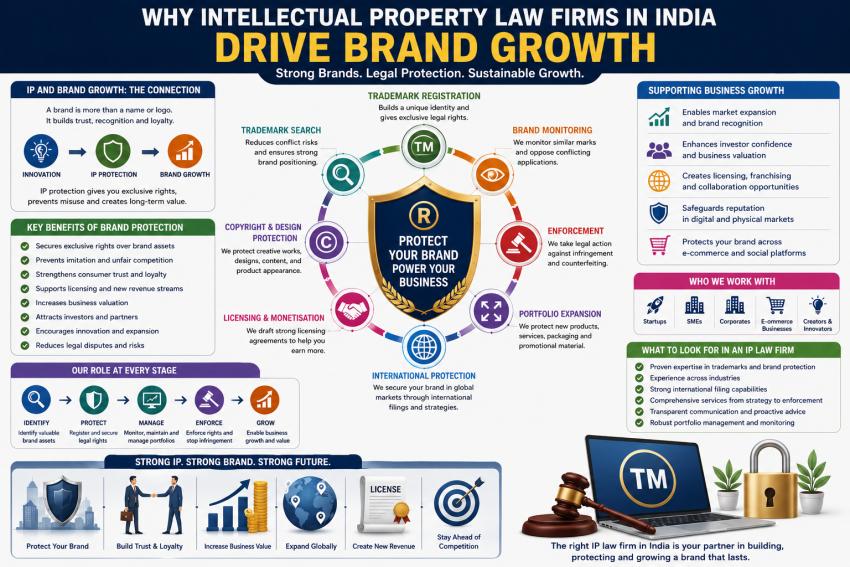
Building a successful brand requires more than creative marketing and quality products. A strong brand represents trust, reputation, customer loyalty, and commercial value. As businesses expand into competitive markets, protecting their brand becomes just as important as promoting it. Without legal protection, businesses risk losing their identity to imitation, infringement, and unfair competition.
Intellectual property law plays a significant role in safeguarding brand assets and supporting long term business growth. From securing trademark registrations to enforcing legal rights and managing global brand portfolios, intellectual property law firms provide strategic legal guidance throughout a brand's journey.
This article explores why intellectual property law firms in India are essential for driving brand growth and how their expertise helps businesses strengthen their market presence while protecting valuable intellectual assets.
Understanding the Link Between Intellectual Property and Brand Growth
A brand is much more than a company name or logo. It represents the overall perception customers associate with a business. Every interaction with consumers contributes to building trust, recognition, and loyalty.
Intellectual property protection ensures businesses enjoy exclusive rights over their distinctive identity. It prevents competitors from using similar names, logos, slogans, packaging, or other identifying features which could confuse consumers.
As businesses continue to invest in innovation and marketing, protecting intellectual property becomes an important part of sustainable brand development.
Why Brands Need Legal Protection
Creating a brand often requires years of investment in product development, advertising, customer service, and market positioning. Without legal protection, competitors may attempt to benefit from another company's reputation through imitation.
Legal protection offers several important advantages.
Secures exclusive rights over brand assets.
Prevents unauthorised use.
Strengthens consumer confidence.
Supports licensing opportunities.
Increases business valuation.
Attracts investors.
Encourages long term growth.
Reduces legal disputes.
Professional legal advice helps businesses maximise these benefits while avoiding common legal risks.
Trademark Registration Builds Brand Identity
Trademarks remain one of the most valuable forms of intellectual property for businesses.
A trademark may include:
Business names.
Logos.
Product names.
Slogans.
Symbols.
Packaging designs.
Registering a trademark provides legal recognition and exclusive rights to use the mark for specified goods or services.
Law firms assist businesses by conducting availability searches, preparing applications, responding to examination reports, and managing registration procedures before the Trade Marks Registry.
Early registration reduces the possibility of future disputes and strengthens brand identity.
Developing a Strong Brand Protection Strategy
Protecting a brand requires more than obtaining registration certificates.
Experienced legal professionals help businesses develop comprehensive protection strategies covering:
Trademark registration.
Copyright protection.
Industrial design registration.
Domain name protection.
Trade secret management.
Licensing arrangements.
Brand monitoring.
Businesses frequently consult experienced ip lawyers in india to create legal strategies aligned with long term commercial objectives.
A structured approach allows businesses to protect every important element of their brand.
Conducting Trademark Searches Before Launch
Launching a new brand without conducting proper trademark searches may expose businesses to infringement claims.
Law firms perform detailed trademark searches to determine whether similar marks already exist.
This process helps businesses:
Avoid legal conflicts.
Reduce registration objections.
Minimise rebranding costs.
Strengthen brand uniqueness.
Careful legal review before launch often saves considerable time and financial resources.
Monitoring Trademark Applications
Brand protection continues after registration.
Law firms regularly monitor newly filed trademark applications to identify marks which may create confusion among consumers.
Where necessary, lawyers initiate opposition proceedings to prevent registration of conflicting trademarks.
Continuous monitoring preserves the distinctiveness and commercial value of established brands.
Enforcing Brand Rights
Successful brands frequently become targets for infringement and counterfeiting.
Law firms assist businesses by taking appropriate legal action whenever unauthorised use occurs.
Common enforcement measures include:
Legal notices.
Settlement discussions.
Opposition proceedings.
Rectification actions.
Civil litigation.
Criminal complaints where applicable.
Customs enforcement against counterfeit goods.
Timely enforcement discourages future infringement while protecting consumer trust.
Supporting Brand Expansion
As businesses introduce new products or enter new markets, their intellectual property portfolios also expand.
Law firms advise businesses on protecting additional trademarks covering new product lines, services, packaging, and promotional materials.
Strategic portfolio management ensures every stage of brand growth receives appropriate legal protection.
Managing International Brand Protection
Many Indian businesses now operate across international markets through exports, ecommerce platforms, licensing, and overseas partnerships.
Trademark rights registered in India generally do not extend automatically to foreign countries.
Law firms help businesses develop international filing strategies through recognised international systems and national registrations.
International brand protection allows businesses to expand confidently while reducing infringement risks abroad.
Protecting Creative Brand Assets
Modern branding involves much more than trademarks.
Businesses create valuable creative assets including:
Advertising campaigns.
Product catalogues.
Website content.
Videos.
Photographs.
Software.
Marketing materials.
Copyright law protects many of these original works.
Law firms advise businesses on ownership, licensing, assignments, and enforcement to preserve commercial value.
Protecting Product Appearance
Consumers often recognise products by their appearance as much as their brand name.
Industrial design registration protects distinctive visual features including shape, pattern, configuration, and ornamentation.
Businesses operating in fashion, consumer products, electronics, furniture, and manufacturing industries frequently rely on design protection to maintain market exclusivity.
Combining trademark and design protection creates stronger legal safeguards for growing brands.
Managing Licensing Opportunities
Well established brands often generate additional revenue through licensing arrangements.
Businesses may authorise third parties to use trademarks, logos, or other intellectual property under agreed commercial terms.
Law firms prepare licensing agreements covering:
Scope of permitted use.
Quality standards.
Royalty arrangements.
Duration.
Termination rights.
Intellectual property ownership.
Carefully drafted agreements preserve brand reputation while supporting commercial growth.
Supporting Investment and Business Value
Investors increasingly assess intellectual property portfolios before funding startups, acquisitions, or expansion projects.
A well protected brand demonstrates commercial strength, legal certainty, and long term market potential.
Law firms assist businesses by maintaining organised ownership records, monitoring renewals, and preparing documentation required during legal due diligence.
Strong intellectual property portfolios frequently improve investor confidence and business valuation.
Adapting to Digital Business Growth
Digital commerce has transformed brand protection.
Businesses now operate across websites, online marketplaces, mobile applications, and social media platforms.
Law firms advise businesses on protecting trademarks in digital environments, addressing online infringement, managing domain names, and responding to counterfeit activity on ecommerce platforms.
Modern legal strategies help businesses maintain consistent brand protection across both physical and digital markets.
Choosing the Right Intellectual Property Law Firm
Selecting experienced legal advisers is an important business decision.
Businesses should evaluate:
Trademark expertise.
Industry experience.
International capabilities.
Portfolio management services.
Enforcement experience.
Communication and responsiveness.
Commercial understanding.
Many growing businesses choose best trademark law firms in india because they provide comprehensive legal support from brand creation to international expansion.
A long term legal partnership allows businesses to manage intellectual property more effectively throughout every stage of growth.
Conclusion
A successful brand represents one of the most valuable assets any business can own. Protecting this asset requires careful legal planning, continuous monitoring, and effective enforcement. Intellectual property law firms in India provide the expertise needed to secure trademarks, manage portfolios, enforce legal rights, protect creative assets, and support global expansion.
Their role extends beyond legal compliance. They help businesses build stronger brands, reduce commercial risks, attract investment, and unlock new growth opportunities through effective intellectual property management.
As competition continues to increase across industries, businesses which invest in strong intellectual property protection are better positioned to establish lasting customer trust, strengthen their market presence, and achieve sustainable long term success.