Preparing an organization for ISO 14001:2026 certification requires more than creating environmental policies and procedures. Organizations must ensure that their Environmental Management System (EMS) is effectively implemented, documented, and aligned with applicable requirements. A systematic audit approach helps identify weaknesses before the certification audit.
An ISO 14001:2026 audit checklist provides a structured method to review EMS processes, evaluate implementation status, and identify areas that require improvement before the final certification assessment.
Why EMS Gap Identification Is Important Before ISO 14001:2026 Certification
A gap analysis helps organizations compare their existing environmental management practices with ISO 14001:2026 requirements. It highlights missing documentation, ineffective controls, compliance issues, and areas where environmental performance can be improved.
Without proper gap identification, organizations may face:
- Nonconformities during certification audits
- Delays in achieving certification
- Weak environmental controls
- Incomplete EMS documentation
- Ineffective corrective action processes
Using a systematic audit approach allows organizations to take preventive action and improve their readiness before external auditors review the EMS.
How ISO 14001:2026 Audit Checklist Helps Identify EMS Gaps
An effective checklist includes audit questions covering different EMS elements and helps auditors verify whether processes are properly implemented.
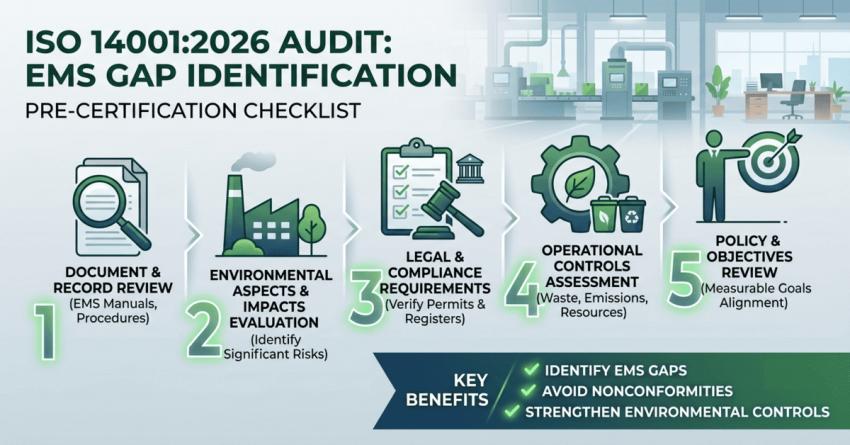
An ISO 14001:2026 audit checklist helps identify gaps in areas such as:
1. Environmental Policy and Objectives Review
The checklist helps verify whether the environmental policy is established, communicated, and supported by measurable objectives. Auditors can evaluate whether environmental goals align with organizational activities and improvement plans.
2. Environmental Aspects and Impacts Evaluation
Identifying environmental aspects and evaluating their impacts is a key part of EMS planning. The checklist helps verify whether organizations have properly identified significant environmental aspects, operational risks, and necessary controls.
Organizations can also review detailed requirements related to this area through an environmental aspects and impacts audit checklist guide to better understand audit considerations.
3. Legal and Compliance Requirement Verification
Organizations must identify applicable environmental obligations and evaluate compliance status. The audit checklist helps review whether legal registers, permits, monitoring records, and compliance evaluations are properly maintained.
4. Operational Control Assessment
Operational controls ensure that environmental risks are managed during daily activities. The checklist helps auditors verify procedures related to waste management, resource usage, emissions control, and other environmental processes.
5. Documentation and Record Review
Proper documentation is essential for demonstrating EMS effectiveness. The checklist supports the review of EMS manuals, procedures, records, monitoring results, training documents, and improvement actions.
Benefits of Using ISO 14001:2026 Audit Checklist Before Certification
A structured checklist provides several benefits during EMS preparation:
- Helps identify implementation gaps before certification audits
- Improves internal audit effectiveness
- Ensures better understanding of ISO 14001:2026 requirements
- Supports corrective action planning
- Reduces the possibility of major audit findings
- Improves confidence before certification assessment
Organizations can use a professionally developed ISO 14001:2026 audit checklist to systematically evaluate their EMS and prepare for successful certification audits.
Preparing for ISO 14001:2026 Certification with a Structured Audit Approach
A successful certification journey requires continuous evaluation and improvement. Internal audits conducted with a comprehensive checklist help organizations understand their current EMS performance and focus on areas needing attention.
Instead of waiting until the certification audit to discover weaknesses, organizations should regularly review their environmental management system through planned audits. This proactive approach helps maintain compliance, improve environmental performance, and build a stronger EMS framework.
Conclusion
Identifying EMS gaps before certification is an important step toward achieving ISO 14001:2026 compliance. A structured ISO 14001:2026 audit checklist enables organizations to evaluate their environmental management system, verify implementation effectiveness, and address weaknesses before the certification audit.
By using a systematic audit checklist, organizations can improve certification readiness, strengthen environmental controls, and support long-term environmental management success.