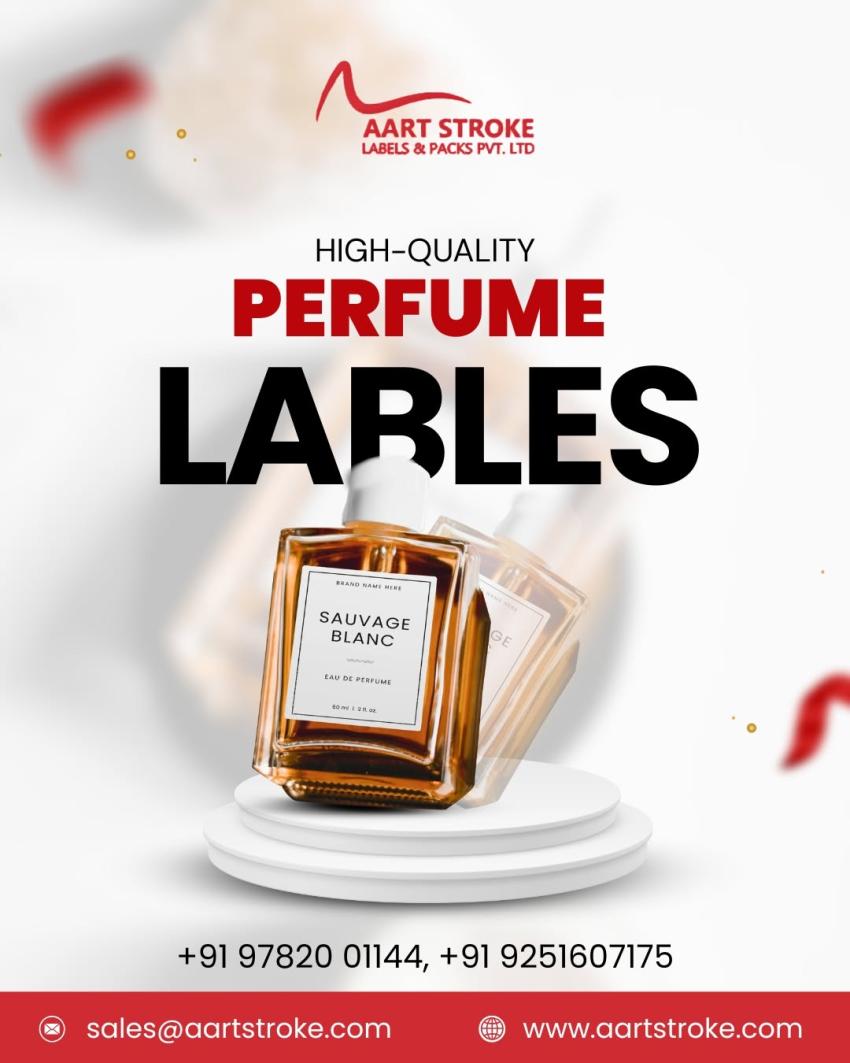
Walk into any perfume store and close your eyes for a moment. Then open them again. Before you reach for a bottle, before you uncap it and inhale, your eyes have already made a decision. Something about one particular bottle pulled your attention across the shelf. The shape, the color, the way light catches the label. That silent pull is not magic. It is the result of thoughtful, high-quality perfume label printing.
In a market where hundreds of fragrances compete for attention, your label is the first conversation your brand has with a customer. And like any first impression, it either opens the door or closes it. If you are a fragrance entrepreneur, an indie perfumer, or a brand owner looking to level up your packaging game, this guide is for you. At Aart Stroke, we have worked closely with fragrance brands of every size and seen firsthand how the right label transforms a good product into a premium experience.
Why Your Perfume Label Does More Than You Think
Most people think of a label as simply a piece of paper with the brand name and some information printed on it. But in the world of fragrance, a label carries enormous weight. Research consistently shows that consumers make purchase decisions within the first few seconds of seeing a product on the shelf. That decision is almost entirely visual.
A well-designed, professionally printed label tells the customer: this product is worth your money. A poorly printed label, one that peels, fades, smudges, or simply looks cheap, does the opposite. It raises doubt before the bottle is even opened.
This is why serious fragrance brands invest in professional perfume label printing as seriously as they invest in the scent itself. The two cannot be separated if you want to build a brand that people trust and remember.
Understanding the Basics: What Goes Into a Perfume Label
Before diving into printing techniques and materials, it helps to understand what makes a perfume label effective. A great label balances three things: design, material, and print quality. Each element supports the other.
Design covers everything from typography and color palette to shape and layout. The font you choose speaks to your brand personality. Elegant serif fonts signal heritage and sophistication. Clean, modern sans-serifs suggest a contemporary, minimalist identity. Color choices are deeply psychological. Black and gold communicate luxury. Soft pastels suggest romance and femininity. Deep jewel tones like emerald or navy convey richness and depth.
Material determines how the label feels in hand and how it holds up over time. A label that disintegrates in a humid bathroom or peels away from a glass surface after a few weeks is not just aesthetically damaging. It is a direct hit to brand credibility.
Print quality brings the design to life. Sharp detail, accurate color reproduction, and clean edges are what separate a professional label from one that looks homemade.
When all three elements work together, the result is a label that sells.
Perfume Bottle Sticker Printing: A Smart and Flexible Option
One of the most popular and practical solutions for fragrance brands today is perfume bottle sticker printing. Whether you are launching a new line, creating a limited edition collection, or simply testing the market with small production runs, sticker labels give you the flexibility that traditional printing methods often cannot.
Unlike pad printing or screen printing directly on glass, sticker labels can be produced in smaller quantities, redesigned quickly, and applied to a wide range of bottle shapes and sizes. For new brands or indie perfumers who are still refining their identity, this flexibility is invaluable.
What materials work best for perfume bottle sticker printing?
Vinyl is the industry favorite for good reason. It is waterproof, resistant to oils and alcohol, and holds up to the kind of handling a perfume bottle experiences daily. Vinyl labels do not wrinkle, peel easily, or lose their color when exposed to moisture, making them ideal for perfume bottles that sit in bathrooms or vanity spaces where humidity is constant.
BOPP (Biaxially Oriented Polypropylene) is another top-tier choice. It is thin, flexible, and crystal clear, which makes it perfect for transparent or no-label look applications where you want the glass bottle to show through. BOPP is oil-resistant and abrasion-resistant, meaning the label stays clean and polished through regular use.
Paper-based labels offer a more artisanal, handcrafted feel that works beautifully for niche or natural fragrance brands. Textured or kraft paper labels communicate authenticity and a connection to natural ingredients. While they are less moisture-resistant than vinyl, finishing treatments can significantly improve their durability.
Metallic and foil labels add instant glamour. Silver and gold metallic stickers catch light in a way that draws attention on any shelf. Holographic variants create a rainbow shift effect that changes as the bottle is rotated, offering a modern, eye-catching finish for youth-oriented or fashion-forward fragrance lines.
Finishing Techniques That Elevate Perfume Label Printing
The printing itself is just one part of the equation. The finishing applied after printing is what gives a label its final character and premium feel.
Gloss Lamination adds a bright, shiny coating that makes colors pop and gives the label a vibrant, high-energy look. It also provides an extra layer of protection against moisture and scratching.
Matte Lamination is the finish of choice for luxury fragrance labels. It gives a soft, understated appearance that feels refined and intentional. Matte finishes have a tactile quality that consumers associate with premium products.
Soft Touch Lamination takes the matte experience a step further. The label feels velvety under the fingertips, almost like suede. This kind of tactile luxury creates a sensory brand experience that customers remember and associate with quality.
Spot UV Coating applies a glossy transparent coat to specific areas of the label, like the brand name or logo, while leaving the rest matte. The contrast between the two finishes creates a striking visual effect that draws the eye exactly where you want it.
Foil Stamping presses metallic foil directly onto the label surface using heat and pressure. Gold, silver, copper, and even holographic foil options are available. The result is a metallic element that cannot be replicated by standard ink printing and that immediately signals premium positioning.
Embossing and Debossing raise or indent specific design elements, adding a three-dimensional texture that makes the label feel as interesting to touch as it does to look at.
At Aart Stroke, we guide fragrance brands through choosing the right combination of materials and finishes to match their brand positioning, budget, and production volume.
Printing Methods: Choosing What Works for Your Brand
Understanding the different printing methods available for perfume label printing helps you make smarter decisions about quality, cost, and turnaround time.
Digital Printing is ideal for brands that need high-quality results in shorter runs. No printing plates are required, so setup costs are minimal. It offers excellent color accuracy and is perfect for personalized labels, limited edition releases, or seasonal packaging. For small and medium fragrance brands, digital printing is often the most cost-effective and flexible entry point.
Flexographic Printing uses flexible printing plates and fast-drying inks to produce labels at high volumes. It is the go-to choice for established brands producing thousands or tens of thousands of units. The per-unit cost drops significantly at scale, making this method economically attractive for larger production runs.
Screen Printing applies ink through a mesh stencil and creates bold, solid colors with excellent opacity. It is commonly used when printing directly onto glass perfume bottles, producing a clean and sophisticated result that does not require a separate adhesive label.
Offset Printing offers the sharpest image quality and the most precise color reproduction. It is well-suited for brands that demand the highest standard of detail in their label design, particularly for intricate artwork or fine typography.
Design Tips for Perfume Labels That Actually Sell
Even the best printing technology cannot save a poorly designed label. Here are some design principles that the most successful fragrance labels share.
Keep it readable. No matter how artistic the typography, the brand name and fragrance name must be easy to read. If a customer has to squint or guess, the label has already failed.
Choose colors with intention. Every color tells a story. Match your palette to the character of the fragrance. A fresh aquatic scent deserves cool blues and clean whites. A warm Oriental fragrance might call for deep amber, burgundy, or black and gold.
Use negative space. Overcrowding a label with information and graphic elements makes it look busy and cheap. White space, or negative space in whatever color your background is, gives the label breathing room and signals confidence.
Shape matters. Most brands default to a standard rectangle, but oval, die-cut, and custom silhouette labels stand out on a shelf. The shape of your label should complement the shape of your bottle.
Include the essentials. Fragrance name, brand name, volume in milliliters, fragrance concentration (Eau de Parfum, Eau de Toilette, etc.), country of origin, and batch code. Legal compliance is not optional and missing these details can create problems with retailers and regulators.
Common Mistakes to Avoid in Perfume Label Printing
Even experienced brands make these errors. Knowing them in advance can save you significant time and money.
Choosing the wrong adhesive is one of the most frequent problems. A label that lifts from a curved glass surface, or one that leaves sticky residue when it does peel, creates a terrible impression. Always specify permanent adhesive formulated for glass when ordering perfume bottle sticker printing.
Skipping a print proof is another costly mistake. Colors look different on screen and on physical material. Always request a physical proof before approving a full production run. A color that looks rich and warm on your monitor may print dull or off-tone on your chosen material.
Ignoring the bottle's surface shape is a practical issue many new brands overlook. Highly curved or unusual bottle shapes require flexible label materials and careful die-cutting to avoid wrinkling or lifting at the edges.
Underestimating the importance of durability is especially common. Perfume bottles live in bathrooms, handbags, and vanity drawers. They are handled daily, exposed to humidity and body oils. A label that cannot survive those conditions will not serve your brand well regardless of how beautiful the design is.
Sustainability in Perfume Label Printing
The fragrance industry, like every other sector, is under growing pressure to adopt more sustainable practices. Consumers increasingly make purchasing decisions based on a brand's environmental values, and packaging is one of the most visible areas where those values are expressed.
Eco-friendly label materials are now widely available and do not require any compromise on print quality or finish. Recycled paper stocks, FSC-certified materials, and bio-based adhesives are all viable options. Water-based inks and UV-curable inks have replaced solvent-based alternatives in many professional printing operations, reducing the environmental footprint without sacrificing color depth or durability.
Aart Stroke works with printing partners who offer sustainable material options across our label production services, so fragrance brands that care about their environmental impact do not have to choose between responsibility and quality.
How Aart Stroke Supports Fragrance Brands
At Aart Stroke, we understand that a fragrance brand's visual identity is just as important as the scent inside the bottle. We provide end-to-end support for perfume label printing and perfume bottle sticker printing, helping brands at every stage of growth create labels that communicate quality, build trust, and drive sales.
Whether you are launching your first fragrance or redesigning an established line, our team helps you navigate material selection, finish options, print methods, and design guidance to deliver a result that genuinely reflects the premium nature of your product.
We believe that every bottle deserves a label worthy of the scent inside it.
Frequently Asked Questions
Q1. What is the best material for perfume bottle sticker printing?
Vinyl and BOPP are the two most recommended materials for perfume bottle sticker printing. Both are waterproof, oil-resistant, and hold up to daily handling. BOPP works especially well for clear or no-label-look applications, while vinyl offers superior durability for bottles exposed to frequent handling and humid environments.
Q2. How many labels do I need to order to make perfume label printing cost-effective?
With digital printing, there is no minimum order requirement in many cases, making it ideal for small or new fragrance brands. Flexographic and offset printing become more cost-effective at larger volumes, typically from 1,000 units and above. The right choice depends on your production volume and how frequently you expect to update your design.
Q3. Can I change my perfume label design easily if I use sticker labels?
Yes, this is one of the key advantages of perfume bottle sticker printing over direct-to-bottle printing methods like screen printing or pad printing. Because the label is a separate element, you can update your design, change the fragrance name, or introduce a seasonal variant without replacing or modifying the bottles themselves.
Q4. What finishing option is best for a luxury perfume label?
Matte lamination combined with spot UV and foil stamping is widely considered the premium combination for luxury fragrance labels. The matte base gives a sophisticated, understated feel, while spot UV draws attention to the brand name or key design elements, and foil stamping adds a metallic touch that communicates exclusivity. Soft touch lamination is another excellent choice for brands that want a sensory, velvety quality in their label.
Q5. Does Aart Stroke offer design support for perfume label printing?
Yes. Aart Stroke provides design consultation and print-ready file guidance to help fragrance brands create labels that are both visually compelling and production-optimized. We work with brands from the early concept stage through to final print approval, ensuring that the finished label accurately reflects the vision and quality of the fragrance it represents.