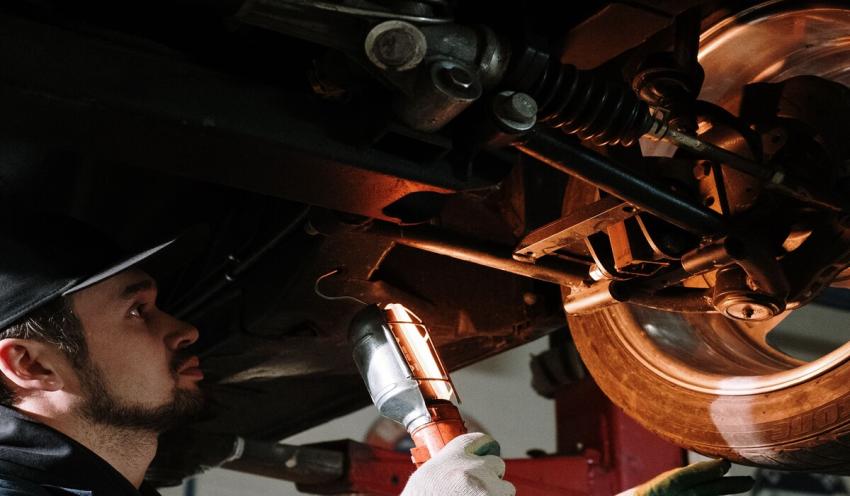
That odd tread pattern on your tyres? Blame usually lands on poor air pressure or a lazy attitude toward maintenance. Yet truth sneaks in sideways - irregular grinding away at the surface frequently points straight to hidden issues within the suspension system itself.
When your suspension is out of order, it makes your tyres go through quite a few uneven stresses. What happens? Their lifetime is dramatically shortened, so their mileage declines. Having your shock absorbers, coil springs, and bushings in excellent shape is not just about the ease of driving on highways, but also the sole way to save the money that you'd otherwise waste on buying new tyres. Because of this, when you are going through a tyre safety checklist for your car, please make sure that checking these underbody parts is first on your list.
Meet the Parts Doing the Heavy Lifting
Before we dive into the gritty details, let's look at what's actually happening under the chassis.
- Shock Absorbers and Struts: You might think they hold the car up. They don't. Their actual job is to control vibrations and keep your tyres glued to the bitumen.
- Coil Springs: Now, these legends provide the vehicle's weight support. They determine the height of your ride. When they get a little tired, your car will lower. Even a couple of inches can completely affect your wheel alignment negatively and cause huge pressure on your tyres.
- Bushings and Control Arms: Think of these as the flexible, shock-absorbing joints connecting the heavy metal parts. When they degrade, you get heaps of unwanted play in your steering and axles.
What Are Your Tyres Trying to Tell You?
Your treads are basically a diagnostic map. You just need to know how to read it.
Notice scooped-out, wavy dips across the rubber? That’s called cupping or scalloping. It's the ultimate giveaway that your shocks are shot. Because the worn shocks can't dampen the movement, the wheel literally bounces off the road, tearing out little chunks of rubber every time it slams back down.
How about feathering? This is when the tread ribs feel smooth brushed one way, but sharp the other. Usually, that points to a bad toe angle caused by worn tie rod ends scrubbing the tyre sideways.
Then there's edge wear. If just the inside or outside edge is completely bald, you’re likely dealing with a camber issue tied to worn ball joints or failing control arm bushings. And those weird diagonal stripes? Loose suspension parts are allowing the tyre to shift around while you drive.
Spot any of this? Nip it in the bud. Seriously. Look into booking some proper suspension repairs in Pakenham before those tyres are completely ruined.
Catching the Warning Signs Early
You don't need a mechanic's certificate to notice when things are going south. Just pay attention during your daily commute.
Front of the car nosediving on braking? That’s a sign. Rear squashing down when speeding up? Happens too often now. Shocks once kept that motion steady - now they just let it happen. Weight shifts more than before because those parts wear out. They used to resist, now they give in.
In fact, the easiest way is the bounce test. Push down with a good amount of force on the roof of your car right above a wheel. If your car bounces up and down like a trampoline more than once or twice before it stops, then it's for sure your shocks are going to need replacing soon.
Keeping Things in Check
Make no mistake, routine inspections are your absolute best mate here.
Having a pro look over your suspension bits every twenty to thirty thousand kilometres can save you an absolute fortune later on. Yes, and whatever you do, please don't just chuck a fresh set of tyres on without fixing the root cause. That’s literally just burning money. Your camber, caster, and toe angles must be spot-on with the manufacturer's specs.
Next time you have your scheduled car service in Pakenham, you might want to request that your mechanic examine the shocks, springs, and bushings during the service to confirm that they are not worn. You shouldn't rely on luck.
Final Thoughts:
Your tyres and suspension work together harmoniously. The suspension, when in good condition, not only helps in absorbing shocks but also manages the distribution of weight and preserves the alignment. As a result, your tyres are no longer exposed to rough handling. You might want to inspect those tread patterns now and make sure that an unexpected mechanical defect doesn't diminish your mileage!