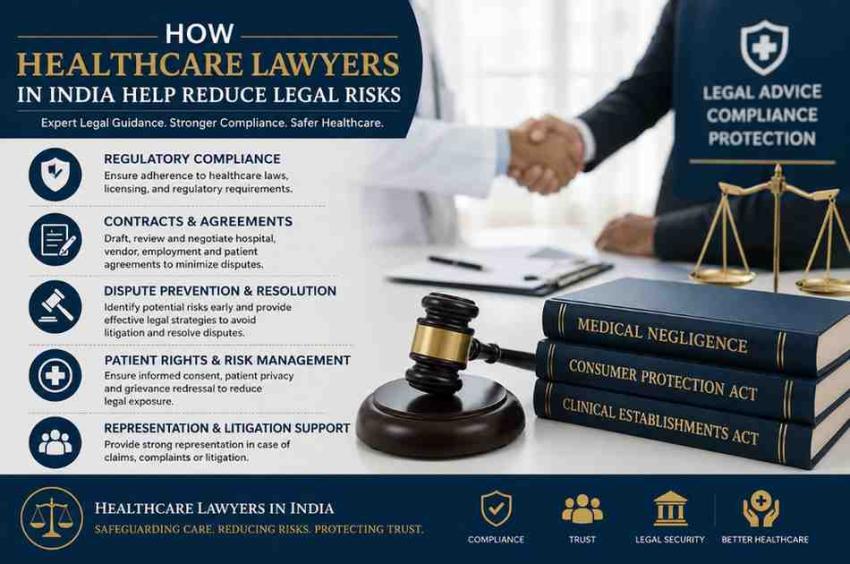
India's healthcare sector continues to expand through technological innovation, increasing investment, and growing demand for quality medical services. Hospitals, clinics, pharmaceutical companies, diagnostic centres, healthcare startups, and telemedicine platforms are operating in an environment shaped by complex regulations and evolving legal obligations.
While growth presents significant opportunities, it also introduces legal challenges. Healthcare organisations must comply with numerous laws relating to patient care, licensing, data privacy, employment, commercial contracts, and regulatory governance. Even minor compliance failures can result in financial penalties, reputational damage, operational disruptions, and legal disputes.
Healthcare lawyers play a vital role in helping organisations identify potential risks and implement strategies to minimise legal exposure. Their expertise allows healthcare businesses to focus on delivering services while maintaining compliance with applicable regulations.
The Increasing Legal Complexity of Healthcare
Healthcare is one of the most heavily regulated industries in India. Medical businesses operate within a legal framework designed to protect patients, maintain ethical standards, and ensure quality healthcare delivery.
Regulations affect nearly every aspect of healthcare operations. Organisations must address issues relating to licensing, professional conduct, patient rights, medical records, employment practices, and commercial relationships. As regulations continue to evolve, healthcare providers face increasing pressure to remain compliant.
Healthcare lawyers help businesses understand legal requirements and develop systems that reduce the likelihood of regulatory violations.
Supporting Regulatory Compliance
One of the most effective ways to reduce legal risk is through strong compliance management. Healthcare organisations must comply with various statutory and regulatory obligations throughout their operations.
Healthcare lawyers assist businesses by reviewing compliance requirements and advising on appropriate procedures. They help organisations understand licensing obligations, registration requirements, governance standards, and reporting responsibilities.
When compliance frameworks are properly implemented, businesses are less likely to encounter regulatory investigations or enforcement actions.
Assisting with Licensing and Approvals
Many healthcare organisations require licences and approvals before commencing operations. Hospitals, laboratories, pharmacies, diagnostic facilities, and healthcare technology providers often face detailed regulatory requirements.
Errors during the application process can delay business activities and create legal complications.
Healthcare lawyers guide organisations through regulatory procedures and help ensure applications are prepared accurately. Their involvement reduces the risk of non compliance and supports smoother interactions with regulatory authorities.
Protecting Against Medical Negligence Claims
Medical negligence allegations can create serious legal and financial consequences for healthcare providers. Even when claims lack merit, investigations and legal proceedings can consume considerable time and resources.
Healthcare lawyers assist organisations in developing risk management procedures designed to reduce liability exposure. They review policies, assess documentation practices, and advise on patient communication protocols.
Strong legal guidance helps healthcare providers establish procedures that support both patient safety and legal protection.
Managing Patient Rights and Consent Requirements
Patient rights have become increasingly important within modern healthcare systems. Healthcare organisations must ensure patients receive appropriate information and are able to make informed decisions regarding treatment.
Legal disputes often arise when communication processes are unclear or documentation is incomplete.
Healthcare lawyers assist businesses in developing consent procedures and patient communication policies aligned with regulatory expectations. These measures help reduce misunderstandings and minimise legal risks.
Addressing Data Privacy Concerns
Digital healthcare services have transformed the way medical information is collected, stored, and shared. Electronic records, telemedicine consultations, mobile applications, and cloud based systems offer significant benefits but also introduce legal responsibilities.
Healthcare organisations manage sensitive patient information on a daily basis. Improper handling of data can result in regulatory scrutiny and reputational harm.
Many organisations rely on healthcare law attorneys in India to establish data protection policies and review privacy practices. Their expertise helps healthcare providers manage information responsibly while maintaining compliance with legal obligations.
Strengthening Contractual Protection
Healthcare organisations regularly enter into contracts with suppliers, service providers, medical professionals, insurers, technology vendors, and research institutions.
Poorly drafted agreements can create disputes and financial losses. Unclear contractual terms may lead to disagreements regarding responsibilities, performance standards, or payment obligations.
Healthcare lawyers review and draft agreements designed to protect business interests and minimise uncertainty. Well structured contracts provide clarity and reduce the likelihood of future legal conflicts.
Supporting Employment Compliance
Healthcare organisations depend on a diverse workforce consisting of doctors, nurses, technicians, administrators, and support staff.
Employment related disputes can arise from recruitment practices, workplace policies, compensation matters, disciplinary procedures, or professional conduct issues.
Healthcare lawyers assist employers in developing compliant employment frameworks and addressing workforce concerns before they escalate into legal disputes.
Strong employment practices contribute to organisational stability and help reduce operational risks.
Advising Healthcare Startups and Emerging Businesses
India's healthcare startup ecosystem continues to attract entrepreneurs and investors seeking innovative solutions in telemedicine, health technology, diagnostics, and digital healthcare.
Many startups face unique legal challenges involving business structures, regulatory approvals, intellectual property protection, and investment transactions.
Healthcare lawyers provide practical guidance during the early stages of business development. Their support helps startups establish compliant foundations while reducing legal uncertainty.
Early legal planning often prevents costly issues later in the growth cycle.
Assisting During Regulatory Investigations
Healthcare organisations may occasionally face inspections, audits, or investigations by regulatory authorities.
These situations require careful management and accurate responses. Failure to cooperate appropriately or provide required documentation can increase legal exposure.
Healthcare lawyers assist businesses in preparing for investigations, responding to regulatory enquiries, and addressing compliance concerns.
Their expertise helps organisations navigate regulatory scrutiny while protecting their legal interests.
Reducing Risks in Telemedicine and Digital Health
Telemedicine has expanded rapidly across India. Digital healthcare platforms now provide consultations, monitoring services, prescriptions, and healthcare information through technology driven solutions.
While these innovations improve access to healthcare, they also create additional legal responsibilities.
Healthcare lawyers advise businesses on regulatory requirements relating to telemedicine operations, patient consent, digital contracts, and data security.
This guidance helps digital healthcare providers reduce risks while maintaining compliance with evolving regulations.
Supporting Corporate Governance and Risk Management
Effective governance plays a significant role in legal risk reduction. Healthcare organisations require clear decision making processes, accountability structures, and compliance oversight mechanisms.
Healthcare lawyers help establish governance frameworks that support ethical conduct and regulatory compliance.
For larger healthcare businesses pursuing expansion, investment, or restructuring opportunities, collaboration with best corporate law firms in india may strengthen governance practices and support more complex corporate transactions.
Strong governance contributes to long term stability and helps organisations identify potential risks before they become significant problems.
Managing Commercial Disputes
Commercial disputes can arise in any sector, and healthcare is no exception. Disagreements involving contracts, partnerships, suppliers, or service providers can disrupt operations and create financial strain.
Healthcare lawyers help resolve disputes through negotiation, mediation, arbitration, or litigation where necessary.
Their involvement often enables organisations to resolve conflicts more efficiently while protecting commercial relationships and business interests.
Encouraging a Culture of Compliance
Legal risk reduction is not achieved through policies alone. Organisations must develop a culture where compliance and ethical conduct are integrated into daily operations.
Healthcare lawyers contribute by providing guidance on internal policies, governance practices, training initiatives, and compliance monitoring.
When employees understand their legal responsibilities, organisations are better positioned to prevent violations and respond effectively to emerging risks.
Supporting Long Term Business Growth
Reducing legal risk is closely connected to sustainable business growth. Investors, lenders, business partners, and regulators often evaluate an organisation's compliance history before making decisions.
Businesses with strong legal frameworks are generally viewed as more reliable and trustworthy.
Healthcare lawyers help organisations create systems that support operational efficiency, regulatory compliance, and long term growth objectives.
Their expertise provides stability in an industry where legal and regulatory requirements continue to evolve.
Conclusion
Healthcare organisations operate within one of the most complex regulatory environments in India. From patient rights and licensing requirements to data privacy, employment compliance, and commercial transactions, legal obligations influence every aspect of healthcare operations.
Healthcare lawyers play an essential role in helping organisations identify risks, maintain compliance, and respond effectively to legal challenges. Their expertise supports stronger governance, improved operational practices, and better protection against regulatory and commercial risks.
As healthcare regulations continue to develop, professional legal guidance remains a valuable resource for businesses seeking to minimise legal exposure and achieve sustainable growth. Organisations that invest in proactive legal support are often better equipped to navigate challenges and build long term success.