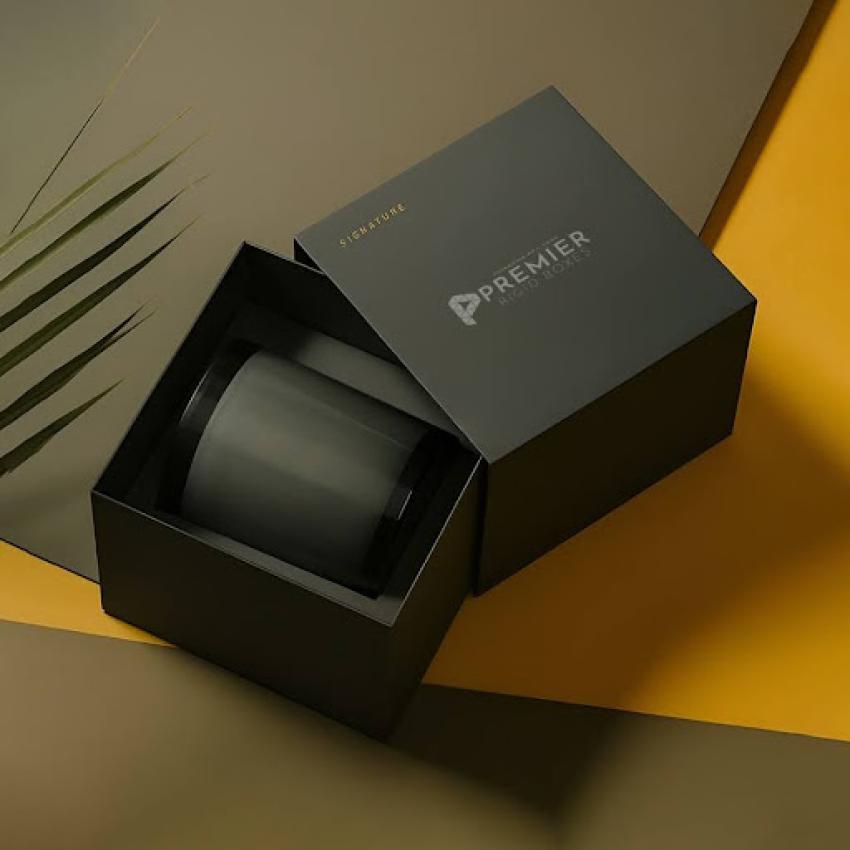
As soon as you touch a luxury container, you feel the difference.
Raise patterns so you can feel them with your fingertips. Indented details create visual depth. Three dimensional texture makes the quality apparent before opening the package. The embossing and debossing process creates tactile luxury by transforming a flat surface into a tactile experience.
These methods distinguish between common container and high-end containers that can sell for higher prices. The working mechanisms of embossing and debossing provide insight into the importance of these finishes for premium brands and how they convey brand excellence through container design.
This finishing finesse changes perceptions and values.
Understanding Embossing and Debossing
Embossing and debossing are two different types of finishing, yet they're related.
Embossing is the technique used to create a pattern that protrudes from the surface. This will push the material up, generating dimensional relief. The raised elements reflect light to create drama. Raised texture, evident on touch, is indicative of quality and craftsmanship.
Debossing has the reverse effect. This presses the material into the mold to form impressions. Elements that are recessed make the scene look deeper. Patterns are highlighted through light and shadow. Tactile experience shows indentation which produces sophisticated impression.
In both techniques, metal dies are used to apply pressure to the container surfaces. The quality of the results depends on the specified temperature and pressure. It is the precision of execution that leads to clean consistent results. But when done poorly, the patterns are confusing, inconsistent, and compromise premium perception.
Embossing and debossing are common features of custom candle rigid boxes, as they enhance brand presentation. In their construction, raised logos project luxury. Indented patterns: adds a sophisticated texture. The result of a combination of techniques is dynamic, memorable surfaces.
The Technical Process
Embossing and debossing are manufacturing processes that demand accuracy.
All metal dies for the Creation Custom are custom designed. This must withstand thousands of pressure cycles without being damaged. The precision of the results is determined by the die's precision. Millions of containers have slight inaccuracies that grow over time.
Temperature Control Heat melts material to make deformation without cracking possible. Clean patterns are made when the temperature is correct. Insufficient heat will not allow for proper deformation. Over-heating causes damage to material or to adjacent print.
Pressure Application Usually hydraulic presses are used to force material into or out of dies with controlled pressure. Pressure should be applied uniformly over all the surface. Inconsistent results will be obtained due to uneven pressure. Quality is assured with precision pressure control.
The timing of the pressure is precise. If too short, then pattern is not fully developed. If too long, material over-deforms. This precision is within milliseconds, enabling optimal results.
MR Mat Spring back after pressure release. Engineers have to calculate the dimensions to ensure the final result matches the specifications, accounting for this recovery.
Material Considerations
Materials have different emboss/deboss characteristics.
The embossing is excellent on Chipboard Characteristics Premium chipboard. The fiber structure can be easily shaped, creating crisp patterns. Use lower grade material and get fuzzy and indistinct results. The finishing quality is directly related to the quality of materials.
Coating Interaction
Coatings influence the response of material to pressure. Soft-touch coatings will produce different deformations than gloss coatings. The texture of matte finishes can vary from that of glossy finishes. The choice of coating affects the final results.
Thickness Impact
The thicker the material, the more pressure is needed so as to emboss it deeper. A thinner material will take mild pressure to achieve a subtle effect. Optimizing thickness is a compromise between protection and finishing appearance.
Moisture Content
Moisture content influences material flexibility. Very dry material is brittle. Clean deformation cannot exist in excess of moisture. Accurate moisture control ensures optimal embossing results.
Design Applications
Embossing and debossing are used in various design purposes.
The logos of Logo Enhancement Company embossed prominently develop luxury perception. Dynamic visual effect is achieved by the raised logos as they reflect light. Debossed logos are subtle, chic, and elegant. The impact of the branding depends on the placement and size of the Logo.
Embossed Patterns: Decorative patterns imprinted onto surfaces create texture and interest. Geometric designs add a contemporary touch. Natural elegance is provided by organic patterns. Selecting a pattern conveys brand personality.
There are text-finished product names that emboss or deboss, conveying a premium positioning. Raised text is a good way to grab the reader's attention. Indented text is used to maintain a degree of refinement. Text finishing helps the design to be cohesive.
Texture Development All-over embossing patterns create surface texture. Debossed texture is a matte texture with a sophisticated look. Dynamic dimensional surfaces are developed through the combination of techniques. Texture is a tactile element of visual design.
Custom candle rigid boxes use embossing and debossing to create a memorable brand presentation. Logos with embossing convey quality. Debossed patterns produce interesting texture. When combined together, these effects produce unique containers that customers will remember.
Premium Positioning Impact
Embossing and debossing are a way of communicating luxury through various means.
High quality is felt with Tactile Luxury Touch. The embossed patterns seem costly. The debossed surfaces are elegant. The use of tactile experience reinforces the premium perception of the visuals.
Visual Drama Three Dimension Surfaces Reflect Light to create dynamic appearance. Embossing involves creating highlight/shadow play. Debossing makes a subtle depth. The more complex the visual, the more craftsmanship it conveys.
Embossing and debossing patterns make brands stand out from competitors. Custom designs it’s an opportunity to form an unforgettable identity. The distinctiveness creates brand recognition in markets.
Price Justification Premium finishes are worth more price. Finishing is perceived as added value by the customer. Finishing allows to generate extra profit margin by premium pricing.
Brand Impact Examples
Specific examples are given to illustrate finishing impact.
The embossed logos message the brand excellence in luxurious beauty brands premium cosmetics. Raised logos reflect light and produce a visual feat. Quality is perceived before opening packages.
Debossed Candle Boxes For Artisanal Candle Brands bring a touch of classy elegance. The indented designs give the design a sleek appearance. Texture conveys handcrafted quality.
Premium Gift Packaging Embossed monograms are the making of luxury! Debossed patterns give a sophisticated presentation. Memorable unboxing experiences are achieved through a combination of techniques.
Quality Standards
Professional embossing and debossing are precision done to a high standard.
Consistency Requirements: All the containers should be embossed/debossed the same way. Variation is a sign of quality problems. Automated systems that guarantee uniformity of millions of units. Quality Control ensures each batch conforms to specifications.
Clarity Standards Patterns should be clear and concise. Indistinct patterns affect the premium perception. Clearance is maintained with pressure calibration and die maintenance.
There should not be any cracking or separation at the embossed or debossed areas when performing adhesion test. Materials must be attached to base. Testing ensures durability over container's lifetime.
Appearance Standards Visual results should be identical to approved samples. Embossed consistency in colour with surrounding areas. The completion should complement, not detract from, the overall design.
Implementation Strategy
Brands which have adopted embossing and debossing stick to a systematic process.
Design Development Collaborate with designers creating finishing designs enhancing brand. Sketch preliminary concepts. Develop digital designs. Create sample mockups.
Custom die produced very accurately. Dies should be capable to satisfy the production necessities. Consistent results with quality die production.
Prepare Approval Containers for Sample Production. Check embossing/debossing quality. Ensure completion aligns with brand standards. Please approve prior to committing to large production runs.
Production Execution Work by knowledgeable manufacturing companies who can carry out finishing precision. Ensure quality control procedures are checked. Monitor and maintain consistency throughout production run.
Custom candle rigid boxes with embossed logos are some successful examples. Professional finishing effects will produce memorable brand presentation.
Cost-Benefit Analysis
Embossing and Debosing are expensive but yields benefits.
The Cost Addition Embossing and debossing process costs $0.05-$0.15 per container, depending on the complexity. This includes an upfront cost. Production speed decreases accommodating finishing.
Perception of RBPs means more revenue. Customers are willing to pay 10-20% premium for the finished containers. Margins add costs to finishing.
Brand Impact Distinctive finishing is known as creating brand recognition. Everything is memorable, which leads to word of mouth marketing. Customer satisfaction is enhanced through a superior experience.
Final Thoughts
Embossing and debossing add a degree of luxury to containers, making them more than functional. 3D Finishing conveys quality by touch and sight. Strategic finishing gives the brand a competitive edge and provides a rationale for high prices.
Custom candle rigid boxes are the perfect way to showcase a candle as a beautiful, luxurious presentation.