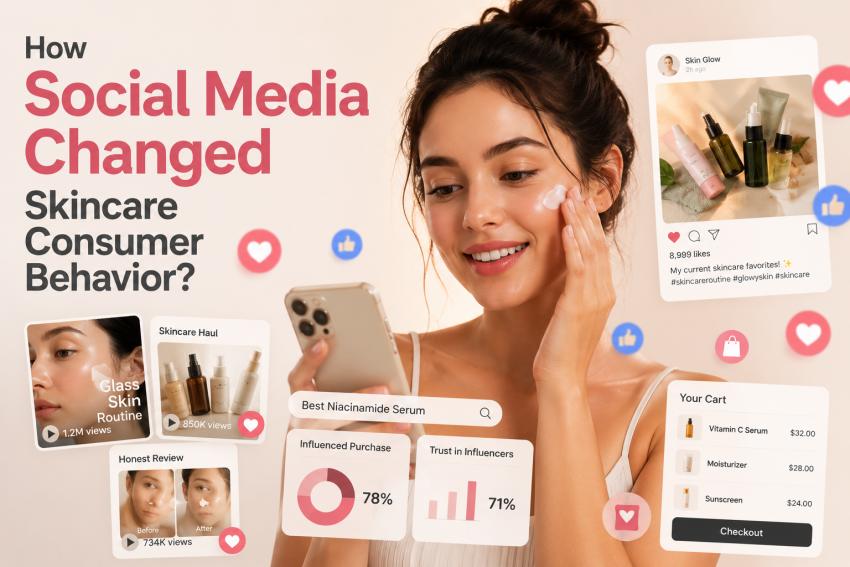
Think about the last skincare product you bought. Did you read about it in a magazine, or did you see someone rave about it in a 30-second video at midnight? If it was the second one, you are not alone. Millions of people today are building their entire skincare routine based on what they see on social media. And honestly, that shift has changed everything.
Social media did not just change how we shop for skincare. It changed how we think about our skin.
From TV Ads to TikTok Tutorials
Not too long ago, skincare brands relied on TV commercials and print ads to reach people. A celebrity with perfect skin would smile at the camera, say something like "clinically tested," and that was enough. People trusted big brand names simply because they were big.
Then social media arrived, and everything flipped.
Now a 19-year-old with good skin and a ring light can have more influence than a brand that has been around for 50 years. Platforms like Instagram, YouTube, and TikTok gave everyday people a voice. And consumers started listening to those voices more than the polished ads.
This change opened doors for smaller brands and new players. It also made consumers far more aware and far more demanding.
Skin Education Went Mainstream
One of the best things social media did for skincare is that it made people curious about ingredients. Before, most people just picked up whatever their mom used or whatever was on sale. Now, people actually know what niacinamide does. They look up whether a moisturizer has fragrance. They check if a sunscreen is reef-safe.
Skincare creators on YouTube and Instagram started breaking down product labels in simple language. Dermatologists joined TikTok. Estheticians started doing Q&A sessions. Suddenly, skincare knowledge that used to live only in textbooks or expensive consultations was free and available to anyone with a phone.
This is great for consumers. But it also means that brands can no longer hide behind fancy words and vague claims. If your product does not deliver, someone will make a video about it.
The Rise of Skincare Communities
Social media also created something really powerful: skincare communities. Groups on Reddit like r/SkincareAddiction have millions of members sharing product reviews, before-and-after photos, and honest opinions. Facebook groups, Instagram comment sections, and YouTube threads became places where people helped each other figure out what works for their skin type.
This community-driven culture changed buying behavior in a big way. People now look for social proof before buying anything. A product with thousands of genuine reviews and real user photos will outsell a beautifully packaged product with no buzz every single time.
Trends Spread Faster Than Ever
Social media also made skincare trends move at a crazy speed. One week, everyone is talking about slugging. The next week, it is skin cycling. Then it is glass skin, then dewy skin, then "skin fasting." These trends spread from one corner of the world to another in just a few days.
For brands, this is both an opportunity and a challenge. If a product fits into a trending routine, it can sell out overnight. But if a brand moves too slow, that moment is gone.
This fast-moving trend culture is one reason why so many entrepreneurs are now looking at skincare as a business opportunity. If you study the market and move quickly, there is real money to be made. Many people today are exploring how to start a skincare brand because the barrier to entry has lowered significantly, thanks to social media marketing.
The India Angle: A Market That is Just Waking Up
In India, the impact of social media on skincare has been especially strong. Indian consumers were historically loyal to a handful of traditional brands. But Instagram and YouTube changed that loyalty fast. Young Indians are now experimenting with Korean skincare, looking for natural Ayurvedic options, and building 10-step routines.
This growing interest has created a booming market. The skincare franchise in India space has expanded hugely in the last few years. Entrepreneurs across tier-2 and tier-3 cities are capitalizing on local demand that social media helped create. People in smaller towns now want the same products they see influencers using in Mumbai or Delhi. That demand needs to be met.
If you are someone thinking about entering this space, the timing is actually quite good. Social media has already done a big part of the job: it has educated the consumer.
What This Means for Brands Going Forward
Social media made skincare personal. It made it a conversation rather than a broadcast. Brands that understand this and build real relationships with their audience will grow. Brands that still think in terms of one-way advertising will fall behind.
Consumers today want transparency. They want to know what is in the product, where it comes from, and whether it actually works. They want to see real skin, not filtered perfection. They want brands that talk to them, not at them.
The skincare industry is one of the few where a small brand with a genuine story and a strong social media presence can compete with giants. And that is a genuinely exciting thing.
Social media did not just change how we buy skincare. It changed what we expect from it. And there is no going back.