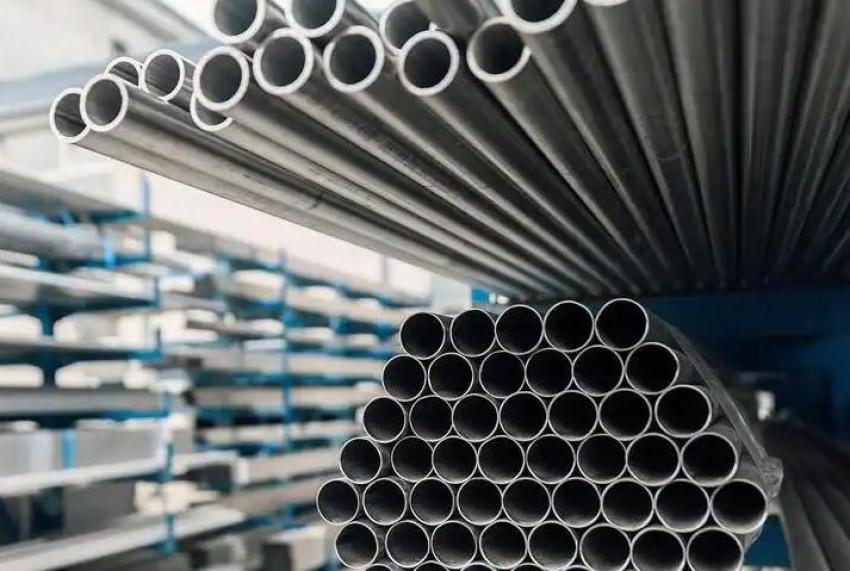
Advantages of Stainless Steel Seamless Pipes in Fire Protection Systems:
1. Performance Advantages
Stainless steel seamless pipes possess excellent corrosion resistance, enabling them to withstand the erosion of water and chemical extinguishing agents in fire protection systems for extended periods, ensuring that the pipelines will not leak due to corrosion and thus guaranteeing the reliability of the fire protection system. Stainless steel seamless pipes also have good high-temperature resistance, maintaining structural integrity under high-temperature conditions in common fire scenarios, ensuring unobstructed fire water delivery channels.
Furthermore, their pressure resistance allows stainless steel seamless pipes to withstand high-pressure water flow in fire protection systems, ensuring sufficient water volume and pressure during firefighting. High tensile strength ensures that the pipeline is not easily broken under external forces, further enhancing the safety of the fire protection system. The appropriate wall thickness grade must be selected according to the system design pressure.
2. Cost and Installation Advantages
Compared to other pipe materials, stainless steel seamless pipes may have a higher initial purchase cost, but in the long run, their cost-effectiveness is significantly better. Their long service life reduces the frequency and associated costs of pipe replacement. Furthermore, the installation of stainless steel seamless pipes is relatively simple, requiring no complex anti-corrosion treatment or special connection techniques, saving installation time and labor costs.
3. Service Life and Maintenance Advantages
Stainless steel seamless pipes have a very long service life, typically lasting decades or even longer. This is because their excellent corrosion resistance and high strength make the pipes less susceptible to damage and aging. At the same time, their low maintenance costs are also very prominent. Routine maintenance is relatively simple, requiring only periodic inspections, without frequent repairs or replacement of parts, greatly reducing maintenance costs and workload.
Manufacturing Process and Technical Requirements for Stainless Steel Seamless Pipes:
1. Production Process
The main production processes for stainless steel seamless pipes include hot rolling, cold rolling, and cold drawing.
The hot rolling process involves heating a solid round stainless steel billet, then piercing and rolling it to form a pipe blank. Its advantages include high production efficiency and the ability to quickly obtain large-sized tube blanks, but relatively lower dimensional accuracy and slightly inferior surface quality, making it suitable for applications with less stringent dimensional requirements.
Cold rolling involves reciprocating the tube blank through two rolls with gradually decreasing circumferential passes, using a mandrel with an incline. This method significantly improves the dimensional accuracy and surface quality of the tube, but has relatively lower production efficiency and higher cost, making it suitable for products with high requirements for dimensional accuracy and surface quality.
Cold drawing involves drawing the tube blank on a drawing machine. There are various methods of cold drawing, such as mandrel drawing with the finished inner diameter, mandrel drawing with the same length as the tube, or free cold drawing without a mandrel. Cold drawing further improves the dimensional accuracy and surface finish of the tube, making it suitable for producing small-diameter and thin-walled tubes.
In actual production, cold rolling and cold drawing are usually used sequentially, rather than in parallel. Typically, the pierced tube is first hot-rolled for extension, then cold-rolled or cold-drawn for finishing. Cold rolling generally achieves better dimensional accuracy and surface quality than cold drawing.
2. Technical Requirements
The production process of stainless steel seamless pipes involves numerous technical aspects. First, the selection of raw materials is crucial; stainless steel billets that meet standards, have stable chemical composition, and possess good mechanical and physical properties must be used. Simultaneously, the impurity content in the raw materials must be strictly controlled to ensure the quality and performance of the pipes.
Quality control is integral to the entire production process. At each stage, the dimensions, chemical composition, mechanical properties, and surface quality of the pipes require rigorous testing. For example, during hot rolling, the heating temperature and rolling speed must be controlled to avoid defects such as cracks; during cold rolling and cold drawing, the precision and lubrication of the dies must be ensured to prevent surface roughening. Furthermore, the control of heat treatment processes is also critical, such as the temperature and time parameters for annealing and solution treatment, to improve the mechanical properties and corrosion resistance of the pipes.
Development Prospects of Stainless Steel Seamless Pipes in Fire Protection Systems:
With the continuous improvement of fire safety awareness and increasingly stringent fire protection regulations, the application prospects of stainless steel seamless pipes in fire protection systems are very broad. In the future, fire protection systems will place increasingly stringent performance requirements on pipelines, and stainless steel seamless pipes, with their superior performance, are expected to be widely adopted in more fire protection projects.
In terms of technological innovation, the manufacturing process of stainless steel seamless pipes will be continuously improved, increasing production efficiency and reducing costs, making them more competitive in the market. Simultaneously, with the development of new materials and technologies, the performance of stainless steel seamless pipes will be further enhanced, such as higher corrosion resistance and better high-temperature resistance.
Although the initial material cost is higher than that of traditional galvanized steel pipes, considering the longer service life and lower maintenance costs, the overall cost over the entire life cycle is more advantageous.
The development of intelligent fire protection systems will also bring new opportunities to stainless steel seamless pipes. Through integration with intelligent monitoring and control systems, the operating status of pipelines can be monitored in real time, potential problems can be detected early, and the reliability of the fire protection system can be ensured.
Furthermore, the popularization of green and environmentally friendly concepts will promote the application of stainless steel seamless pipes in the fire protection field. Its recyclable and reusable characteristics meet the requirements of sustainable development, helping to reduce resource waste and environmental pollution.