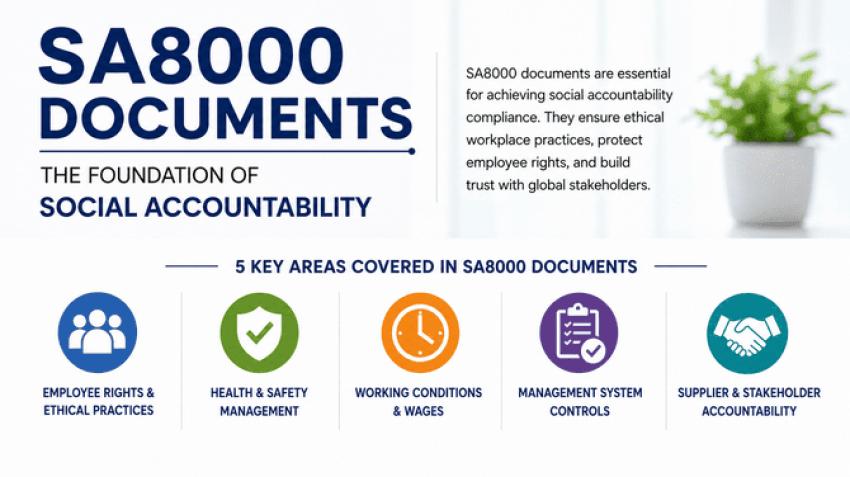
Understanding the required SA8000 documents is essential for organizations aiming to achieve social accountability compliance. These documents form the backbone of the SA8000 management system and help ensure ethical workplace practices, legal compliance, and structured implementation of social responsibility standards.
Many organizations face challenges during certification due to incomplete or unstructured documentation systems. A properly organized set of SA8000 documentation ensures smooth implementation, better control over workforce processes, and long-term compliance with international social accountability requirements.
What Are SA8000 Documents?
SA8000 documents refer to a structured set of policies, procedures, manuals, and records that demonstrate compliance with social accountability requirements. These documents define how an organization manages employee rights, workplace safety, wages, working hours, and ethical labor practices.
They serve as documented evidence of compliance with SA8000 standards and ensure that all systems are consistently implemented across departments. Without proper documentation, organizations cannot effectively demonstrate compliance during verification or internal review processes.
Organizations looking for ready-to-use templates and structured formats can refer to professional solutions for SA8000:2026 documents that simplify implementation and compliance management.
List of SA8000 Documents Required for Compliance
To achieve SA8000 compliance, organizations must maintain structured documentation across all key areas. Below are the essential documents:
- SA8000 Social Accountability Manual
- Human Rights and Workplace Policies
- Employee Age Verification Records
- Working Hours and Attendance Records
- Wage and Salary Documentation
- Health and Safety Procedures
- Training Records and Awareness Programs
- Internal Audit Reports
- Corrective and Preventive Action Records
- Supplier and Subcontractor Compliance Documents
- Grievance Handling Procedure
- Management Review Records
These documents ensure that all aspects of social accountability are properly implemented and continuously monitored within the organization.
Why SA8000 Documentation Is Important
Proper SA8000 documentation helps organizations:
- Demonstrate compliance with international labor standards
- Improve transparency in workforce management
- Reduce risks related to labor violations
- Build trust with global clients and stakeholders
- Ensure consistent implementation of ethical practices
Without structured documentation, organizations may face gaps in compliance, leading to delays in certification and operational inefficiencies.
Key Areas Covered in SA8000 Documents
SA8000 documentation is typically structured around major compliance areas such as:
Employee Rights and Ethical Practices
Documents ensure fair treatment, non-discrimination, and protection of employee rights.
Health and Safety Management
Workplace safety procedures and emergency protocols are clearly documented.
Working Conditions and Wages
Records maintain transparency in salary structure, working hours, and benefits.
Management System Controls
Procedures define responsibilities, internal audits, and continuous improvement processes.
Benefits of Using Ready-Made SA8000 Documents
Organizations often prefer ready-to-use documentation kits because they:
- Save time in preparation
- Ensure compliance with SA8000 standards
- Reduce documentation errors
- Provide structured implementation support
- Help faster certification readiness
Using professionally designed templates improves consistency and helps organizations meet certification requirements efficiently.
Organizations aiming for faster approval and end-to-end implementation support can also strengthen their process with expert guidance on SA8000 certification, ensuring smoother compliance and audit readiness.
Challenges in SA8000 Documentation Management
Managing SA8000 documents can be challenging due to lack of a structured system and inconsistent formats across departments. This often leads to confusion in maintaining key records like HR files, wages, and training documents.
Another issue is failure to update documents regularly, which can create compliance gaps. Poor organization and storage also make retrieval difficult during reviews.
These challenges can be reduced by using standardized formats, proper document control, and regular updates to ensure accurate, consistent, and effective SA8000 documentation for long-term compliance.
Conclusion
SA8000 documents are a critical part of achieving and maintaining social accountability compliance. They provide the structure needed to implement ethical workplace practices and ensure compliance with international labor standards.
Organizations that maintain proper documentation not only achieve certification faster but also build stronger credibility in global markets.