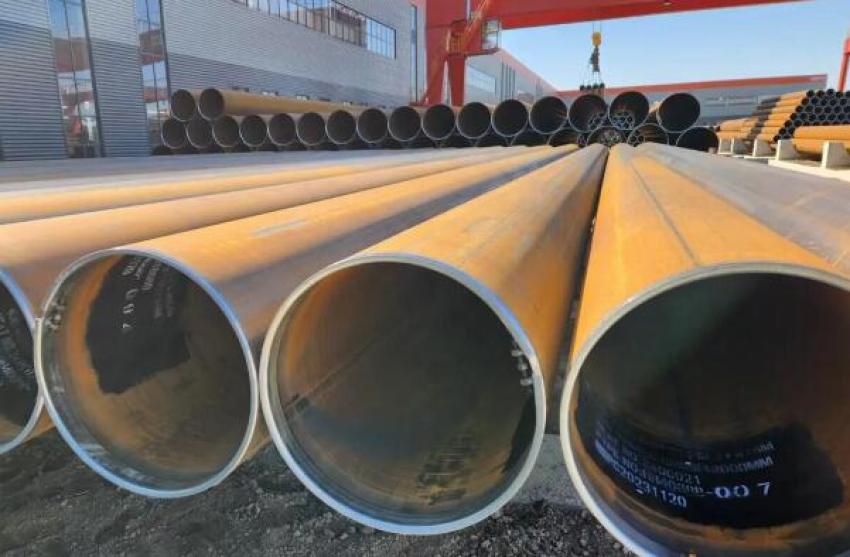
Carbon steel pipes are the most widely used and cost-effective basic pipe material in the pipeline industry, extensively used in industrial fluids, steel structures, machinery, municipal engineering, and other fields. However, rusting is an unavoidable natural problem for carbon steel pipes.
Many industry professionals are puzzled by why brand-new carbon steel pipes yellow and rust after short-term storage, corrode and peel after construction, and experience thinning and leakage after one year of use, seriously affecting project quality and equipment lifespan. Most people only know that carbon steel is prone to rust, but they don't understand the underlying principles of rusting, the rusting patterns in different environments, or proper rust prevention processes. This leads to inadequate rust prevention measures, frequent rework, and high maintenance costs. This article provides a comprehensive explanation of the principles, causes, treatment processes, and long-term rust prevention solutions to help professionals completely solve the problem of carbon steel pipe rusting, adapting to rust prevention needs in warehousing, construction, and operation and maintenance scenarios.
1. First, understand the core underlying principles of carbon steel pipe rusting to understand the corrosion problem at its root.
Carbon steel pipes are primarily composed of iron and carbon, containing no rust-preventing alloying elements. Iron is chemically reactive and readily undergoes electrochemical corrosion in environments with oxygen, water, and electrolytes. Moisture in the air adheres to the pipe surface, forming a very thin water film. This film, combined with oxygen, dust, and carbon dioxide, creates a complete micro-battery circuit. The base metal of the steel pipe is continuously oxidized, generating rust products such as ferric hydroxide and ferric oxide—the commonly seen yellow and red rust. Unlike stainless steel, which has a built-in passivation protective film, the rust products of carbon steel pipes are loose and porous, unable to cover the pipe wall to form a protective layer. Instead, they absorb more moisture and impurities, allowing corrosion to penetrate deeper. This progresses from surface rust to layer corrosion, pitting corrosion, and wall thinning, ultimately leading to perforation, leakage, and pipe bursting.
2. Based on industry scenarios, this paper identifies four core causes of carbon steel pipe rusting, enabling precise avoidance of high-risk rust scenarios.
First, humid environments, such as open-air storage, basements, waterfront projects, and rainy season construction sites, create high humidity levels and continuous condensation on the steel pipe surface, making them the fastest and most severe environments for rusting.
Second, temperature fluctuations cause condensation. Large diurnal temperature variations and alternating warm and cold environments easily lead to condensation on the steel pipe surface. Repeated drying cycles accelerate rust spread.
Third, contaminating media, such as dust, acid and alkali fumes, soil salts, and industrial exhaust gases at construction sites, adhere to the pipe walls, forming electrolytes that accelerate electrochemical corrosion.
Fourth, inadequate storage protection. New pipes are often stored uncovered and without padding after delivery, directly exposed to ground moisture, resulting in widespread yellowing and rusting within a short period.
Many construction sites neglect early protection. What appears to be minor surface rust has already caused irreversible damage to the pipe wall, significantly reducing the pipeline's lifespan.
3. For all stages of steel pipe installation—from arrival, storage, construction, to completion—we offer detailed, standardized short-term rust prevention processes to meet temporary protection needs.
Short-term rust prevention primarily targets pipe storage and protection during construction breaks, with a duration of several months. It's suitable for pipes stored indoors in dry conditions and for short-term turnover.
The first method is oil coating for rust prevention, a standard process from steel mills. New seamless pipes and carbon steel pipes are coated with a layer of rust-preventive oil at the factory to isolate them from air and moisture. This is suitable for pipe storage and turnover, with a protection period of 3-6 months. The disadvantage is that degreasing and cleaning are required before application; otherwise, welding and coating adhesion will be affected.
The second method is simple spray painting protection, using a thin layer of ordinary rust-preventive primer. This is suitable for short-term outdoor storage of pipes, is low-cost, quick to apply, and effectively prevents surface rust. However, it has poor wear resistance and weather resistance, making it unsuitable for long-term outdoor use.
The third method is covering protection. When stacking pipes, wooden blocks or boards are placed at the bottom to isolate them from ground moisture, and a waterproof and rainproof tarpaulin is used to prevent direct rainwater runoff. This is a zero-cost, most efficient basic rust prevention method, and also a basic operation that is often overlooked on construction sites.
4. The focus is on explaining the commonly used long-term rust prevention treatment process, which is also the standard anti-corrosion construction solution for industrial pipelines, municipal engineering, and pressure pipelines, achieving 5-10 years of long-term rust prevention.
Standard carbon steel pipe anti-corrosion construction consists of four standard procedures, none of which can be omitted.
The first step is surface pretreatment, thoroughly removing rust and impurities. Through methods such as sandblasting, shot blasting, and manual grinding, oxide scale, loose rust, oil, and dust are removed from the pipe wall, exposing the pure metal substrate and improving coating adhesion. This is crucial for good rust prevention; incomplete rust removal will lead to later coating peeling, flaking, and anti-corrosion failure.
The second step is primer coating. Epoxy zinc-rich primer and anti-rust primer are used, evenly applied to the pipe wall. The primer has extremely strong adhesion and rust-preventive properties, firmly adhering to the metal substrate and blocking the penetration of corrosive media.
The third step is intermediate coating, using epoxy micaceous iron oxide intermediate paint to increase coating thickness, strengthen anti-corrosion shielding performance, resist aging and penetration, and improve the overall stability of the anti-corrosion system.
The fourth step is topcoat application, using acrylic or epoxy topcoat to achieve weather resistance, wear resistance, and waterproof protection, while also adapting to the color requirements of the project.
5. Detailed explanation of specialized heavy-duty anti-corrosion processes for buried pipelines and harsh outdoor conditions.
Buried carbon steel pipes are in constant contact with damp soil, groundwater, and soil electrolytes, resulting in corrosion rates several times faster than in air. Ordinary spray painting is completely insufficient; specialized anti-corrosion processes are necessary.
The industry mainstream solution is a three-coat, two-fiber cloth anti-corrosion process, which involves three layers of anti-corrosion asphalt paint and two layers of fiberglass cloth alternately wrapped, layer by layer, and cured as a whole to form a high-strength, highly airtight anti-corrosion protective layer that is waterproof, seepage-proof, and resistant to soil corrosion, suitable for municipal buried water, oil, and gas carbon steel pipelines. For high-end, demanding operating conditions, epoxy coal tar pitch anti-corrosion and 3PE anti-corrosion processes can be used. 3PE anti-corrosion, with its three-layer polyethylene composite protective structure, boasts extremely strong corrosion resistance, weather resistance, and extrusion resistance, making it a top-tier rust prevention solution for long-distance buried carbon steel pipelines, with a service life exceeding 20 years.
6. Addressing common industry misconceptions about rust prevention to avoid ineffective protection and rework waste.
First, simply painting without rust removal leaves residual rust and oxide scale on the pipe wall, resulting in weak coating adhesion, peeling off quickly, and complete failure of the anti-corrosion effect.
Second, using inferior anti-corrosion paint: cheap paint has poor adhesion and weak corrosion resistance, seemingly providing protection but only treating the symptoms, not the root cause.
Third, neglecting pipe ends and weld seams: only spraying the pipe body leaves weld seams and pipe openings untreated, creating entry points for corrosion, allowing localized rust to spread throughout the entire pipe.
Fourth, substituting short-term protection for long-term corrosion prevention: directly deploying pipes with temporary oiling or simple spraying in permanent outdoor or buried conditions leads to severe corrosion and eventual scrapping.