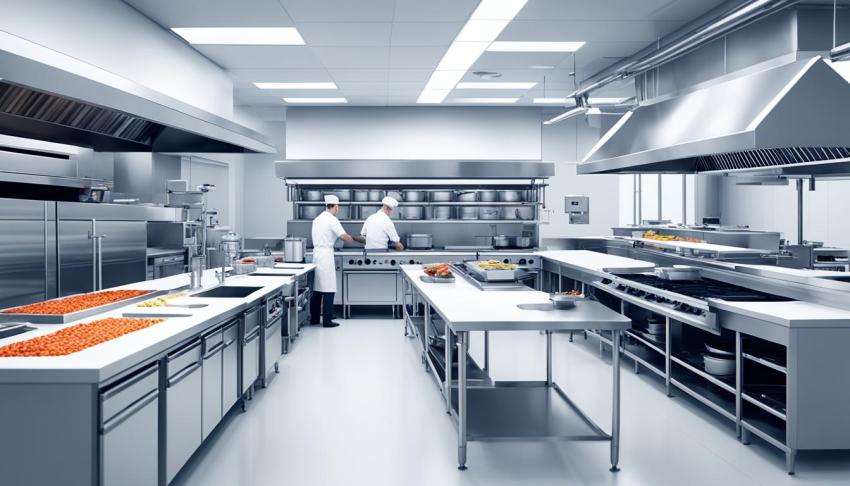
In Australia’s hospitality and foodservice sector, kitchen layout directly impacts operational efficiency, labour movement, and service consistency. Every square metre of preparation space influences how effectively staff can handle food preparation, plating, storage access, and cleaning procedures during peak service periods.
Commercial kitchens in cafés, bakeries, restaurants, pubs, catering facilities, and food trucks often operate within limited floor plans where poor equipment sizing creates workflow obstructions, safety risks, and unnecessary labour delays. Selecting the correct equipment dimensions is therefore a key factor in commercial kitchen design and long-term operational performance.
Key Takeaways
Measure total clearance space, including walkways, refrigeration doors, and swing areas
Match workbench size to food preparation volume and kitchen workflow
Prioritise ergonomic bench heights to support Australian OHS (Occupational Health and Safety) requirements
Choose reinforced stainless steel frames and industrial castors rated for commercial loads
Plan for future menu expansion and increased preparation requirements
What Are the Standard Sizes for Commercial Mobile Workbenches?
Commercial mobile workstations are manufactured in multiple widths and depths to suit different hospitality environments. Bench dimensions determine preparation capacity, storage integration, and manoeuvrability.
Smaller units are commonly used in kiosks, coffee shops, and food trucks, while larger models are used for bulk preparation in restaurants, hotels, and catering facilities.
Common Commercial Mobile Workbench Sizes
Workbench Size
Suitable Businesses
Typical Use
600mm x 600mm
Cafés, kiosks, food trucks
Light preparation tasks
900mm x 600mm
Small restaurants, bakeries
General food prep
1200mm x 700mm
Medium commercial kitchens
Multi-purpose workstation
1500mm x 700mm
High-volume kitchens
Bulk ingredient preparation
1800mm+ x 700mm
Catering facilities, hotels
Large-scale food production
The ideal dimensions depend on floor space, menu complexity, staffing levels, and preparation volume.
How Do I Measure My Kitchen for a Mobile Workbench?
Operators must evaluate the total available floor space before selecting a portable workstation. Measurements should include preparation zones, equipment clearance, refrigeration access, and required walkway spacing. Businesses should also calculate door swing clearance, corner turning areas, and access pathways between cooking equipment. This step-by-step measuring process helps prevent overcrowding and supports compliance with AS 4674-2004 food premises design standards.
In smaller Australian kitchens, oversized benches reduce operational movement efficiency and increase workplace hazards. Compact or modular workstations often offer greater flexibility in cafés, takeaway stores, and food trucks where space is limited. Staff movement patterns should also be evaluated separately from room measurements. The bench must support uninterrupted movement between cooking stations, refrigeration, plating areas, and dishwashing zones.
What Size Workbench Fits My Food Service Business Type?
Every hospitality operation has different production requirements. The correct bench dimensions depend on service volume, menu structure, and preparation workflow.
A small café preparing sandwiches and beverages requires less preparation space than a Brisbane takeaway kitchen producing high-volume fried-food orders or a bakery handling 20 kg+ dough batches.
Workbench Size Based on Workflow Requirements
Kitchen Type
Recommended Size
Main Operational Requirement
Coffee Shop
Compact
Limited preparation area
Bakery
Medium to large
Dough handling and tray storage
Restaurant
Medium
Flexible food preparation
Catering Business
Large
Bulk ingredient preparation
Food Truck
Compact and mobile
Space optimisation
Matching preparation capacity to kitchen output improves productivity, consistency, and operational continuity.
Why Does Bench Depth Matter?
Workbench depth directly affects usable preparation space and movement efficiency. Shallower benches improve accessibility in narrow kitchens, while deeper surfaces support trays, ingredient containers, and countertop equipment. In most Australian hospitality environments, a depth of 600mm to 700mm provides a balanced combination of workspace and manoeuvrability.
Companies managing large prep trays or multiple item boxes benefit from enhances depth during high-volume manufacture periods. However, excessive bench depth reduces accessibility and limits movement efficiency in confined kitchens.
How Does Bench Height Affect Staff Ergonomics?
Workbench height significantly impacts staff comfort, posture, and workplace safety. Ergonomics refers to the design of equipment that supports safe and efficient staff movement while reducing physical strain. Australian hospitality businesses increasingly align workstation selection with OHS workplace safety standards to minimise fatigue and repetitive strain injuries.
Standard Workbench Height Recommendations
Work Type
Recommended Height
General food preparation
850mm–900mm
Detailed preparation tasks
900mm–950mm
Heavy equipment handling
800mm–850mm
Correct bench height improves posture, reduces shoulder strain, and supports productivity during extended shifts.
How Much Storage Should a Mobile Workbench Include?
Storage requirements strongly influence overall workbench size selection. Many rolling preparation stations include undershelves, enclosed cabinets, adjustable shelving, or tray slide systems that improve kitchen organisation without increasing floor space requirements.
Storage Features and Their Operational Benefits
Storage Feature
Operational Benefit
Undershelves
Additional storage within the existing footprint
Enclosed cabinets
Improved hygiene and organisation
Adjustable shelving
Flexible equipment storage
Tray slides
Faster bakery and catering access
Integrated storage systems help maximise vertical space and reduce clutter within compact hospitality kitchens.
What Is the Difference Between Fixed and Mobile Workbenches?
Fixed vs Mobile Workbench Comparison
Feature
Fixed Workbench
Mobile Workbench
Flexibility
Permanent position
Easily repositioned
Cleaning access
Restricted underneath
Improved floor access
Workspace adaptability
Limited
High
Best suited for
Static preparation zones
Multi-use kitchens
Mobile workstations offer greater kitchen agility for businesses managing changing service requirements throughout the day.
How Important Are Castors and Manoeuvrability?
Large preparation benches offer more workspace but can be difficult to reposition if mobility components are poorly designed. Industrial castors are heavy-duty wheels designed for moving commercial equipment. High-capacity castors with diameters around 125mm generally provide smoother manoeuvrability across tiled kitchen surfaces.
Bench mobility and wheel quality should be evaluated separately. Even mid-sized workstations become difficult to control if castors lack load support or locking stability. Many commercial units are now rated for equipment loads exceeding 250kg to safely support countertop appliances and bulk ingredients.
How Can Businesses Plan for Future Growth?
Many hospitality operators purchase equipment based only on current production requirements. However, menu expansion, delivery services, and enhanced user volume often generate additional creation demands over time.
Selecting slightly larger or modular portable workstations improves long-term adaptability and reduces the likelihood of premature equipment replacement. Restaurants expanding into catering or high-volume takeaway operations particularly benefit from scalable workspace solutions.
Why Does Material and Build Quality Matter?
Commercial mobile workbenches must withstand constant cleaning, exposure to moisture, food handling, and equipment loads.
304-grade stainless steel is commonly used in Australian hospitality environments because it provides strong corrosion resistance, hygiene performance, and long-term durability. Reinforced frames are particularly important for kitchens supporting mixers, slicers, or countertop cooking equipment.
Maintenance FAQ
Maintenance Task
Recommended Action
Stainless steel cleaning
Use non-abrasive food-safe cleaners.
Castor maintenance
Lubricate wheel bearings regularly
Frame inspection
Check weld stability and wheel locks.
Shelf cleaning
Remove debris to maintain hygiene.
Choosing the correct mobile workbench dimensions improves workspace efficiency, staff movement, preparation capacity, and long-term kitchen flexibility. Australian hospitality businesses benefit from balancing floor space, ergonomic design, storage integration, and manoeuvrability when selecting a rolling stainless steel workstation.
Whether operating a compact Melbourne café, a Brisbane takeaway kitchen, or a large Sydney catering facility, properly sized mobile workstations support safer workflows, better organisation, and more adaptable commercial kitchen environments.