What Design Exams Actually Test
Design entrance exams in India are not focused on artistic perfection. Instead, they evaluate how you think and express ideas visually.
Key Skills Evaluated:
- Creativity and originality
- Observation and visual awareness
- Problem-solving ability
- Conceptual thinking
- Communication through visuals
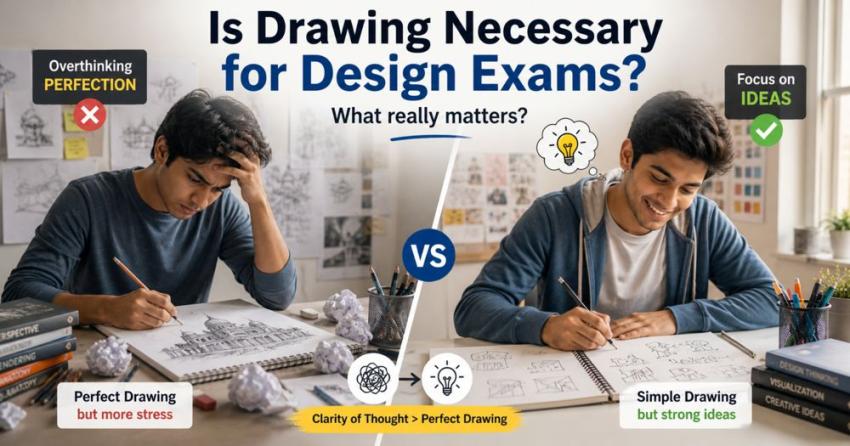
This means even if your drawing is not perfect, you can still perform well if your ideas are strong and clearly expressed.
If you’re preparing for entrance exams like NID, NIFT, or CEED, one of the most common questions is whether drawing skills are mandatory to succeed. The simple answer is no—but understanding the full picture is important for your preparation strategy.
Design entrance exams in India are not built around artistic perfection. Instead, they are designed to evaluate how you think, observe, and communicate ideas visually. These exams focus more on creativity, problem-solving, and conceptual clarity rather than fine art skills. This means that even if your drawing is not perfect, you can still perform well as long as your ideas are strong and clearly expressed.
Drawing does play a role, but it acts as a tool rather than the final goal. In exams like NID, you may be asked to sketch concepts, create storyboards, or visually represent ideas within a limited time. Similarly, NIFT includes creative sections where basic drawing helps in presenting your ideas effectively. CEED also involves sketching, but it emphasizes analytical thinking and design aptitude more than advanced illustration skills. Across all these exams, clarity of thought matters more than how polished your drawings look.
What you really need is the ability to communicate visually using simple sketches. Basic skills like drawing shapes, understanding proportions, and representing objects quickly are enough. The goal is not to create beautiful artwork, but to express your thinking in a way that evaluators can understand. A rough but clear sketch with a strong idea often performs better than a detailed drawing with no clear concept.
Many students make the mistake of spending too much time trying to perfect their drawing skills while ignoring creativity and design thinking. This can actually slow down their progress. Design exams reward originality and problem-solving ability, not just technical drawing.
The good news is that drawing can be improved with consistent practice. Simple exercises like sketching everyday objects, practicing quick drawings, and observing real-life scenes can make a big difference over time.
In the end, drawing is helpful but not mandatory. If your ideas are strong, even basic sketches can help you stand out. Focus first on becoming a creative thinker, and your drawing skills will naturally improve along the way.