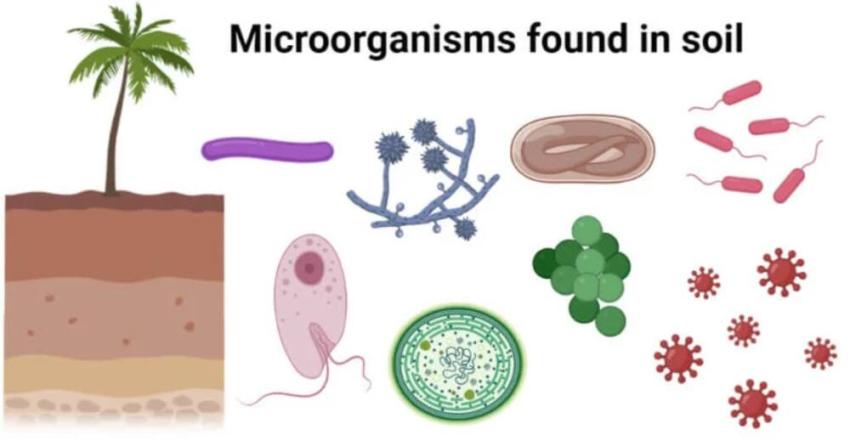
Soil is more than just a growing medium. It is a living ecosystem filled with billions of microorganisms that play a crucial role in agricultural productivity. These microscopic organisms, including bacteria, fungi, protozoa, and algae, form a complex web of interactions that directly influence plant health, soil fertility, and crop yields. Understanding how soil microorganisms work can help farmers and growers improve their practices in practical and sustainable ways.
The Role of Soil Microorganisms
Soil microorganisms are essential for breaking down organic matter. When plant residues, animal waste, or compost are added to the soil, microbes begin decomposing these materials. This process releases nutrients such as nitrogen, phosphorus, and potassium in forms that plants can absorb.
Certain bacteria, like nitrogen-fixing bacteria, have a unique ability to convert atmospheric nitrogen into usable forms for plants. This is especially important because nitrogen is one of the key nutrients required for plant growth. Without these microbes, plants would struggle to access enough nitrogen naturally.
Fungi also play a major role, particularly mycorrhizal fungi. These fungi form symbiotic relationships with plant roots. They extend the root system through fine filaments, helping plants absorb water and nutrients more efficiently, especially phosphorus. In return, the plant provides the fungi with sugars produced through photosynthesis.
Effects on Soil Health
Healthy microbial activity improves soil structure. Microorganisms produce substances that bind soil particles together, forming stable aggregates. This improves soil aeration, water retention, and root penetration. As a result, plants can grow stronger and become more resilient to stress.
Microbial diversity is another key factor. A diverse microbial population helps suppress soil-borne diseases. Some beneficial microbes compete with harmful pathogens, while others produce natural antibiotics that protect plant roots.
In contrast, soils with low microbial activity often become compacted, less fertile, and more prone to erosion. This is commonly seen in areas where excessive chemical inputs or poor land management practices disrupt the natural balance of the soil ecosystem.
Practical Examples in Agriculture
Farmers around the world are already applying knowledge about soil microorganisms to improve productivity and sustainability.
One common example is the use of compost. Compost is rich in beneficial microbes and organic matter. When added to soil, it boosts microbial activity and enhances nutrient availability. For instance, vegetable farmers often apply compost before planting to improve soil fertility and structure.
Another practical approach is crop rotation. Different crops support different types of microorganisms. By rotating crops, farmers encourage microbial diversity and reduce the buildup of harmful pathogens. For example, alternating legumes with cereals can naturally improve nitrogen levels in the soil due to the presence of nitrogen-fixing bacteria in legume root nodules.
Cover cropping is also widely used. Plants like clover or rye are grown during off-seasons to protect the soil. These cover crops feed soil microbes through their root exudates, which are organic compounds released into the soil. This continuous food source helps maintain active microbial populations even when main crops are not being grown.
Biofertilizers provide another clear example. These products contain live microorganisms that enhance nutrient availability. For instance, farmers may apply rhizobium inoculants to legume seeds to ensure effective nitrogen fixation. Similarly, phosphate-solubilizing bacteria can be added to improve phosphorus uptake.
Reducing Chemical Dependence
One of the biggest advantages of supporting soil microorganisms is the potential to reduce reliance on chemical fertilizers and pesticides. Healthy microbial systems naturally supply nutrients and protect plants from diseases. This not only lowers production costs but also reduces environmental impact.
For example, integrated pest management (IPM) often includes the use of beneficial microbes to control pests and diseases. Certain bacteria and fungi can act as biological control agents, targeting harmful organisms without damaging crops or beneficial insects.
Challenges and Considerations
While the benefits are clear, managing soil microorganisms requires careful attention. Factors such as soil pH, moisture, temperature, and organic matter levels all influence microbial activity. Overuse of synthetic chemicals can harm beneficial microbes, while poor irrigation practices can limit their effectiveness.
Farmers need to adopt balanced practices. This includes minimizing soil disturbance through reduced tillage, maintaining organic inputs, and avoiding excessive chemical use. Regular soil testing can also help monitor microbial health and guide better decision-making.
Conclusion
Soil microorganisms are the unseen workforce behind successful agriculture. They drive nutrient cycling, improve soil structure, and protect plants from disease. By understanding their roles and applying practical methods such as composting, crop rotation, cover cropping, and biofertilizer use, farmers can harness their full potential.
In the long run, investing in soil microbial health leads to more sustainable and productive farming systems. It is not just about growing crops but about nurturing the living soil that makes agriculture possible.
Article about " Soil Microorganisms in Agriculture: Effects and Practical Examples " publish by: https://belirangkalisari.id