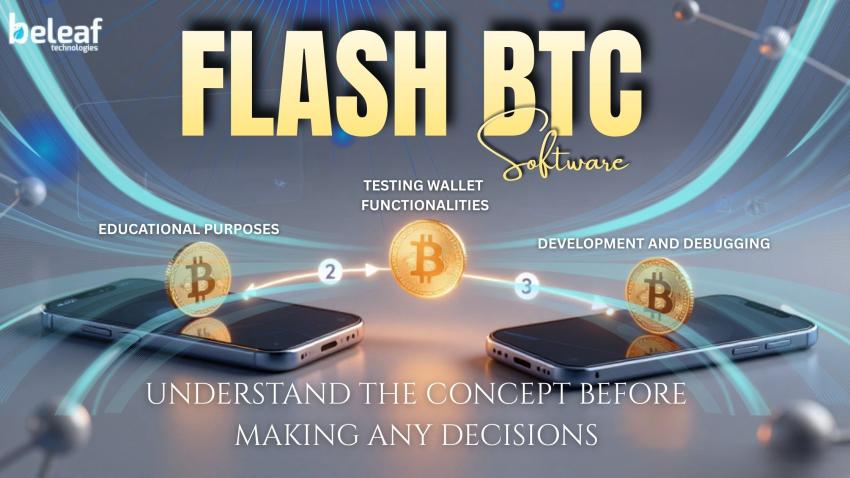
Flash BTC software often comes up when people try to understand how Bitcoin transactions really work before making any decisions. It usually begins with a simple moment when someone is curious, opening a wallet, thinking about sending their first transaction, and then pausing. What if something goes wrong? What actually happens behind the scenes? That mix of curiosity and caution is natural. Many learners don’t lack interest; they just want clarity before they move forward. That’s where learning step by step makes a real difference.
Why Understanding Comes Before Decisions
In blockchain, taking action without understanding can lead to confusion. Bitcoin transactions may look simple, but they involve multiple steps like creation, broadcasting, verification, and confirmation. Without clarity, it’s easy to misread what is happening. Learning first helps build confidence and reduces mistakes. It also helps people think more clearly before interacting with real systems. A strong understanding creates a solid base for everything that comes next.
Breaking Down the Concept in Simple Terms
At its core, a Bitcoin transaction is sending value from one wallet to another. But behind that action, the system checks data, validates inputs, and ensures everything follows network rules. For beginners, this can feel complex when explained only in theory. That is why transaction simulation becomes useful. It allows learners to observe each stage step by step. Over time, these small observations turn into a clear understanding of how the system works.
Learning Through a Safe Testing Environment
One of the best ways to learn is by practicing in a safe space. A testing environment allows learners to explore without the fear of losing real assets. Flash BTC software is often discussed in this context, where simulation of real Bitcoin transfers helps show how systems behave. This risk-free environment gives learners the freedom to try, fail, and learn again. It also encourages curiosity, which is important for deeper understanding.
Testing Wallet Functionalities for Real Understanding
A wallet is the main point of interaction in any blockchain system. Testing wallet functionalities helps learners understand how sending, receiving, and balance updates work. Through repeated actions, users begin to notice patterns in wallet interaction. They understand how the system responds to different inputs. This kind of practice builds confidence and prepares learners for real-world usage. It also improves their ability to handle simple issues on their own.
Demonstrating Crypto Transfers for Better Clarity
Sometimes, reading is not enough to understand a concept. Demonstrating crypto transfers makes learning more practical. When a simulated transaction is performed, learners can follow the entire process visually. They can see how the transaction is created, how it moves, and how it appears in the system. This approach supports educational purposes by making abstract ideas more real. It also helps learners remember the process more easily.
Supporting Development and Debugging
As learners move forward, they often become interested in building their own applications. At this stage, development and debugging become important. Simulation tools allow developers to test their systems and find issues early. They can try different scenarios and improve how their applications behave. This leads to faster development and more reliable systems. It also helps in creating applications that are ready for real-world use.
Understanding Temporary Transaction States
Another important concept is temporary transaction visibility. Sometimes, a transaction appears in a wallet before it is fully confirmed. This temporary state helps learners understand how pending transactions behave. It shows how systems handle unconfirmed data and how users see it in real time. By observing this stage, learners gain a deeper understanding of how blockchain systems manage information. This knowledge becomes useful when analyzing real transactions later.
Cost-Effective Learning and Better Systems
Learning blockchain does not have to be expensive. A controlled testing environment allows cost-effective testing where learners can practice without spending real money. This encourages experimentation and repeated practice. It also supports scalability, as systems can be tested under different levels of activity. Over time, this process leads to improved user experience. Applications become smoother, clearer, and easier to use because they have been tested properly.
Additional Learning Insights
A strong learning approach always starts simple, and Flash BTC Software can support this process by making concepts easier to explore. Instead of trying to understand everything at once, focusing on small steps like transaction simulation and observing system behavior makes a big difference. Using testing tools, educational software, demo platforms, and research tools helps learners build knowledge gradually. Each step adds clarity and reduces confusion. Over time, this consistent practice turns basic understanding into real confidence.