If you are building your house, you need to be associated with every major decision regarding it. From beginning to end, you must know what is going into the making of your house. Therefore, one of the most vital decisions that you will have to make is choosing the best cement for house construction. PPC cement or OPC cement?
Both PPC & OPC have their strong points, and in this blog, we will analyse, case by case, why and where one variety finds application, and the other does not. However, it is worth mentioning here that top cement companies in India, like MP Birla Cement, manufacture both PPC and OPC varieties, which you can choose from.
PPC Cement
According to expert opinion, Portland Pozzolana Cement (PPC) is made by combining cement clinker with fly ash. They make the concrete stronger. The concrete made from this cement is less prone to cracks.
PPC cement is less subject to wear and tear due to environmental conditions. The USP is that PPC becomes stronger with time and offers great performance in the long run.
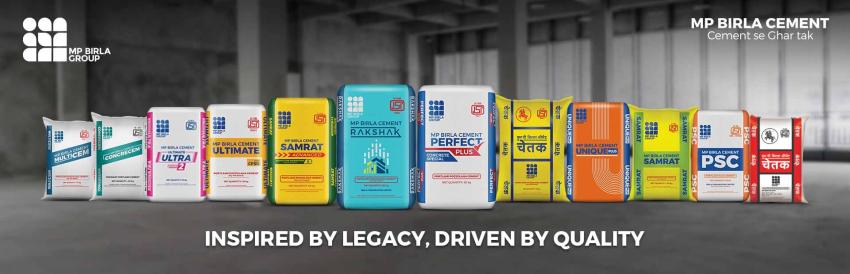
We have already spoken about MP Birla Cement in the introduction of this blog. Experts vouch for MP Birla Cement Perfect Plus, a PPC brand. They say Perfect Plus stands for high-quality and durability. It offers long-lasting strength and is absolutely perfect for concrete construction.
OPC Cement
Expert opinion suggests that the most commonly used cement is Ordinary Portland Cement (OPC). This cement is made by grinding clinker, gypsum, limestone, fly ash, or slag to a fine powder. OPC cement is ideal for constructions such as building foundations, bridges, roads, etc.
OPC cement comes in different grades: the OPC 43 and the OPC 53. Each grade denotes different strength characteristics.
MP Birla Cement Chetak is a high-grade OPC, made for strong performance and faster construction.
Key Differences between PPC Cement & OPC Cement
Let’s try to understand the differences between the two types of cements through their characteristics.
ppc cement, best cement for Construction, opc cement, top cement companies in India
PPC vs OPC Cement: Which is Better for House Construction?
If you are building your house, you need to be associated with every major decision regarding it. From beginning to end, you must know what is going into the making of your house. Therefore, one of the most vital decisions that you will have to make is choosing the best cement for house construction. PPC cement or OPC cement?
Both PPC & OPC have their strong points, and in this blog, we will analyse, case by case, why and where one variety finds application, and the other does not. However, it is worth mentioning here that top cement companies in India, like MP Birla Cement, manufacture both PPC and OPC varieties, which you can choose from.
PPC Cement
According to expert opinion, Portland Pozzolana Cement (PPC) is made by combining cement clinker with fly ash. They make the concrete stronger. The concrete made from this cement is less prone to cracks.
PPC cement is less subject to wear and tear due to environmental conditions. The USP is that PPC becomes stronger with time and offers great performance in the long run.
We have already spoken about MP Birla Cement in the introduction of this blog. Experts vouch for MP Birla Cement Perfect Plus, a PPC brand. They say Perfect Plus stands for high-quality and durability. It offers long-lasting strength and is absolutely perfect for concrete construction.
OPC Cement
Expert opinion suggests that the most commonly used cement is Ordinary Portland Cement (OPC). This cement is made by grinding clinker, gypsum, limestone, fly ash, or slag to a fine powder. OPC cement is ideal for constructions such as building foundations, bridges, roads, etc.
OPC cement comes in different grades: the OPC 43 and the OPC 53. Each grade denotes different strength characteristics.
MP Birla Cement Chetak is a high-grade OPC, made for strong performance and faster construction.
Key Differences between PPC Cement & OPC Cement
Let’s try to understand the differences between the two types of cements through their characteristics.
Strength Development
PPC cement develops strength gradually. But it can become even stronger in the long run, while OPC cement is used for initial strength. By that, we mean if you are looking to build in a hurry, it will be useful.
Durability
PPC cement is more durable. If your house construction site is in a moisture-ridden area or exposed to sulphate, this is the cement variety (MP Birla Cement Perfect Plus or MP Birla Cement Samrat) you should ask your contractor to use.
OPC is best suited for dry weather conditions, RCC (Reinforced Cement Concrete) work, and projects requiring quick load application.
OPC cement finds its best use where immediate setup and instant strength are required.
Heat of Hydration
Experts in the cement industry say that during the hydration process, PPC generates less heat compared to OPC. So, the disadvantage of using OPC is that, due to high heat generation, OPC can cause cracks in the concrete. It is safe to use PPC cement for mass concrete construction.
Value For Money
PPC provides better value for money as it requires less maintenance and is economical in the long run. PPC is also a better choice for plastering and finishing work. OPC, though, gives instant strength but is not good for finishing.
Which Cement is Better for House Construction?
In this blog, we have already discussed the relative merits/demerits of the two types of cement. People often get confused about which cement to use for their house construction - PPC cement or OPC cement?
Ideally, you should use OPC when building columns, beams or load-bearing walls. If time is limited, and you want the concrete to develop faster, OPC cement should be your “Go-to” choice.
However, when it comes to house construction, you would want a smooth finish and fewer cracks. For that purpose, you should use PPC cement. It takes time to set in, but it provides durability in the long run.
As mentioned earlier as well, when there is a need to be resistant to moisture, based on environmental conditions, you should choose PPC cement like MP Birla Cement Perfect Plus.
Conclusion
For best results, you will have to use both PPC cement and OPC cement. The former is for the initial stages of constructing the house, like pillars and columns, and the latter is for the construction of slabs, plastering, and concrete work.
At the end of the day, it comes down to two very simple things - the toughness of PPC or the speed of OPC.
Now that you have gained an understanding of the two varieties, you will be better equipped to decide which one to choose and when, once you start building your house. It is important to rely only on brands like MP Birla Cement - one of the top cement companies in India - for the best of both varieties.
PPC cement develops strength gradually. But it can become even stronger in the long run, while OPC cement is used for initial strength. By that, we mean if you are looking to build in a hurry, it will be useful.
Durability
PPC cement is more durable. If your house construction site is in a moisture-ridden area or exposed to sulphate, this is the cement variety (MP Birla Cement Perfect Plus or MP Birla Cement Samrat) you should ask your contractor to use.
OPC is best suited for dry weather conditions, RCC (Reinforced Cement Concrete) work, and projects requiring quick load application.
OPC cement finds its best use where immediate setup and instant strength are required.
Heat of Hydration
Experts in the cement industry say that during the hydration process, PPC generates less heat compared to OPC. So, the disadvantage of using OPC is that, due to high heat generation, OPC can cause cracks in the concrete. It is safe to use PPC cement for mass concrete construction.
Value For Money
PPC provides better value for money as it requires less maintenance and is economical in the long run. PPC is also a better choice for plastering and finishing work. OPC, though, gives instant strength but is not good for finishing.
Which Cement is Better for House Construction?
In this blog, we have already discussed the relative merits/demerits of the two types of cement. People often get confused about which cement to use for their house construction - PPC cement or OPC cement?
Ideally, you should use OPC when building columns, beams or load-bearing walls. If time is limited, and you want the concrete to develop faster, OPC cement should be your “Go-to” choice.
However, when it comes to house construction, you would want a smooth finish and fewer cracks. For that purpose, you should use PPC cement. It takes time to set in, but it provides durability in the long run.
As mentioned earlier as well, when there is a need to be resistant to moisture, based on environmental conditions, you should choose PPC cement like MP Birla Cement Perfect Plus.
Conclusion
For best results, you will have to use both PPC cement and OPC cement. The former is for the initial stages of constructing the house, like pillars and columns, and the latter is for the construction of slabs, plastering, and concrete work.
At the end of the day, it comes down to two very simple things - the toughness of PPC or the speed of OPC.
Now that you have gained an understanding of the two varieties, you will be better equipped to decide which one to choose and when, once you start building your house. It is important to rely only on brands like MP Birla Cement - one of the top cement companies in India - for the best of both varieties.
PPC cement is better for overall house construction because it offers better durability, lower heat generation, smoother finish, and higher resistance to moisture and cracks over time. It is ideal for plastering, masonry, slab work, and long-term residential projects.
OPC cement is better for fast-strength construction where early setting and high initial strength are required, such as columns, beams, foundations, and RCC work. It is commonly used when speed and immediate load-bearing capacity are important.
FAQ's
Q. Can PPC cement be used for RCC work?
Yes, PPC cement can be used for RCC work in many residential projects, but some engineers prefer OPC for columns, beams, and slabs where early strength is required.
Q. Which cement gains strength faster?
OPC cement gains strength faster in the initial stage, making it ideal for quick construction and early load application.
Q. Which cement is more durable?
PPC cement is usually more durable in the long run because it has better resistance to moisture, chemicals, and environmental wear.
Q. Which cement is better for plastering?
PPC cement is often preferred for plastering because it provides a smoother finish and better workability.
Q. Does OPC cement crack more than PPC?
OPC generates more heat during hydration, which can increase the risk of shrinkage cracks if curing is poor. PPC generally performs better against cracks.
Q. Which cement is better in rainy or coastal areas?
PPC cement is usually the better choice in moisture-prone, humid, or coastal areas due to its improved resistance to water and sulphates.
Q. Is PPC cement cheaper than OPC?
Prices vary by brand and region, but PPC often provides better long-term value because of lower maintenance and higher durability.
Q. Can I use both PPC and OPC in one house?
Yes. Many builders use OPC for structural components like columns and beams, and PPC for masonry, plastering, and general concrete work.
Q. Which cement brand is best in India?
The best cement brand depends on your project needs, location, quality standards, and engineer recommendations. Always choose a trusted and certified manufacturer.