The gaming landscape has long since moved past the clichéd notion of a teenager in a dark basement. Esports is a global behemoth in the year 2026. It is a multi-million dollar industry that engages more audiences than any other traditional sports. For businesses, this isn’t a trend to just watch. It is a massive commercial frontier.
However, how can you make the jump from outsider to stakeholder in this digital goldmine? The key is physical space: the Dedicated Esports Gaming Center.
By leveraging the turnkey expertise of industry pioneers like E-Blue Gaming, businesses across retail, hospitality, and education sectors are successfully anchoring themselves in this esports boom. Here is how your business can do the same.
The "E-Blue Effect": Why Physical Space Still Wins
One might ask: "If gaming happens online, why do we need a physical building?"
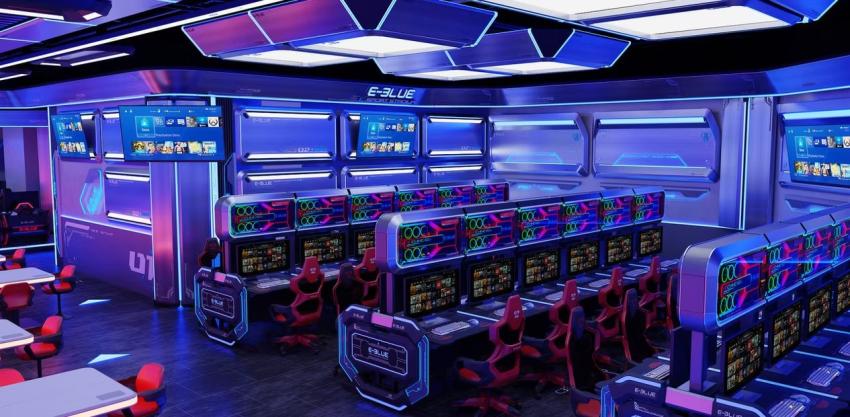
The answer is human connection. Much like football fans flock to stadiums, gamers crave community. Real-life observations from E-Blue’s 1,000+ global installations show that players spend 3x more time and money in environments that offer an "immersive" experience they can't replicate at home. This is the "E-Blue Effect"—a combination of futuristic RGB aesthetics, professional-grade ergonomics, and a high-energy social atmosphere.
1. Hospitality: From "Just a Bed" to a Gaming Destination
Hotels are no longer just places to sleep; they are lifestyle hubs. We’ve seen traditional hotels transform stagnant occupancy rates by converting a single floor into Esports Hotel Suites.
Imagine a guest checking in and finding a dual-station "Battle Ground" setup in their room, featuring E-Blue’s signature Scion32 all-in-one rigs and RGB-integrated furniture. These rooms don't just sell for a premium; they drive massive secondary revenue through in-room dining and extended "staycation" bookings from local gamers.
2. Retail & Malls: The New Anchor Tenant
With the rise of e-commerce, shopping malls are desperate for "experience-led" foot traffic. This jewel of an esports arena acts as a potent anchor tenant. A cinema is passive; an esports gaming center is interactive. It attracts a young, digitally adept demographic that lingers for hours, between online gaming and offline retail spending.
Navigating the "Turnkey" Path to Profit
For most companies, the biggest hurdle is the technical complexity. Constructing an esports gaming center demands specialized power requirements, high-speed networking features, and ergonomic furniture that can survive continuous use.
This is where the E-Blue’s Esports Gaming Center model changes the game. They don't just sell chairs; they provide a complete ecosystem:
● Design & Layout: Businesses provide their floor plan, and E-Blue’s designers create a 3D rendering that optimizes flow, sightlines for spectators, and "wow-factor" RGB zones.
● Modular Construction: Most of E-Blue's decor and furniture is modular and pre-installed during production. That allows a project that ordinarily would take a full year to build to be “unboxed” and running within four months.
● Brand Synergy: Your center serves as an extension of your brand — from custom logos on the furniture to specific color palettes that reflect your corporate identity.
Real-World Insights: Observations from the Field
In our experience consulting with businesses looking to enter this space, three specific "wins" consistently emerge:
1. The "Tribal" Loyalty Factor
Businesses that host weekly "community nights" or local tournaments see a surge in customer lifetime value. In Saudi Arabia, Gamma Games partnered with E-Blue Gaming to create a flagship center. The result? They didn't just get customers; they built a "home base" for local teams. This consistent, recurring revenue is the holy grail of the leisure industry.
2. The Multi-Generational Appeal
We’ve observed that well-designed esports gaming centers attract more than just "pro" players. Parents are increasingly comfortable dropping their kids at a professional, supervised E-Blue Gaming arena rather than a traditional, dark internet cafe. The "clean, futuristic, and safe" vibe of an E-Blue Gaming setup appeals to the person holding the credit card just as much as the one holding the controller.
3. Secondary Revenue Streams
An esports gaming center is a platform for upselling.
● F&B: High-intensity gaming leads to high-intensity snacking. Integrated bars and cafes are high-margin additions.
● Sponsorships: Once you have the foot traffic, local hardware brands and energy drink companies will pay for "naming rights" or booth space within your center.
3 Steps to Get Your Project Off the Ground
If you’re ready to cash in on the esports boom, don't start from scratch. Follow this proven roadmap:
- Concentrate on the “Vibe”: The "cool factor" is your authentic currency in 2026. If your standard esports gaming center won't look good on TikTok or Instagram, it will not work for Gen Z — so invest in the RGB environment.
- Identify Your Type of Venue: "Esports Stadium" (spectator-driven), "Esports Hotels" (luxury/privacy), or "Gaming Lounges" (casual/social)?
- Join Hands With A Specialist: Channel a provider like E-Blue Gaming that offers premium gaming features. Their systems are pre-engineered for the specific stresses of a commercial gaming environment.
The Bottom Line
The esports boom isn't coming; it’s already here. For businesses, the risk is no longer "investing too early," but being left behind as competitors claim the local digital territory. By partnering with a global leader like E-Blue Gaming, you can bypass the "trial and error" phase and move straight to the grand opening.
Esports gaming centers offer businesses a one-of-a-kind cross between experiential marketing and commercial diversification. They are transforming physical environments ranging from malls to hospitality venues into lifestyle hubs.
For hospitality operators, commercial landlords, or retail brands, the esports boom serves as an irresistible invitation. This is the one that makes your venture a bright social center in the digital world.