No home improvement project can beat the magic of paintwork. Your home, both inside and out, becomes beautiful, where you can let your imagination run free. A weekend’s work, and any room will become brand-new.
But if you fail to factor in the mould effect, all those efforts and the money invested in painting will go to waste. If the walls are infested by mould, then beneath the surface and in cracks, water stains will quietly spread and ruin the paint job in no time.
That’s why experienced painters in Essendon focus on what’s happening beneath the surface. The real work? It’s rarely the final coat. It’s the prep. And if you’re in Essendon, any reputable crew worth their salt will inspect first and paint later. No shortcuts. No quick cover-ups.
Step 1 - Start at the Source
Professionals don’t play guessing games. They investigate.
Is there a leaking pipe behind the wall? A gap in the flashing? Poor airflow trapping moisture? Rising damp creeping upward? They trace the issue back to its root.
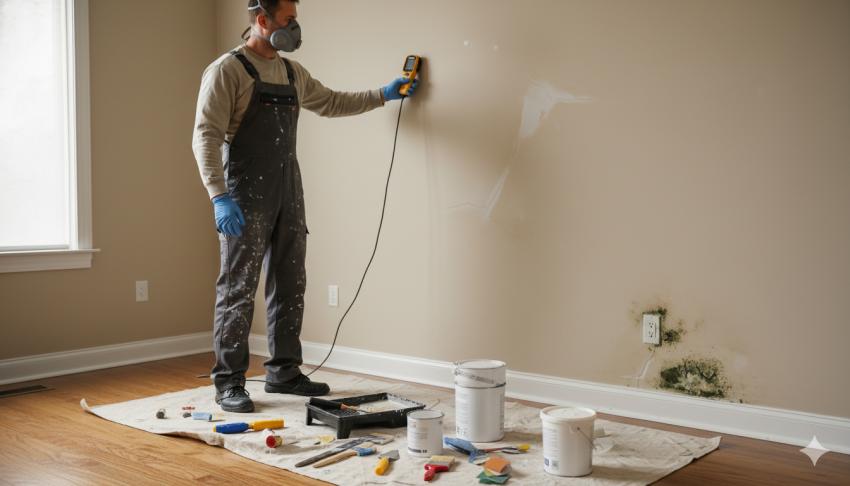
Moisture meters are often used early in the process. Walls can feel dry to the touch and still hold moisture deep inside. Proper drying can take days. And if the wall isn’t fully dry? Peeling, bubbling, and mould will come knocking again.
Step 2 - Dealing with Mould (Properly)
First things first, a small patch of mould doesn’t mean the entire wall is ruined. But you can’t ignore it either by just wiping it out and then ignoring it.
You have to address the root cause: the moisture problem. Once spotted, you need to safely remove mould. The affected area needs to be treated and contained properly to stop any potential spread.
And if the mould has spread further than it looks? That’s when professionals recommend remediation specialists. Because half-fixing mould is a recipe for round two. And nobody wants that.
Step 3 - Repairing Water Damage
Once everything is completely dry, the damaged materials are assessed.
Plasterboard that’s swollen or crumbling? It gets cut out. Rotten timber? Replaced. Insulation soaked through? Swapped out. Professionals don’t gamble with compromised surfaces. They remove what’s beyond saving and rebuild properly.
Step 4 - Cracks Aren’t Created Equal
Some cracks are harmless hairlines. Others tell a bigger story. The finer cracks are tricky ones to deal with. They need flexible fillers and a skim coat to deal with. Those cracks that are recurring or are wide require reinforcement, such as fibreglass tape or mesh.
But if you’re looking at large, stair-step cracks in brickwork or gaps that seem to be growing? That’s when painters step back and call-in structural experts. Better safe than sorry. The painter’s role is to stabilise and smooth the surface, not to patch over structural issues and hope for the best.
Step 5 - Choosing the Right Primer and Paint
Now comes the part most people notice. But it’s not just about colour. Professionals are thorough in their work and match primers to problems. For example, anti-mould options to deal with humid rooms, stain blockers for water-damaged areas, and acrylics for high-traffic walls.
Prevention Advice Professionals Always Share
Here’s the honest truth: most moisture problems are preventable.
Ventilation matters more than people realise. Bathroom exhaust fans. Kitchen rangehoods. Open windows when possible. Keep gutters clear and downpipes flowing freely. These small timely fixes can do wonders in preventing mould.
It’s the same advice interior painters in Essendon give homeowners who want their walls looking sharp for years, not months.
Final Thoughts:
A great paint job is mostly invisible effort, involving investigation, drying, repair, reinforcement, and priming. The colour is just the finishing touch.
Do it in the right order, and you’ll save yourself time, money, and more than a few headaches. Cut corners, and you’ll be chasing the same problems again before long.
If you’re comparing quotes, ask about preparation. That one question alone can separate a quick fix from a job that truly goes the distance.