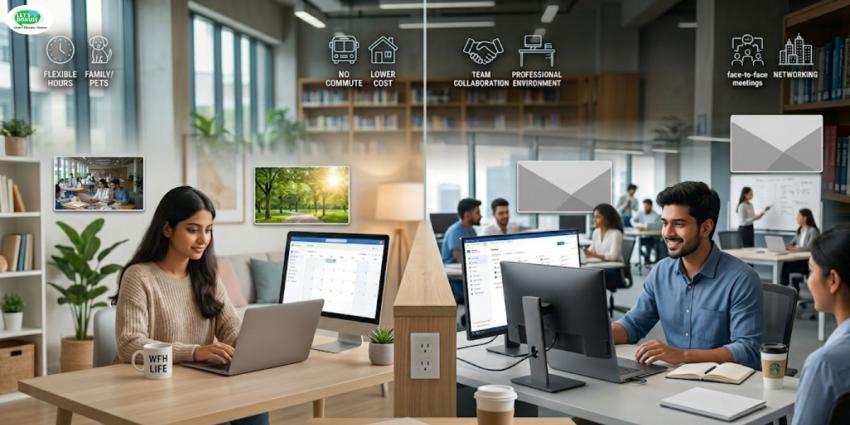
The debate around office work vs remote work is stronger than ever. Professionals today are not just searching for jobs — they are searching for flexibility, stability, productivity, and long-term growth. With the rapid expansion of work from home jobs and hybrid opportunities, choosing between traditional office roles and remote work has become a major career decision.
If you're confused about which option suits you better, this detailed comparison will help you understand work from home vs office productivity, career growth, salary expectations, and the best WFH jobs available in 2026.
Let’s break it down clearly and practically.
Understanding Office Work in Today’s World
Office work refers to traditional employment where employees commute daily to a physical workplace. Despite the popularity of remote jobs, many industries still rely on in-office teams for operations, supervision, and collaboration.
Companies like IBM and Accenture continue to maintain structured office environments along with hybrid options.
Advantages of Office Work
- Direct face-to-face communication
- Stronger professional networking
- Immediate feedback from managers
- Clear work-life separation
Disadvantages
- Daily commuting stress
- Fixed schedules
- Higher travel expenses
- Office politics
For professionals who prefer structure and in-person collaboration, office work remains attractive.
What Is Remote Work or Work From Home?
Remote work, also known as wwork from home (work from home), allows professionals to complete their tasks outside a traditional office setting. It can be full-time remote, freelance, or hybrid.
Thanks to digital platforms and cloud technology, companies across industries now hire remote employees globally.
Why Work From Home Jobs Are Popular
- No commuting time
- Flexible working hours
- Comfortable environment
- Access to global opportunities
From IT professionals to digital marketers, remote roles are expanding rapidly.
Work From Home vs Office Productivity
The most searched question remains: which model offers better productivity?
Productivity in Remote Work
Many employees report higher focus while working from home. Without travel fatigue and office interruptions, remote professionals often complete individual tasks faster.
Benefits:
- Flexible scheduling
- Fewer unnecessary meetings
- Personalized workspace
Challenges:
- Home distractions
- Difficulty disconnecting from work
- Reduced team bonding
Productivity in Office Work
Office environments encourage collaboration and instant communication. Team-based projects often move faster when everyone is physically present.
Benefits:
- Quick problem-solving
- Strong team culture
- Better supervision
Challenges:
- Time wasted in commuting
- Frequent interruptions
- Less personal flexibility
In reality, work from home vs office productivity depends on personality, job role, and management style.
Office Jobs From Home: The Hybrid Revolution
The future of employment lies in flexibility. Many organizations now offer office jobs from home under hybrid work models.
Hybrid work means:
- Employees work remotely on some days
- Office presence is required occasionally
- Companies reduce operational costs
This system balances productivity with collaboration and is becoming the preferred choice in 2026.
Best WFH Jobs in 2026
If you're considering switching to remote work, here are some of the best WFH jobs trending today:
1. Software Developer
Tech professionals enjoy high-paying remote opportunities worldwide.
2. Digital Marketing Executive
SEO, PPC, and social media roles are fully online-based.
3. Content Writer
Content creation remains one of the most accessible work from home jobs.
4. Online Tutor
EdTech growth has created massive demand for remote teaching.
5. Graphic Designer
Design tools make creative jobs easy to perform remotely.
6. Virtual Assistant
Businesses hire remote assistants for administrative and support tasks.
These roles offer flexibility, scalability, and competitive salaries.
Salary Comparison: Remote vs Office
When comparing office work vs remote work, salary structures vary:
- Office employees typically receive fixed monthly pay and benefits.
- Remote workers may earn more through global contracts.
- Freelancers experience income fluctuations but enjoy unlimited earning potential.
Some companies now follow location-independent pay models, offering equal salaries regardless of where employees work.
Career Growth Opportunities
Career advancement differs in both models.
Office Career Growth
- Better visibility with leadership
- Easier promotions through networking
- Strong mentorship opportunities
Remote Career Growth
- Exposure to international clients
- Multiple income streams
- Skill-focused performance evaluation
Remote workers must actively communicate their achievements to stay visible.
Work-Life Balance: Who Wins?
One of the biggest advantages of work from home jobs is improved work-life balance.
Remote work offers:
- Flexible hours
- More family time
- Reduced travel stress
Office work offers:
- Structured routine
- Clear working hours
- Social interaction
For many professionals, flexibility has become more valuable than fixed office culture.
Challenges of Both Work Styles
Remote Work Challenges
- Isolation
- Self-discipline issues
- Technical dependency
Office Work Challenges
- Commuting pressure
- Rigid schedules
- Workplace politics
Every professional must evaluate personal priorities before choosing.
Final Verdict: Office Work vs Remote Work
The choice between office work vs remote work is not about which is superior — it’s about what suits your career goals and lifestyle.
If you value flexibility and independence, work from home jobs may be ideal. If you prefer structure and in-person collaboration, office work could be better.
In 2026, adaptability is the ultimate career skill. Whether you choose office jobs from home, full remote roles, or traditional workplaces, continuous learning and skill development will determine your success.
Must Read – 401k Savings Plan