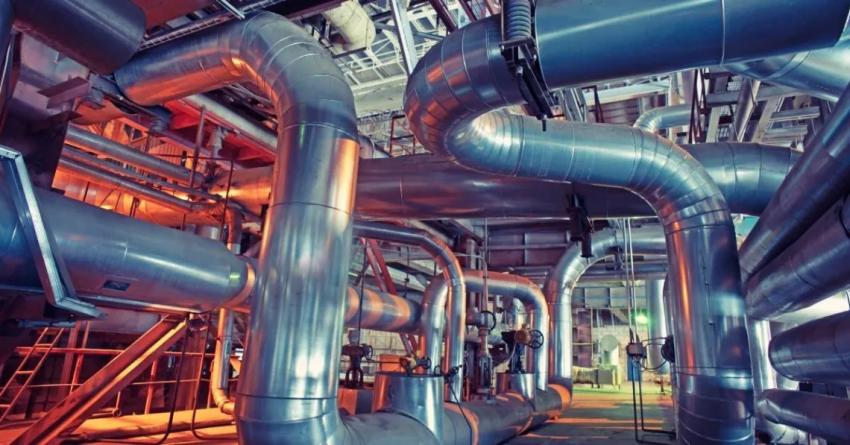
When you’re dealing with piping that runs at very high pressures and temperatures, every design decision matters. A small mistake can quickly turn into a major safety incident, costly downtime, or catastrophic failure. That is exactly why ASME B31.3 is so widely used: it gives engineers a structured, proven framework for designing high‑pressure and high‑temperature (HPHT) process piping systems.
Whether it’s a chemical plant, refinery, or power plant, a good grasp of B31.3’s design rules helps you move from “it should work” to “it will work safely and reliably.”
What ASME B31.3 Covers
ASME B31.3 Process Piping, is part of the broader ASME B31 Pressure Piping Code series. It sets out mandatory requirements and recommended practices for:
Materials
Design and stress calculations
Fabrication and welding
Assembly and erection
Examination, inspection, and testing
Unlike codes focused on utility piping or boiler external piping, B31.3 is tailored for process piping found in refineries, petrochemical and chemical facilities, pharmaceutical plants, and similar installations. As operating pressure and temperature increase, the code introduces additional checks, tighter limits, and more detailed analysis requirements.
Design Basics for High-Pressure Piping
Pressure design and wall thickness
For high-pressure lines, one of the first questions is: how thick does the pipe wall need to be to safely contain the internal pressure over its service life?
ASME B31.3 provides formulas to calculate minimum required wall thickness based on:
Internal design pressure
Allowable material stress at design temperature
Pipe outside diameter
Joint efficiency and design factors
As pressure rises, the safety margin and accuracy of these calculations become more critical. For systems subject to:
Severe cyclic loading
Frequent start–stop operation
Pressure transients or surges
the code expects more detailed flexibility and fatigue evaluations. Engineers have to check not only steady-state pressure stresses but also the effects of pressure spikes, vibration, and interaction with supports and equipment nozzles.
Material Selection for HPHT Service
Picking a material for HPHT service goes beyond choosing “strong enough.” It must retain its mechanical properties at temperature, resist time‑dependent degradation, and tolerate the process environment.
ASME B31.3 supports this by:
Listing acceptable materials
Providing allowable stress values over a range of temperatures
Referring to applicable product and material standards
Typical HPHT materials include:
Chrome‑moly steels (for high‑temperature, high‑pressure steam and hydrocarbon service)
Stainless steels (for higher corrosion resistance)
Nickel‑based alloys (for very aggressive or very hot environments)
For these services, designers must consider:
Toughness at both operating and potential upset conditions
Creep resistance at elevated temperature
Susceptibility to corrosion, erosion, and embrittlement
High-Temperature Design Considerations
Creep and long-term strength
Once metal temperatures climb into the creep range for a given alloy, the behavior of the material changes. Under constant load, the material may slowly and permanently deform over time.
ASME B31.3 accounts for this by:
Providing reduced allowable stresses at elevated temperatures
Basing these values on the more limiting of yield strength, tensile strength, or creep/stress‑rupture data
For long‑term, high‑temperature service, you are not just designing against immediate failure; you are designing against gradual loss of strength and dimensional stability over years of operation.
Thermal expansion and system flexibility
High temperatures cause piping to expand. If that movement is restrained by rigid anchors, structures, or equipment, large thermal stresses can develop.
B31.3 requires flexibility analysis when:
Thermal expansion is significant
Layout or restraints could cause high displacement stresses
Loads may be transferred to pumps, compressors, vessels, or rotating equipment
To control these effects, designers often use:
Expansion loops or offsets
Carefully placed anchors and guides
Expansion joints (where appropriate and properly qualified)
The code outlines how to:
Calculate thermal expansion
Determine displacement stresses
Combine thermal stresses with pressure and weight stresses to verify that total stresses stay within allowable limits
When High Pressure and High Temperature Combine
HPHT systems are challenging because high pressure and high temperature amplify each other’s effects on materials and stresses. ASME B31.3 addresses these combined conditions through:
Conservative allowable stresses at high temperatures
Additional design margins where material behavior becomes less predictable
Explicit treatment of severe cyclic service and high‑pressure fluids
Key implications include:
Higher expectations for analysis and documentation
Stricter control of design details such as branch connections, supports, and flexibility
Closer attention to transient operating conditions and upset scenarios
Fabrication, Welding, and Heat Treatment
Welding quality and PWHT
In HPHT systems, welds are often the most critical locations. ASME B31.3 sets strict rules for:
Welding procedure qualification
Welder and welding operator qualification
Filler metal selection and compatibility
Post‑weld heat treatment (PWHT) is frequently required to:
Reduce residual welding stresses
Improve toughness and ductility
Restore or improve creep resistance in certain alloys
The code specifies PWHT temperature ranges and holding times based on material type, thickness, and service conditions.
Inspection and non-destructive examination
Because small weld flaws can grow under HPHT conditions, B31.3 typically requires:
Higher levels of non‑destructive examination (NDE), such as radiography or ultrasonic testing, on critical welds
More stringent acceptance criteria for imperfections
Increased visual inspection and documentation
For severe cyclic or high‑risk services, examination categories and percentages are elevated to provide additional assurance of weld integrity.
Pressure Testing for HPHT Piping
Before a system is placed into service, ASME B31.3 requires a pressure test to demonstrate leak tightness and verify that the system can tolerate at least the design pressure.
Common approaches include:
Hydrostatic testing, usually at about 1.5 times design pressure (subject to code rules and allowable stress limits at test temperature)
Pneumatic testing at lower test factors, used only when hydrostatic testing is impractical, with strict safety precautions due to stored energy
For high‑temperature service, engineers must:
Consider the effect of test temperature on material allowable stress
Ensure that the test pressure does not overstress the system when evaluated at test conditions
Confirm that the test genuinely represents expected service conditions, including direction of loading and support conditions
How Different Industries Use B31.3 for HPHT Systems
Petroleum refining
Refineries run many units with:
Pressures often above 17 MPa (2,500 psi)
Metal temperatures of several hundred degrees Celsius
Processes such as hydrocracking, hydrotreating, and catalytic reforming all rely on piping systems that must withstand high pressure, temperature, and corrosive fluids. B31.3 helps define appropriate:
Materials and corrosion allowances
Welding and PWHT practices
Flexibility and support strategies
Chemical processing
Chemical plants use HPHT piping for:
Reactors and synthesis loops
High‑pressure distillation and separation
Polymerization and specialty chemical production
Here, compatibility with complex and sometimes highly corrosive chemicals is as important as mechanical strength. B31.3’s integration of material limits, stress rules, and examination requirements underpins safe continuous operation.
Power generation
In power plants, especially those using superheated and supercritical steam, piping operates at:
Very high pressures
Temperatures exceeding typical creep thresholds
Critical lines include main steam, hot reheat, and feedwater piping. While some power piping may fall under other sections (such as B31.1), B31.3 principles for HPHT service—material selection, creep considerations, flexibility, and rigorous welding control—remain directly relevant and often inform best practice.
Engineering With ASME B31.3 in Mind
ASME B31.3 represents a large body of collective industry experience translated into practical, enforceable rules. For HPHT piping, it:
Guides material and thickness selection
Controls stresses from pressure, weight, and temperature
Defines fabrication, PWHT, and examination expectations
Provides test requirements to validate system integrity
Successful HPHT design is not just about “following the code.” It also means understanding why the rules exist creep, fatigue, thermal movement, corrosion and then applying that knowledge intelligently to your specific system, layout, and process conditions.