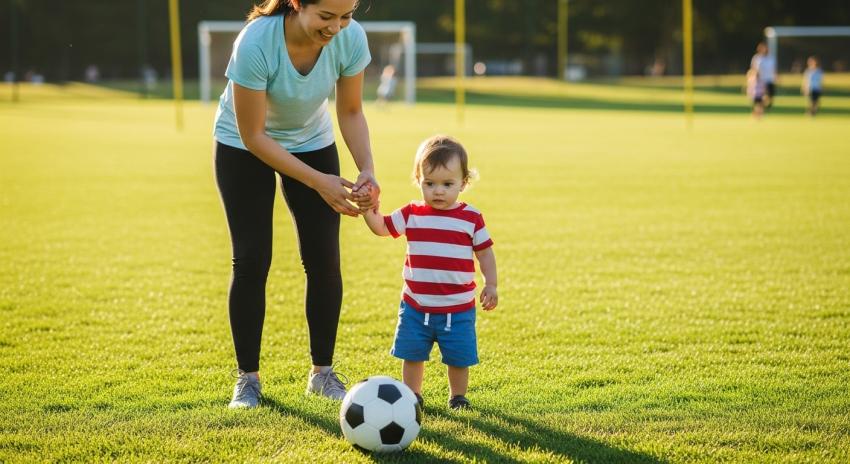
Raising a child in Los Angeles is a competitive sport in itself.
From the moment they are born, you are worrying about waiting lists for preschools in Santa Monica or the best school districts in the Valley. There is a palpable pressure in this city to get your child "ahead" before they can even speak in full sentences.
This pressure bleeds into youth sports.
I see parents searching for 2 year old soccer Los Angeles classes with the intensity of an NFL scout. They want to know if the coach is a former pro. They want to know if the league feeds into the Galaxy academy.
Stop. Breathe. Your child is two.
They still wear diapers. They think the soccer ball is a seat. They cry when you take their juice cup away.
If you approach soccer for a toddler with an "Elite Athlete" mindset, you are going to waste your money and traumatize your kid. But if you treat it as "Unstructured Recess" at a random park, you are wasting your time.
There is a middle ground. Here is the honest truth about navigating the chaotic world of toddler sports in LA and what you should actually be looking for.
1. The "Scholarship" Delusion
Let’s rip the band-aid off. No one is scouting your 2-year-old.
The LA Problem: In a city full of high achievers, parents project their ambitions onto their toddlers. I have seen dads screaming instructions at a child who is literally chasing a butterfly.
The Reality Check: At age 2, "soccer" is not about passing or scoring. It is about Gross Motor Skills. Can they run without falling? Can they balance on one foot? Can they listen to a stranger (the coach) instead of clinging to your leg?
The Goal: If you find a program that promises "Elite Training" for 2-year-olds, run away. It is a marketing gimmick. Look for a program that promises "Coordination and Confidence." That is the only foundation that matters right now.
2. The Traffic Factor (Geography vs. Quality)
In Los Angeles, distance is measured in minutes, not miles.
The 405 Reality: You might find a "highly rated" academy in West LA, but if you live in Long Beach or Pasadena, are you really going to drive 90 minutes in rush hour for a 30-minute class?
The Burnout: I see parents do this. They sign up for the "best" class across town. By week 3, they are stressed, the kid is cranky from the car ride, and they quit.
The Strategy: When searching for 2 year old soccer Los Angeles, find the best structured program within a 20-minute drive. Consistency beats prestige. Your toddler needs to show up every week to learn; they can't do that if you are stuck in gridlock.
3. Anatomy of a 2-Year-Old (Why "Drills" Fail)
Most soccer coaches have no idea how a toddler's brain works.
The Attention Span: A 2-year-old has an attention span of roughly 3 to 5 minutes. If a coach tries to line them up for a "drill," chaos ensues.
The "Me" Phase: Toddlers are egocentric. They do not understand "passing" because that involves sharing. They do not understand "teams."
The Solution: You need a curriculum built on Imaginative Play. You don't tell a 2-year-old to "dribble to the cone." You tell them to "drive their race car to the red light." If the program doesn't use imagination, it will fail.
4. The "Stranger Danger" Hurdle
This is the biggest shock for new parents.
The Scene: You buy the cute cleats. You drive to the park. You put your child on the grass... and they scream. They cling to your leg and refuse to move.
The Bad Program: An inexperienced coach will ignore the crying child or tell the parent to "force" them. This creates a negative association with sports.
The Expert Program: A pro coach expects tears. They know that for a 2-year-old, this class is likely the first time they are taking instructions from an adult who isn't Mom or Dad. A good curriculum involves Parent Participation. You should be on the field with them, acting as their safety net until they are ready to fly solo.
5. The "Park Rec" Lottery
Los Angeles has beautiful parks, from Griffith to El Dorado. But relying on city-run rec leagues for toddlers is risky.
The Volunteer Model: City leagues are cheap for a reason. They rely on volunteer dads. Sometimes that dad is great. Usually, that dad is late, unprepared, or overwhelmed.
The Equipment: Is the ball the right size? (Size 3 is too big for a 2-year-old; they need Size 1 or foam balls). Are the goals weighted down so they don't tip over?
The Verdict: For a 6-year-old, rec leagues are fine. For a 2-year-old, you need professional consistency. You are paying for a controlled environment, not a "free-for-all."
6. Socialization in the Digital Age
We are raising "iPad Kids."
The Deficit: Many Los Angeles toddlers spent a significant portion of their short lives inside or in front of screens. Their social skills are lagging.
The Class Environment: A soccer class is often the first place a child learns to wait their turn. It is where they learn to high-five a peer. It is where they learn to freeze when the whistle blows.
The Value: The soccer skills are secondary. The social skills—listening, waiting, cheering—are the primary return on investment.
Conclusion: Choose Sanity Over Status
Los Angeles will try to convince you that your child is falling behind if they aren't in a "Premier Academy" by age 2. Do not buy into the hype.
Your child does not need a drill sergeant. They need a storyteller. They need a high-five. They need a program that understands that at 24 months old, the victory isn't scoring a goal—it's running onto the field with a smile. Be picky. Ignore the "Elite" labels and look for the program that respects the biology of childhood.