We live in the age of instant gratification. We order food with a tap, we date with a swipe, and naturally, we assume we can find out exactly what our biggest financial asset is worth by typing an address into a search bar.
It sounds perfect. You type "123 Maple Street," and a shiny website tells you your home is worth $450,000. You feel rich. You start planning your retirement.
But here is the cold, hard reality: That number is likely wrong.
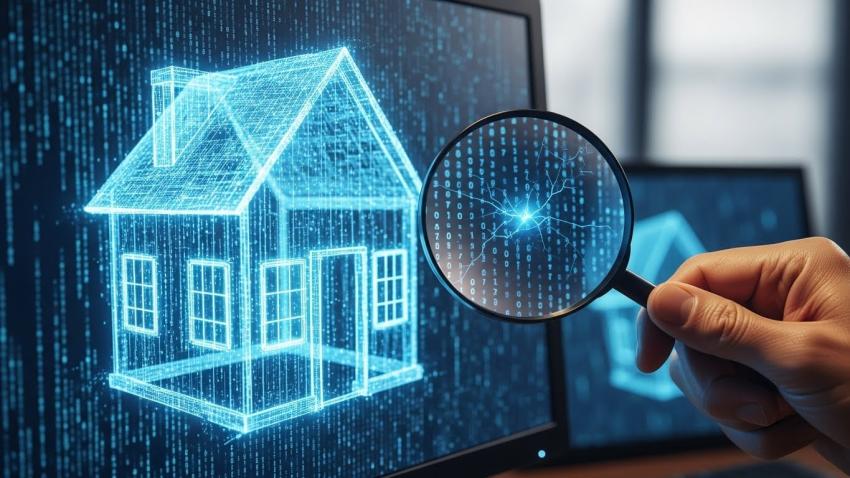
When you try to appraise house online, you are not getting a professional valuation. You are getting an "AVM" (Automated Valuation Model). You are getting a mathematical guess based on averages, not reality. While these tools are useful starting points, treating them as gospel truth is a fast track to financial disaster.
If you are serious about understanding your home's value—whether to sell, refinance, or fight property taxes—you need to stop trusting the robot blindly and start understanding how the machinery actually works.
1. The "Cookie Cutter" Bias
Online valuation tools love mediocrity. They thrive on standardization.
How it Works: The algorithm looks at your neighbor’s house that sold for $400,000. It sees you have the same square footage and the same number of bedrooms. So, it decides your house is also worth $400,000.
The Problem: The algorithm assumes your house is a "cookie-cutter" copy of your neighbor's. It works fine for massive subdivisions where every house is identical.
The Reality: If your house is custom-built, historic, or unique in any way, the online tool will fail. It cannot calculate "character." It cannot calculate "charm." If you own a unique property, the online number is effectively a random number generator.
2. The "Renovation Blindness"
This is the biggest frustration for homeowners.
The Scenario: You just spent $60,000 remodeling your kitchen. You put in quartz countertops, a Viking range, and heated floors.
The Algorithm’s View: The computer doesn't have eyes. It has no idea you did that. To the tool that helps you appraise house online, your kitchen is still the same dated 1990s mess it was in the last public record filing.
The Consequence: The tool will undervalue your home significantly because it cannot see your upgrades. Unless you manually input this data into a sophisticated system, you are looking at a "base model" price for a "luxury" product.
3. The "Smell" Test (Condition Matters)
Conversely, the algorithm also misses the disasters.
The Data: Public records say your house is 2,000 square feet and has 3 bathrooms.
The Reality: Public records don't mention that the basement floods every time it rains, or that the previous owner was a heavy smoker, or that the roof is leaking.
The Danger: If you are a buyer relying on an online estimate, you might overpay for a lemon. An algorithm assumes the property is in "average" condition. It cannot smell mold. Only a human (or a highly detailed disclosure form) can account for the physical degradation of a property.
4. The "Zestimate" Effect on Buyers
Real estate agents hate this, but it’s true. The existence of online estimates has poisoned the psychology of buyers.
The Anchor Price: If a popular real estate site says a house is worth $500,000, that number gets stuck in a buyer's head.
The Conflict: If you list your house for $550,000 (because it’s actually worth that much due to upgrades), buyers will think you are greedy. They will point to the online number and say, "But the computer says..."
The Fix: You need actionable data to fight back. You cannot just say "Trust me." You need a comprehensive report or a professional appraisal to prove why the algorithm is wrong.
5. Location Nuances (The View)
GPS coordinates are precise, but they lack context.
House A: Backs up to a beautiful, serene nature preserve.
House B: Is right next door but backs up to a 24-hour gas station with bright neon lights.
The Algorithm: To the computer, these houses are in the exact same location. It might value them identically.
The Human Market: In the real world, House A is worth $50,000 more than House B. A tool designed to appraise house online rarely captures these micro-nuances of location unless it uses advanced satellite imagery analysis.
6. When Should You Actually Use Online Tools?
I am not saying these tools are useless. I am saying they are "thermometers," not "diagnoses."
Trend Tracking: They are excellent for seeing the direction of the market. Is your neighborhood going up or down? The percentage change is usually more accurate than the specific dollar amount.
The Starting Line: Use them to get a ballpark figure. If three different sites say your home is between $400k and $450k, it’s probably safe to assume it’s not worth $600k.
Tax Fights: Sometimes, a low online estimate can actually help you. If the county tax assessor says your home is worth way too much, you can sometimes use lower online estimates as part of your argument to lower your property taxes.
7. The Hybrid Solution
The future isn't "Human vs. Robot." It is "Human + Robot."
Data + Context: The best platforms (like the ones we aim to build) combine the speed of big data with the nuance of user input.
The Input: You need a system where you can say, "Yes, I have 3 bedrooms, but I also just added a deck and a new HVAC system."
The Result: When you feed better data into the machine, you get a better number out. Don't settle for a generic estimate. Look for tools that allow for deep customization.
Conclusion: Don't Marry the Number
The number on the screen is not money in the bank. It is a data point. It is a guess. If you are making a life-changing decision—like selling your family home or taking out a massive equity loan—do not rely solely on a 30-second search. Use the tool to appraise house online as a rough draft, but ensure you edit that draft with real-world eyes, professional advice, and common sense.