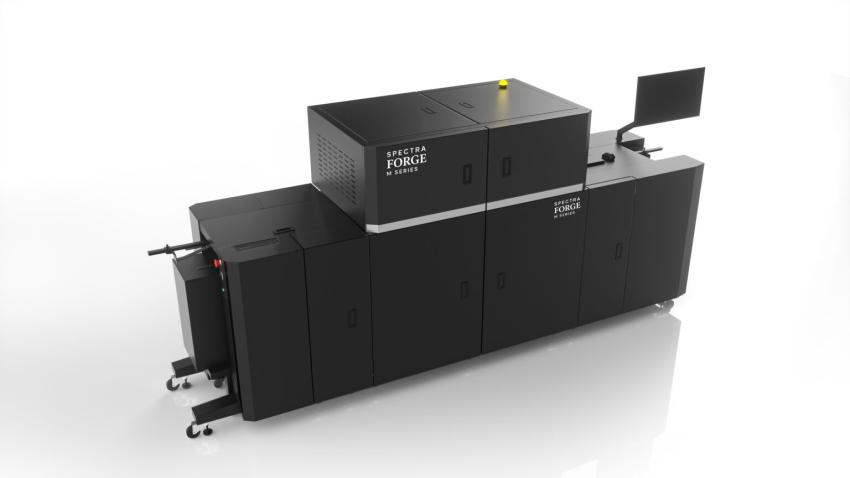
A Digital Inkjet Printing Machine is a modern printing solution that uses digital technology to transfer ink directly onto various substrates without the need for printing plates. Unlike traditional printing methods such as offset or gravure, digital inkjet printing works directly from a digital file, making it faster, more flexible, and highly cost-effective for short to medium print runs. Due to its efficiency and versatility, digital inkjet printing has become widely popular across industries such as packaging, textiles, advertising, publishing, and commercial printing.
The working principle of a digital inkjet printing machine is based on propelling tiny droplets of ink onto the printing surface through microscopic nozzles. These droplets are precisely controlled by software, ensuring high accuracy and excellent image quality. Inkjet machines generally use either continuous inkjet (CIJ) or drop-on-demand (DOD) technology. Drop-on-demand is more commonly used in industrial and commercial applications because it offers better control and minimal ink wastage.
One of the major advantages of digital inkjet printing machines is their ability to produce high-resolution prints with sharp text, vibrant colors, and smooth gradients. Since the printing process is digital, design changes can be made instantly without additional setup costs. This makes inkjet printing ideal for customized printing, variable data printing, and personalized marketing materials such as labels, packaging, and promotional products.
Digital inkjet printing machines support a wide range of inks, including water-based, solvent-based, UV-curable, and pigment inks. UV inkjet printing, in particular, has gained significant popularity due to its fast drying time, durability, and ability to print on non-porous surfaces like plastic, glass, metal, and ceramics. This versatility allows businesses to expand their product offerings and serve multiple markets using a single machine.
Another key benefit is the reduced turnaround time. Since there are no plates to create and minimal setup requirements, printing jobs can be completed quickly. This helps businesses meet tight deadlines and respond faster to market demands. Additionally, digital inkjet printing machines are more environmentally friendly compared to traditional methods, as they generate less waste, use fewer chemicals, and consume less energy.
From a cost perspective, digital inkjet printing machines significantly reduce initial setup and operational costs for small and medium-scale printing businesses. They are particularly suitable for short runs, prototypes, and on-demand printing, where traditional printing methods may not be economical. Maintenance is also relatively simpler, and many machines come with automated cleaning and calibration systems to ensure consistent performance.
In conclusion, digital inkjet printing machines represent a major advancement in printing technology. Their flexibility, speed, high print quality, and cost efficiency make them an ideal choice for modern printing needs. As technology continues to evolve, digital inkjet printing is expected to play an even more important role in the future of the printing industry.