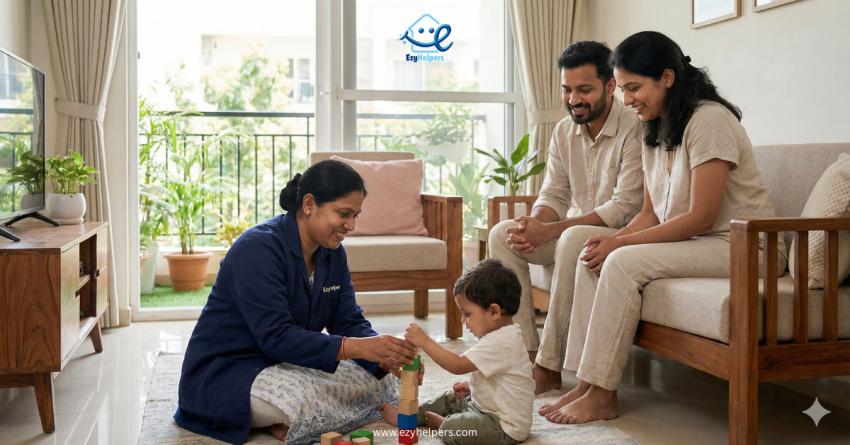
In many modern Indian households, especially in fast-paced cities like Bangalore, working parents rely on live-in babysitters to provide constant care, comfort, and supervision for their children. Over time, these caregivers become more than just “nannies” or “helpers.” They often evolve into emotional anchors, daily companions, and trusted adults who shape a child’s early emotional world.
Yet many parents wonder:
Is it healthy if my child develops a deep emotional bond with the live-in babysitter?
Will this attachment replace the bond they have with us?
How do I maintain the right balance?
This blog explores the emotional dynamics between children and live-in babysitters in Bangalore, what parents should expect, and how to nurture a balanced, healthy relationship that benefits everyone.
Why Live-In Babysitters Form Strong Bonds With Children
Unlike part-time helpers who come for a few hours, live-in babysitters stay with the family 24/7. This gives them:
More daily interaction
More caregiving responsibilities
More emotional presence during a child’s daily routines
Children naturally bond with adults who consistently meet their needs, like feeding, bathing, playing, comforting, storytelling, and simply being there.
Key Reasons Why Bonds Develop
Consistency and Routine
Kids thrive on predictability. A live-in babysitter provides a familiar face every day.Emotional Availability
Babysitters often spend more “active hours” with children than parents, especially in dual-working families.Physical Presence
From meal times to bedtime, their presence becomes a part of the child’s emotional safety net.Cultural Similarity
Many families hire babysitters who share similar regional languages or cultural backgrounds, making bonding smoother.
Is This Bond Healthy? Yes — And Here’s Why
A strong bond between a child and a live-in nanny is not just normal; it’s beneficial.
Decades of child psychology research confirm that children need multiple safe attachments, not just parental ones.
Healthy Benefits of This Bond
Stronger emotional security
Social development and empathy
Better communication skills
Reduced separation anxiety
Smoother daily routines
The babysitter becomes an extension of the child’s caregiving circle.
But Does It Replace the Parent-Child Bond? Absolutely Not.
Many parents worry that the child may prefer the nanny over them.
But in reality:
➡️ Children don’t replace their primary attachments—they add to them.
➡️ The parent-child bond remains the deepest one, built on genetics, long-term emotional history, and unconditional love.
Think of the babysitter as a supportive figure—like an aunt, teacher, or grandparent.
The Unique Role Live-In Babysitters Play in an Urban Indian Household
Especially in cities like Bangalore, where commutes are long, work hours are intense, and nuclear families are common, the live-in babysitter becomes:
A primary caregiver
A daytime educator
A play partner
A safety guardian
A routine manager
This makes emotional bonding inevitable—and often very positive.
This is why many families in Bangalore choose to hire trained and background-verified live-in babysitters from professional childcare platforms, ensuring safety, emotional awareness, and reliable caregiving.
What Parents Should Know About This Emotional Bond
1. Bonding Reflects Good Care — Not Replacement
If your child feels happy, safe, and close to the babysitter, it’s a sign that:
The babysitter is caring
Your child feels secure
Your parenting decision was right
A child bonding with the nanny does not mean the child is drifting away from you.
2. You Can Strengthen Your Bond Even With a Live-In Babysitter Present
Many parents worry that they won’t bond enough when a live-in babysitter is around. But even 30 minutes of pure, distraction-free time with your child each day is enough to build a strong and loving connection.
Try:
Bedtime stories
Meal time together
Short after-office play sessions
Eye contact, hugs, and meaningful conversations
Quality beats quantity.
3. Live-In Babysitters Often Become Emotional Role Models
Children observe everything.
A nurturing, responsible, well-trained babysitter becomes:
A behavioural influence
A language model
A source of emotional learning
A trained live-in babysitter in Bangalore from a professional childcare service can make a meaningful difference, as they understand child psychology, safety, hygiene, and communication.
4. Boundaries Are Important — For Everyone
While bonding is good, boundaries maintain balance.
Healthy Boundaries to Establish
Parents make major decisions
Babysitter follows routines set by the family
Parents remain the primary authority figure
Babysitter understands their professional role
No physical punishment, no shouting
Respectful emotional discipline only
Clear communication from day one prevents confusion.
5. Children May Show Temporary Preference for Babysitters — and That’s Normal
If your child:
Runs to the babysitter when hurt
Wants the babysitter to feed them
Cries when the babysitter leaves
…don’t panic.
This does not mean they love the babysitter more.
It simply means:
➡️ They associate the babysitter with daily care routines.
➡️ You are still the centre of their emotional universe.
6. Parents Must Acknowledge the Babysitter’s Role — Emotionally and Socially
One of the biggest gaps in Indian households is a lack of emotional acknowledgement.
Babysitters give their energy, time, and love to children, even at the cost of their own family time.
Small gestures matter:
Saying thank you
Celebrating birthdays
Giving appreciation
Involving them in festivities
Offering respectful work conditions
This strengthens the overall care environment.
Families who hire through professional live-in babycare services often find that the relationship feels smoother because trained caregivers already understand boundaries and communication expectations.
How Strong Bonds Positively Influence a Child’s Development
1. Emotional Regulation
Children with multiple secure attachments handle emotions better.
2. Social Skills
Observing the babysitter’s patience, tone, and communication shapes the child’s behaviour.
3. Confidence Building
A familiar caretaker helps children feel supported and brave during exploration.
4. Language Development
Babysitters who talk, read, and engage enhance vocabulary.
5. Moral Values
Kids pick up kindness, empathy, and helpfulness from caretakers they trust.
How Parents Can Maintain Balance and Healthy Dynamics
1. Create Shared Routines
Let some routines be parent-only:
Weekend outings
Night stories
Special snacks made by mom/dad
Playtime rituals
This maintains emotional hierarchy.
2. Avoid Comparing Yourself With the Babysitter
Parents often feel guilty when the babysitter calms the child faster.
But remember:
Babysitters handle fewer responsibilities
They remain calm because they are not emotionally overwhelmed
You are doing great — and your bond is irreplaceable
3. Encourage Teamwork, Not Competition
Treat the babysitter as a partner in your child’s care, not someone you’re competing with. Use warm, inclusive language like:
“Let’s handle bedtime together.”
“What worked best for him today?”
This builds trust, avoids misunderstandings, and creates a positive environment for everyone.
4. Prepare for Transitions
Transitions—like holidays, time off, or a new caregiver—can confuse children, so prepare them gently.
Explain gently:
Why the babysitter is unavailable
When they will return
Who will take care in the meantime
Children feel safe when informed.
Signs the Bond Is Unhealthy (and How to Fix It)
A strong bond is good, but certain behaviours indicate imbalance:
Warning Signs
Child refuses all interaction with parents
Babysitter undermines parental authority
Child shows panic when the babysitter is out of sight
Babysitter becomes emotionally possessive
Parents feel excluded from daily routines
How to Correct Gently
Increase parent-child bonding time
Reassign certain routines to parents
Set clear boundaries
Communicate with the babysitter respectfully
Rotate responsibilities
Conclusion: The Bond Is Natural — and Beautiful When Balanced
A live-in babysitter can become:
A second mother figure
A trusted adult
A friend
A routine partner
A safe emotional space
This relationship doesn’t replace the parent; it simply enriches the child’s emotional world.
Parents, babysitters, and children can form a powerful trio, each playing a meaningful role in a child’s upbringing.
Many families in Bangalore rely on reliable, trained, and background-verified childcare services that provide support that feels almost like an extended part of the family.
Your child deserves care that feels like family — and your family deserves support that feels effortless.