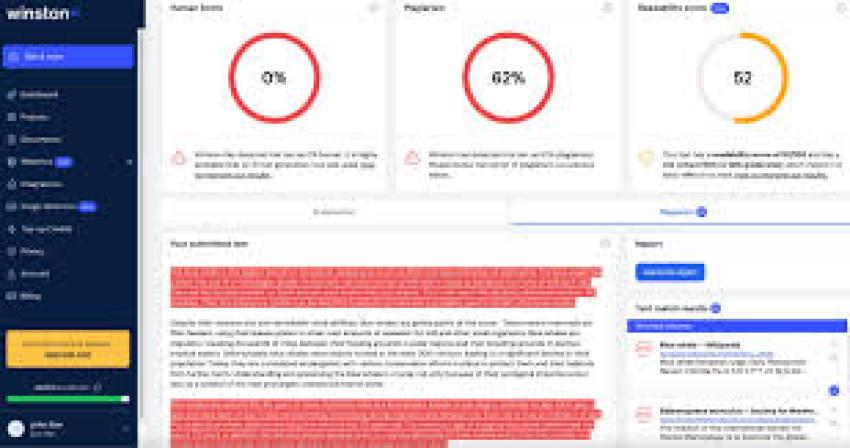
In a world where artificial intelligence is transforming how we create and consume content, knowing the source of information has never been more important. Enter the AI detector—a powerful tool designed to identify AI-generated content, ensuring authenticity, credibility, and transparency in digital media.
What is an AI Detector?
An AI detector is a software tool that analyzes content to determine whether it was created by a human or an artificial intelligence system. Unlike traditional plagiarism checkers, which compare text against a database of existing material, AI detectors focus on writing patterns, sentence structures, and subtle linguistic cues unique to machine-generated content.
These tools are becoming essential across industries—from journalism and education to marketing—helping professionals maintain trust and integrity in their work.
How Do AI Detectors Work?
AI detectors operate through advanced algorithms and machine learning models. They study large datasets of both human and AI-generated content, learning to recognize patterns that differentiate the two. Some of the key indicators include:
Repetitive phrasing: AI often uses repetitive sentence structures that humans naturally avoid.
Predictable syntax: AI text tends to follow logical, sometimes overly uniform patterns.
Contextual inconsistencies: AI might produce content that seems correct on the surface but lacks nuanced understanding.
By analyzing these factors, an AI detector assigns a confidence score, indicating how likely it is that a piece of content was created by an AI.
Why Use an AI Detector?
There are advantages and disadvantages to the growth of AI-generated content. Here’s why an AI detector is crucial:
Preserve Authenticity: Ensure your content is genuinely human-made, maintaining credibility with readers.
Academic Integrity: Teachers and institutions can detect AI-assisted essays or assignments.
Content Quality Control: Marketers and editors can verify that articles, social media posts, and blogs align with brand voice.
Ethical Transparency: Organizations can demonstrate responsible use of AI tools, fostering trust with their audience.
With AI writing tools becoming more sophisticated, relying solely on intuition to detect machine-generated content is no longer sufficient.
Characteristics of an AI Detector
When choosing an AI detector, consider these essential features:
Accuracy: Look for tools with minimal false positives and consistent performance.
Speed: Real-time analysis is important for fast-paced content workflows.
Compatibility: The best detectors can analyze text, images, and even audio.
User-Friendly Interface: Accessibility ensures that even non-technical users can confidently evaluate content.
The Future of AI Detection
AI is evolving at lightning speed, and detection tools must evolve too. Future AI detectors will likely combine deep learning with semantic analysis, identifying not only whether content is AI-generated but also evaluating its quality, relevance, and originality. This shift could empower creators to fine-tune AI-assisted work while maintaining human authenticity.
Additionally, hybrid detection systems may become standard, blending AI detection with human editorial review to provide the most reliable results.
Conclusion
The rise of AI has revolutionized content creation, but it has also blurred the line between human and machine authorship. An AI detector serves as a critical guardian of authenticity, helping individuals and organizations verify content and maintain trust in the digital era.
By adopting AI detection tools, professionals can navigate the evolving landscape with confidence, ensuring that their content remains genuine, credible, and impactful. In an age where AI is everywhere, knowing the difference between human and machine is no longer optional—it’s essential.