In aerospace engineering, everything should be just about perfect, reliable, and safe, leaving no margin for error. From manufacturing spacecraft components, avionics systems, satellites, propulsion units to advanced composite materials, even one particle can compromise a mission. It is because of this fact that aerospace cleanrooms should be constructed to meet strict engineering standards, robust contamination control systems, and an advanced integration of technology. Modern construction of aerospace cleanrooms involves thorough knowledge concerning airflow management, material compatibility, regulatory compliance, and efficiency in long-term operations.
The following article highlights the main design considerations governing the construction of high-performance aerospace cleanrooms.
1. Understanding Cleanroom Classification Requirements
The first step in aerospace cleanroom construction is the identification of the required cleanliness level. Cleanrooms are classified under the ISO 14644-1 standards, which range from ISO 1 ultra-clean to ISO 9 least clean. The following are generally required for aerospace components:
Propulsion systems, optics, guidance components, or microelectronics: ISO 5–ISO 7
ISO 7–ISO 8 for assembly areas
ISO 6 for composite fabrication sensitive to particle contamination
Choosing the right classification ensures a cleanroom meets the exact contamination limits required by mission-critical operations.
2. Airflow Design and HVAC Engineering
Aerospace cleanrooms rely heavily on sophisticated HVAC systems since airflow directly relates to contamination control. Some of the essential parameters for HVAC include:
Laminar versus Turbulent Airflow
Laminar flow is a unidirectional flow, used in sensitive processes such as optics or microelectronic assembly.
Turbulent airflow applies to general aerospace assembly rooms where the risk of contamination is generally moderate.
Air Changes Per Hour (ACH)
Aerospace cleanrooms have to replace the air periodically in order to maintain the class of cleanliness. Examples include:
ISO 5 may require 240–360 ACH
ISO 6 may require 90–180 ACH
HEPA/ULPA Filtration
HEPA filters are standard: 99.97% efficiency at 0.3 microns.
Some ultra-clean aerospace applications involve the use of ULPA filters.
Pressure Differentials
Positive pressure prevents the entry of particles from outside into the clean room. Proper pressure cascades between rooms are also important for flow stability and control of contamination.
3. Contamination Control Strategies
Components in aerospace require clean surfaces and particle-free environments. The quality of contamination control comprises the following:
Material Selection
All materials should:
Resist particle shedding
Be easy to clean
Not corrode or degrade
Preferred materials include stainless steel, aluminum, epoxy flooring, FRP wall panels, and non-porous surfaces.
Electrostatic Discharge (ESD) Protection
Since most aerospace parts now contain microelectronics, the cleanroom should include:
ESD flooring
ESD-safe working stations
Grounding systems
Antistatic paints and coatings
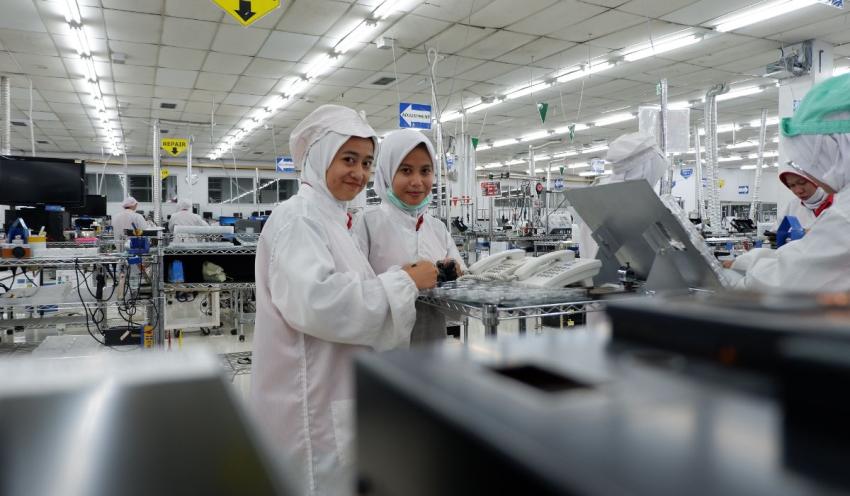
Garmenting of Personnel
Aerospace protocols typically include:
Full-body suits
Gloves
Shoe covers
Hoods and masks
The design shall include gowning areas, air showers, and pass-through chambers wherever appropriate.
4. Temperature, Humidity, and Environmental Controls
Adhesive bonding and composite curing are among aerospace procedures that are very sensitive to environmental variations. Hence, cleanrooms have to maintain:
Temperature: ±1°C or tighter tolerances
Relative Humidity: 40-60% for general manufacturing; as low as 20-30% for specialized electronics areas.
Vibration control: is highly important in precision assembly and optical alignment.
Illumination Standards: LED, low-glare, flicker-free lighting to reduce operator fatigue
The environmental conditions are stable, providing a consistent quality of the product without defects.
5. Structural Integrity and Build Quality
Aerospace cleanroom building should be done according to basic structure standards that avoid contamination and support heavy equipment. The main features to be considered include:
Modular or Hardwall Construction
These modular systems offer flexibility, speed of installation, and ease of expansion-perfect for evolving aerospace programs.
Hardwall cleanrooms offer better durability and tighter environmental control in high-precision applications.
Seamless Finishes
Joints, corners, and surfaces must be seamless to prevent accumulation of particles. Finishing options can often be epoxy-coated or welded for flooring and wall systems.
Load-bearing capacity
Aerospace equipment includes cranes, vacuum chambers, and composite autoclaves, which have support structures that need reinforcement.
6. Workflow Optimization and Layout Design
The cleanroom workflow can minimize the risk of contamination and improve operational efficiency.
Unidirectional flow
Personnel and materials should flow from the least clean to most clean areas. These would include:
Gowning rooms
Pass-through cabinets
Airlocks
Equipment marshaling areas
Zoning and Segmentation
Different zones regulate the level of contamination.
Assembly zones
Precision manufacturing areas
Metrology and inspection rooms
Storage and packing areas
A well-designed layout reduces cross-contamination and thereby smoothes operations.
7. Adherence to Aerospace and Cleanroom Standards
Aerospace cleanrooms are designed to meet a variety of industry standards, including:
ISO 14644, Cleanroom classification and testing
NASA-STD-8739 (materials and contamination control requirements)
AS9100: Aerospace Quality Management
Federal and defence clean manufacturing guidelines
Compliance makes certain that cleanrooms meet the exacting demands of space missions and aeronautic manufacturing.
8. Integration of Smart Technologies
Modern aerospace cleanrooms are heavily reliant on automation and smart systems. Common sets of technologies to be found in such cleanrooms will include:
Real-Time Environmental Monitoring (EMS)
Tracks:
Temperature
Humidity
Pressure differentials
Particle counts
Automated Material Handling Systems
Reduces risk of human contamination by using:
Robotics
Conveyor systems
Automated Guided Vehicles (AGVs)
IoT Sensors
Intelligent monitoring increases energy efficiency and improves equipment performance.
9. Safety, Fire Protection, and Emergency Systems
Special safety precautions may be needed for aerospace materials, such as composites, adhesives, and fuels.
Important safety considerations include:
Fire-resistant construction materials
Explosion-proof electrical fixtures where required
Emergency power backup
Secure areas for the storage of chemicals
Safety and compliance are paramount in protecting personnel and equipment.
10. Energy Efficiency and Sustainability
Most of the energy in cleanrooms is consumed due to HVAC loads. New designs focus more on:
High-efficiency motors and fans Smart HVAC controls LED lighting Heat recovery systems Renewable Energy Integration In effect, reduced energy consumption is good for the environment and cuts operational budgets.
Conclusion
Modern cleanroom construction within the aerospace industry represents a very critical balance of engineering, compliance, technology, and workflow efficiency. From airflow design to the control of contamination, from modular construction to smart monitoring, each of these concerns plays an important role in maintaining ultra-clean conditions to produce aerospace products. With advanced design consideration, an aerospace company is guaranteed reliability and precision for long-term performance and therefore completes missions with high production quality.