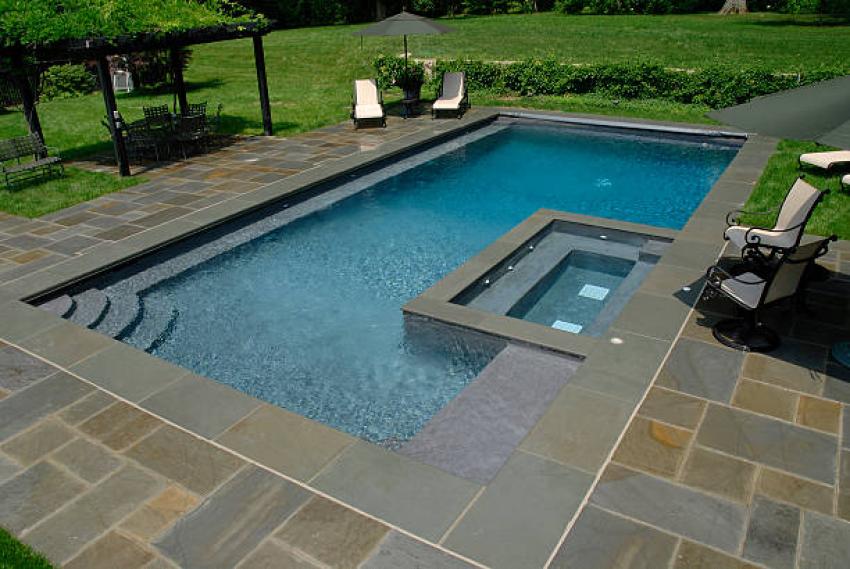
When planning a poolside renovation or new build, one of the first questions homeowners ask is: how much will pavers around pool cost? The answer depends on several variables, from the type of paver you pick to the labor conditions in your region. In this guest blog, we’ll walk you through what you need to know, step by step, so you can estimate your budget more confidently.
1. Key Factors That Determine Pool Paver Cost
Before giving ballpark numbers, let’s review what influences the cost:
Material choice — concrete, brick, natural stone (travertine, flagstone), etc.
Square footage — larger decks require more material and labor.
Design complexity — curves, patterns, cut-outs, and elevation changes increase labor.
Base preparation — site grading, soil conditions, drainage, compacted subbase.
Labor rates — region, contractor expertise, demand.
Extras & finishes — edge restraints, sealers, coping, expansion joints.
Permits, transportation, and waste disposal — often overlooked.
Each of these adds up when you roll out the plan for your ideal pool deck.
2. Price Ranges by Material
Here’s a rough guide to current material cost tiers (in the U.S. / Florida market) as of the latest updates:
Material TypeApprox. Cost (installed)Notes
Basic concrete pavers$8 – $12 / sq ftAffordable, many color and shape options
Brick pavers$10 – $15 / sq ftClassic look, moderate cost premium
Travertine / natural stone$15 – $25+ / sq ftHigh-end, natural beauty, slip resistance
Premium / custom stone or imported options$25 – $35+ / sq ftUnique finishes, specialty shapes, custom imports
These figures include both material and labor under typical conditions but do not always cover difficult sites, high-end finishes, or extraordinary design demands.
3. The Role of Site Preparation and Base Work
You may have heard that “the base is as important as the pavers.” That’s true. Many issues such as uneven settling, cracks, or shifting come from inadequate base preparation. In South Florida’s sandy soil, extra underlayment, geotextile fabrics, or deeper compacted base layers may be needed. These costs can add $2 to $5+ per square foot depending on site complexities.
Cutting curves or working around steps, drains, or utilities may also raise labor costs by 10–25%.
4. Labor Costs & Regional Variations
Labor can represent 30–60% of your total project cost, depending on how complex the work is. In South Florida, high demand or limited contractor availability can push labor rates upward. Vendors might charge per square foot or hourly rates for specialized labor. It’s wise to request detailed bids that break out labor, materials, and extras separately.
5. Added Costs: Sealers, Coping, and Edge Work
After laying pavers, finishing touches are essential:
Sealer: protects pavers from staining, UV damage, and wear. Reapplication every few years adds ongoing cost.
Coping: the edge of the pool deck often has trimmed, shaped stones to transition to the pool lip.
Edge restraints, joints, and expansion gaps: necessary to stabilize and allow for movement.
Drainage and slope correction: to avoid pooling water.
These extras typically add $1 to $3+ per square foot depending on complexity.
6. Sample Cost Scenarios
To make things more tangible, consider a typical 1,000 sq ft pool deck:
Basic concrete pavers:
Material + labor: $8–$12 → $8,000 to $12,000
Base & extras: + $2,000
Total ballpark: $10,000 to $14,000
Mid-tier brick / upgraded concrete:
Material + labor: $12–$15 → $12,000 to $15,000
Base & extras: $2,500
Total ballpark: $14,500 to $17,500
High-end travertine / natural stone:
Material + labor: $18–$25 → $18,000 to $25,000
Base & extras: $3,000 to $4,500
Total ballpark: $21,000 to $29,500
These numbers are illustrative — your exact cost may differ due to local conditions, design, and contractor rates.
7. Tips to Control Your Pool Paver Budget
Simplify design: limit curves and complex cuts.
Select mid-tier materials: balance cost and appearance.
Bundle work: do drainage, grading, etc., all at once.
Get multiple bids: always compare apples to apples.
Ask for line-item breakdowns: labor, materials, extras.
Plan maintenance: sealers, cleaning, and repairs over time.
8. ROI & Long-Term Value
While a plain concrete slab might cost less upfront, pavers offer easier repairs, better aesthetics, and more flexibility. In many cases, investing in quality pavers around pool cost yields better long-term value. A well installed paver surface can last for decades with minimal upkeep.
Moreover, a beautifully finished pool deck can boost your property’s curb appeal, help sell your home more easily, and make the outdoor experience far more enjoyable.
Conclusion
Estimating pavers around pool cost is not just about square footage — it’s about choices. From material selection, labor complexity, site prep, and finishing touches, many moving parts influence the final bill. Using the guidance above, you can better understand quotes, spot padding or omissions, and choose a solution that fits your aesthetic and financial goals.