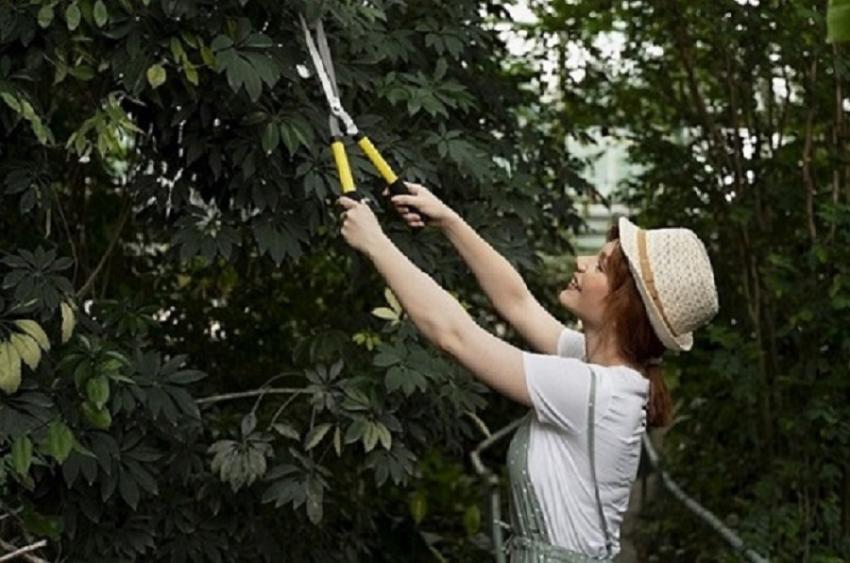
Have you ever pondered why some trees in your neighborhood appear perfectly charming while others look rather shabby? And perhaps, standing in your own garden, with those trusty secateurs in hand, you simply don't know how to start? Well, how about transforming your trees into supreme beauties, healthy and unharmed by human interventions?
Tree pruning may seem horrendous to the faint-hearted, and yet it remains a task one may pursue with capable skills and proper knowledge. From maintaining native Australian species to ornamental varieties, getting pruning just right is essential for forwarding sustainable growth patterns, disease prevention, and just for good landscaping.
From the beginning to the end, this thorough guide introduces the various phases from general considerations of pruning to the specifics of advanced shaping. You will come to understand what differentiates pruning from trimming, master the three-cut technique of pruning larger branches, and learn about simple errors that may improperly advantage or even hurt your trees. We will provide species-specific advice on Australian natives, with seasonal considerations to help give you very clear timing on how best to tackle your pruning. By the end of the guide, you will have absolutely all the skills and insight necessary to keep your trees alive throughout the year.
The Basic Understanding of Tree Pruning
What Is Tree Pruning and Why We Do?
Pruning trees essentially means cutting away different parts of the tree to favor the remainder. This service is not only performed for aesthetic purposes, but proper pruning fosters the development of healthy limbs, removes dead or weakened wood, and helps maintain the structural integrity of the tree. Failing to prune can be likened to an annual number--the tree is allowed to stand as something like an arborous leper, infected with parasites growing along its back, sight unseen. For all such reasons, tree pruning becomes an active preventative treatment to strengthen the health of the tree.
Proper pruning:
- For suitable growth, stricter control is initiated for removing end growth.
- Stimulates growth in the direction intended and improves branch distribution.
- Enhances airflow to the tree and good penetration of sunlight to inner branch need.
- Less likelihood of damaging hazard limbs removed, allowing greater resistance to storm damage.
- Prevention of the spread of infestations and disease stresses against the main structure, therefore lengthening the life of the tree.
Oh, yes, trees do all this stuff--for themselves. Plant trees, then prune them. Too bad the land is never full of identities--I shall explore abroader sense of some good-times beauty for my groom, children, and grandchildren, or maybe my unborn great-grandchildren: A well-pruned garden invites merry laughter and playful hilarity in the seasoned embrace of ancient trees; or imagine instead the grandeur unfolding in a fine display of the marriage of arborous symphony; that is, from four large tree families--felled once, now lovingly pruned-suckers into being-pristine.
The Difference Between Pruning and Trimming
Though most people use the two terms interchangeably, a distinction does exist between pruning and trimming in the world of tree care. Trimming is a mere clip-clop of ends of the branches, but pruning decorates the tree with long lower branches that hang with life, swaying blossoms, and green leaves. Yet precise reductions of certain limbs for future growth.
Trimming leads basically to aesthetically pleasing shapes and maintained forms. If your interest is cutting bushes into all sorts of shapes or creating neat lines for hedges, trimming is all about visual appeal, not health. Trimming generally means cutting things back into shape to control overgrowth-the key elements for hedges or ornamental shrubs.
In this light, the difference in meaning will allow yourself to approach either way with the right mindset and tools. For pruning, which requires you to think carefully about cut placement and the timing of cuts, these events may be a bit more sporadic. Both practices are an equally necessary part of garden maintenance, but if you distinguish between the two, you will know when to apply what.
The Essential Tree Pruning Techniques Every Gardener Should Know
Large Branches-The Three Cut Method
For branches exceeding 5cm in diameter, this method really comes handy - that is, the three-cut method. This prevents bark tearing and damages the tree by providing clean, healing cuts without completely damaging your tree. It might require some extra time but the trees surely thank you for it.
Specifically, start with about 30cm from the trunk, making an upward undercut about one-third into the branch. Thereafter, make a top cut, slightly further out from the undercut, which, once made, allows the weight on the branch to snap it cleanly between the two cuts. And finally, a clean cut just outside the branch collar - that swollen area where the branch meets the trunk - will remove the remaining stub.
This works brilliantly because it controls how the branch falls, avoiding that dreaded bark strip that exposes your tree to disease and pests. That's why professional arborists swear by this technique. Once you've mastered it, you'll never go back to risky single cuts on heavy branches.
Heading Cuts vs Thinning Cuts: When to Use Each
When you understand these two cutting techniques in trees for major pruning, it will change your whole view about pruning problems. Cutting heads stimulates dense growth below the cut point and occurs when a branch is cut back to a bud or smaller branch. These are the methods to use when attempting to encourage bushy growth or height control.
Thinning cuts remove whole branches back to their points of origin--whether that be the trunk or a larger branch--and widens a tree's canopy, allowing light to penetrate its canopy and maintain its natural shape. Generally considered to be preferred for most pruning situations because they promote healthy growth patterns.
The thing is knowing when to use each. Heading cuts should be done only under special circumstances: for training young trees or for rejuvenating an overgrown shrub. The majority of pruning should be done via thinning cuts, maintaining the natural form with greater health. Often the best results with the shaping and pruning of trees come through the mixture of techniques.
Common Tree Pruning Mistakes and Ways of Avoiding Them
Topping Trees Never Is the Answer
Topping stands out among the worst practices in tree care, as it consists of cutting main branches back to stubs. Although such practices seem popular among amateur gardeners, topping actually causes a myriad of problems that, ultimately, may kill the tree. Large wounds almost never heal properly and therefore invite decay and disease.
When you top a tree, it responds immediately by multiple weak sprouts from below the cuts. After that it is development of water sprouts: fast-growing but very poorly attached to the tree. In the future, it creates a lot of possible hazards. The natural shape and appearance of a tree are lost and eventually, it becomes unworthy of your landscape at all.
Do not top; instead, you have to prune arm trees properly by reducing or thinning their crowns. These forms will keep the tree's natural state while achieving size attainment goals. If from a space a tree is growing too large, then not crown it all but remove and replace it with a species more suitable for that site.
Over-Pruning Has Its Own Dangers
It is over-enthusiasm to get the well-known "over-pruning" which is, taking off too much foliage all at once, seriously stresses trees and can lead to a decline or death. The general rule would be not to remove more than a quarter of a tree's crown in one year, failing which the tree would suffer stress.
Leaf is important for the tree, for the photosynthesis reaction by which energy is produced-needed for growing, and resistance against diseases and pests. The moment one decides to strip off a number of branches, starvation to the tree is imminent, and this weakens the immune system causing more problems than it would have normally been able to resist.
Over-pruning induces sprouting of watersprouts, sunburnt bark, and overall reduced vitality. If it is found that you have over-pruned, the best remedy is patience. Allow that tree time to recover, ensure it receives adequate watering, and avoid making further cuts for a year after that. Sometimes, less is more.
Right Pruning for Different Native Australian Species
Easy and Safe Pruning of Eucalyptus Trees
Because they present growth patterns that can also be hazardous, particular considerations should be taken for the pruning of eucalyptus. Such natives are characterized by and very prone to dropping branches and hence safety is the most major issue when pruning these eucalypts. At all times wear protective equipment and always hire professionals for large eucalypts kept next to structures.
Usually late winter or early spring is best for the pruning scheduled on eucalyptus because that sap flow is low. One prune for dead, damaged, or crossing branches, but don't fight size control with big cuts. Eucalypts do not respond well to hard pruning and develop an epicormic growth – those messy shoots that are all over the place such as below the branches and trunks.
Pruning eucalyptus is about pushing the natural form of the tree, not against it. These trees naturally shed branches; your job is to manage this as safely as possible. Cut excessive branches, which indicate weakness or disease; resist the urge to over-prune chasing a "perfect" shape.
Managing Bottlebrush and Grevillea
Bottlebrush and grevillea are the gentler sides of Australian native pruning. These shrubs respond very well to some regular light pruning: you can shape them quite nicely without the danger involved with larger natives. The timing of your cuts must then synchronize with their periods of bloom.
With bottlebrush, prune right after the blooming ends so that the following year will be rich in bloom and thickened foliage. Your cuts must be above a node, junction, but do not be afraid of giving them a serious trim — they will grow back well. This is also a really good timing for shaping into forms if you are one for a bit more formal style.
Grevilleas also benefit from regular tip pruning while the plant is growing. This tends to promote denser growth and more flowers. Grevilleas can be pruned any time of the year, if unlike many plants, it's ideal to leave out the heavy cutting during incursions of extreme weather. Both species indicate how native plants can be low maintenance but also responsive to thoughtful pruning practices.
Conclusion
There should be nothing scary about tree pruning once the fundamentals are understood. Feel confident to tackle any tasks from learning the three-cut method to assessing the pruning needs of Australian natives. The principles all remain the same: cut according to how the tree grows, avoid topping and over-pruning, and adapt cuts to their species and time.