Introduction
In the industrial world, efficient heat transfer is essential for productivity, safety, and cost-effectiveness. Among the many heat exchanger designs available, the shell and tube heat exchanger stands out as the most popular and versatile choice. Its robust construction, ability to handle high pressures, and adaptability to different fluids make it an indispensable component in industries like power generation, oil & gas, petrochemicals, HVAC, pharmaceuticals, and more.
What is a Shell and Tube Heat Exchanger?
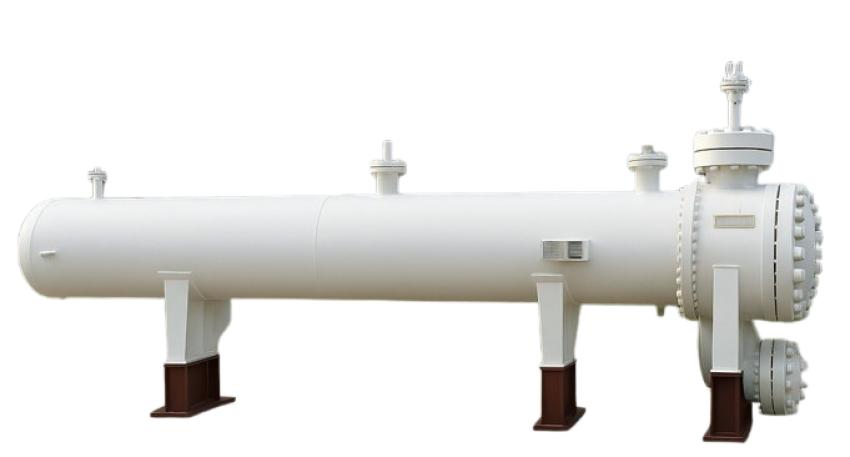
A shell and tube heat exchanger consists of a cylindrical shell housing a bundle of tubes. One fluid flows through the tubes, while another fluid flows over the tubes within the shell. The two fluids remain separated, exchanging heat through the tube walls.
Key Components Include:
Shell – The outer vessel that holds the tube bundle and shell-side fluid.
Tubes – Thin-walled tubes carrying one of the fluids, usually arranged in straight or U-shaped passes.
Tube Sheets – Plates that hold the tubes in place at each end.
Baffles – Metal plates directing fluid flow for better heat transfer efficiency.
Channel Heads – Contain the inlet and outlet for tube-side fluid.
How Shell and Tube Heat Exchangers Work
The basic operation is straightforward:
Fluid A (hot) enters and flows through the tubes.
Fluid B (cold) flows over the tubes within the shell.
Heat transfers from the hotter fluid to the cooler one through the tube walls.
Both fluids exit at their respective outlet points, with temperature changes as per the design.
The flow configuration can be:
Counterflow – Fluids move in opposite directions for maximum heat transfer efficiency.
Parallel Flow – Both fluids move in the same direction; simpler but less efficient.
Crossflow – One fluid flows perpendicular to the other.
Advantages of Shell and Tube Heat Exchangers
High Efficiency – Suitable for high temperature and high pressure.
Scalable Design – Easily customized for different process requirements.
Durability – Long service life with proper maintenance.
Versatility – Can handle a wide variety of fluids, including corrosive and viscous liquids.
Easy Maintenance – Tube bundles can often be removed for cleaning or replacement.
Applications Across Industries
Shell and tube heat exchangers are found in:
Power Plants – For boiler feedwater heating and condenser cooling.
Oil & Gas – For crude oil heating, gas cooling, and refinery processes.
Chemical Processing – For process heating/cooling and solvent recovery.
HVAC Systems – For chilled water systems and heat recovery.
Food & Beverage – For pasteurization and controlled heating processes.
Material Selection
The material choice for tubes and shells is critical and depends on:
Fluid type (corrosive or non-corrosive)
Operating temperature and pressure
Industry standards
Common materials include:
Stainless Steel (SS304, SS316)
Carbon Steel
Copper and Copper Alloys
Titanium (for corrosive marine environments)
Maintenance and Longevity
Regular maintenance ensures optimal performance:
Cleaning – Removing scale, fouling, and deposits from tubes.
Inspection – Checking for leaks, cracks, or corrosion.
Replacement – Damaged tubes or gaskets replaced promptly to avoid downtime.
Why Choose United Heat Exchangers for Your Shell and Tube Needs?
At United Heat Exchangers Pvt. Ltd., we specialize in designing and manufacturing custom shell and tube heat exchangers that meet international quality standards. Our products are engineered for maximum efficiency, durability, and reliability. With advanced manufacturing technology, a skilled workforce, and decades of industry expertise, we deliver solutions that match your exact process requirements.
Conclusion
The shell and tube heat exchanger remains the gold standard for industrial heat transfer, combining flexibility, strength, and cost-effectiveness. Whether you are upgrading your process plant, building a new facility, or replacing older equipment, this type of heat exchanger is a proven investment in efficiency and performance.