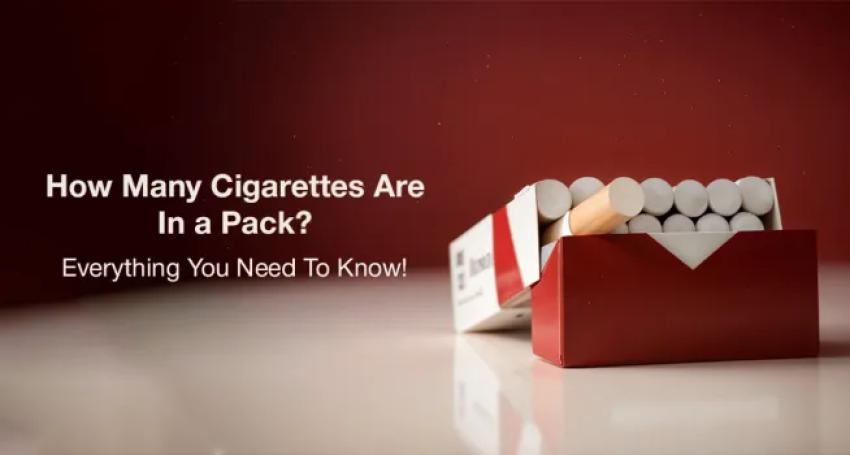
how many cigarettes in a pack? You’d suppose that in a world obsessed with technology, AI, and digital cultures, a commodity as analog as a cigarette pack wouldn’t hold important weight. But it still does. Despite decades of public health sweats, tobacco consumption remains one of the leading causes of preventable death worldwide, and the humble cigarette pack continues to play a central part in this ongoing extremity. In this section, we explore how cigarette packs act as symbols, systems, and silent influencers not just boxes that carry tobacco, but instruments that affect diurnal habits, public perception, dependence cycles, and indeed law enforcement precedences. Because occasionally, the most dangerous effects come in the smallest packages.
Pack Size And Dependence Feeding The Habit One Box At A Time
There’s a reason why so much important study goes into the number of cigarettes per pack; it’s not just about pricing or tradition it’s about dependence operation. Smokers frequently develop habits grounded on what is available to them. However, they come conditioned to consume 20 cigarettes per day, whether they need that many or not, If someone always buys a 20-pack.
Nicotine dependence doesn’t just serve chemically; it operates behaviorally. People bomb when they are stressed, wearied, happy, or anxious, and the physical act of reaching into a pack becomes a kickback. The pack itself becomes a detector.
By conforming pack sizes, tobacco companies can impact
• diurnal smoking frequency
• Average consumption over time
• Relapse rates among those trying to quit
• Perceived dependence inflexibility
This is why health advocates argue that regulating pack sizes isn’t just good policy; it’s a vital tool in dismembering learned gestures that perpetuate dependence.
The Economics Behind The Box Profit, Price Points, And Pack Strategy
Every cigarette pack represents a precisely balanced profitable formula. Tobacco companies dissect the psychology of pricing to design packs that keep guests pious while maximizing profit.
how many cigarettes in a pack
Let’s break it down.
• lower packs (e.g., 10 or 12) Lower outspoken cost, advanced cost per cigarette. These appeal to low-income buyers, youthful druggies, or casual smokers. Banned in numerous regions due to youth appeal.
• Standard 20-packs Considered “mainstream.” They balance cost, convenience, and dependence. Most global taxation laws are also grounded on the 20-stick structure.
• Larger packs (25 or 30) Advanced outspoken cost, lower cost per cigarette. These are retailed as “value deals” but frequently encourage overconsumption.
This formula works because smokers tend to justify purchases grounded on perceived value, not just health enterprises. For numerous, especially in lower-income populations, the sense becomes, “If I’m going to bomb, I might as well save plutocrat per stick.”
And that mindset plays directly into the assiduity's hands.
The Hidden Messaging Of Cigarette Packs
Beyond size and price, cigarette packaging has always served another purpose marketing. For decades, before health regulations cracked down, cigarette brands used their packs to make conglomerates of identity. Bold sources, gold antipodes, slim designs, quaint aesthetics every detail was finagled to make smokers feel commodity.
• Luxury (suppose Dunhill or Davidoff)
• Rebellion (Marlboro’s buckaroo branding)
• Femininity (slim menthols with flowery accentuations)
• Strength and virility (bold reds, dark blacks, thicker boxes)
Indeed now, despite strict packaging laws, the shape and sense of the pack still speak volumes. Some packs flip open like lighters. Others use soft shells to elicit nostalgia. Every point is strategic, indeed, in plain packaging ages.
Packaging Laws: Who Controls The Box, Controls The Habit
Cigarette packaging laws have evolved dramatically in the past two decades. numerous countries now apply standardized or “plain” packaging, stripping down ensigns, colors, and designs, replacing them with
• Graphic images of diseased lungs, cancerous mouths, or corpses
• Large warning textbook “Smoking Kills” and “Tobacco Causes Cancer”
• Quit-line figures and anti-smoking taglines
Australia led the way with its 2012 plain packaging law, followed by the UK, France, Ireland, New Zealand, and Canada. And the results? Studies show that plain packs reduce brand appeal, increase quit attempts, and discourage first-time buyers, especially among youth.
What’s clear is that controlling the cigarette pack from its size to its illustrations has a measurable effect on public health.
Cigarette Packs And Law Enforcement duty prints And Smuggling
Another subcaste to cigarette packs is their part in taxation and law enforcement. Every legal cigarette pack generally carries a duty stamp or enciphered marker proving it has been fairly produced and tested.
still, illegal cigarettes frequently called “lawless whites” or fake packs flood tide black requests encyclopedically. These packs are
• vended without levies
• frequently smuggled across borders
• constantly vended in bulk or mates
• Packaged with fake or missing health warnings
In places like Eastern Europe, Southeast Asia, and the corridor of Africa, lawless cigarettes are a massive problem. Governments lose billions in duty profit, and smokers intentionally consume limited, lower-quality tobacco with advanced health pitfalls.
This underground trade makes the humble cigarette pack a battlefield between public health, profitable policy, and organized crime.
Digital Innovation And Packaging Smart Packs On The Horizon?
Looking ahead, some companies are experimenting with “smart” cigarette packs, especially in regulated requests where traditional advertising is banned. These experimental packs might feature
• QR canons that link to brand websites
• NFC chips embedded inside
• Limited-edition designs or unlockable content
• Augmented Reality gests (yes, indeed, for tobacco)
Health authorities are fighting back. numerous have started banning any tech-linked packaging, arguing it undermines plain packaging laws and targets tech-smart youthful druggies.
But the industry continues to evolve, and packaging, indeed in its physical form, remains a crucial marketing battleground.
What If We Changed The Pack Size Altogether?
Then there’s a study trial. What would it be if cigarette packs only contained 1 cigarette per box?
• Would people bomb lower because buying one cigarette at a time becomes a hassle?
• Would it force smokers to reevaluate each decision?
• Could it make smoking feel more precious, time-consuming, or opprobrious?
Some public health lawyers argue that radical packaging reforms, like micro-packs or applicable cases, could disrupt the assiduity in surprising ways. Others say that would only push smokers to buy in bulk immorally, undermining the law.
Still, the fact that pack size alone can impact gesture proves just how important power is hidden in a commodity as small as a cigarette box.
Final studies Cigarette Packs Are Far From inoffensive
how many cigarettes in a pack At the end of the day, a cigarette pack isn't just cardboard. It’s not just a vessel. It’s a precisely designed, psychologically calibrated tool that shapes geste, sustains dependence, and signals identity.
Whether it holds 10, 20, or 30 sticks, each pack sends a communication.
To the smoker, “You need this.”
To the dealer, “You’re making plutocrats.”
To the government, “ Regulate me.”
To society, “We’re still then.”
still, perfecting public health and guarding unborn generations, If we’re serious about reducing smoking-related deaths.