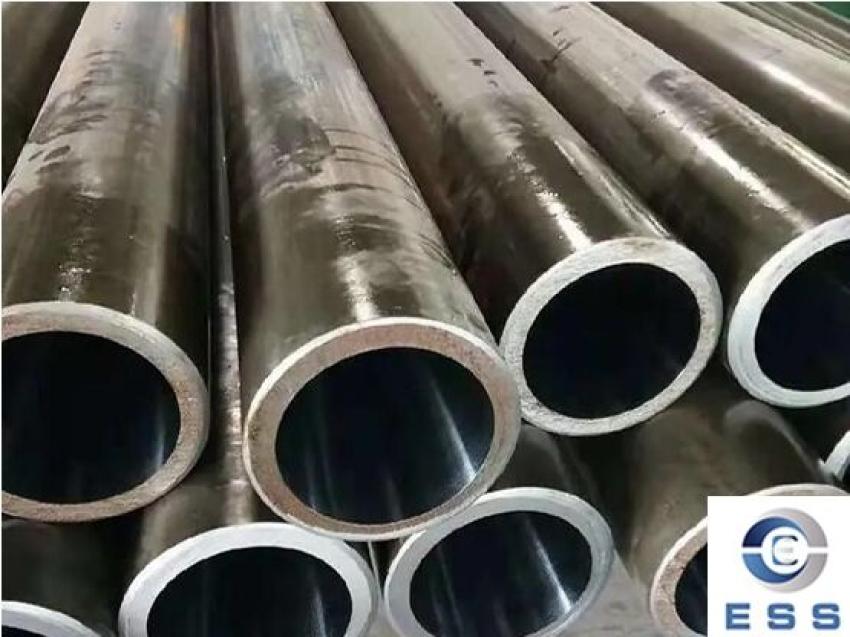
Both steel and copper can be used to make hydraulic tubes. The specific choice should consider the use of hydraulic tubes and economic costs.
Structural characteristics of steel hydraulic tubes and copper hydraulic tubes
1. Steel hydraulic tubes
Usually made by welding or cold drawing, and processed by curling and forging, the inner and outer walls of steel hydraulic tubes are smooth and flat, with different forms of corrosion protection layers on the surface, and have excellent mechanical properties and corrosion resistance.
2. Copper hydraulic tubes
Copper pipes have good thermal conductivity and electrical conductivity. They are made by stamping or cold drawing. The inner and outer walls of the pipe body are smooth and flat, but the strength of copper hydraulic tubes is low and the corrosion resistance is average.
Performance advantages and disadvantages of steel hydraulic tubes and copper hydraulic tubes
1. Performance advantages of steel hydraulic tubes
Steel pipes have high strength and large load-bearing capacity.
The smooth surface of the inner wall of the steel pipe, no oxide scale, no pores, and no defects can reduce resistance and reduce the impact of the hydraulic station on the system.
2. Performance disadvantages of steel hydraulic tubes
Steel pipes have the problem of rust, and anti-rust work needs to be done.
The cost of steel pipes is relatively high.
3. Performance advantages of copper hydraulic tubes
Copper pipes have good corrosion resistance and are not easy to rust.
Copper pipes have good thermal conductivity and can dissipate heat better.
4. Performance disadvantages of copper hydraulic tubes
Copper pipes have low strength and cannot withstand excessive loads.
The cost of copper pipes is relatively high.
Use of steel hydraulic tubes and copper hydraulic tubes
Steel hydraulic tubes are suitable for high-pressure and high-flow hydraulic systems, such as engineering machinery, metallurgical equipment, papermaking machinery, etc.
Copper hydraulic tubes are suitable for low-pressure and low-flow hydraulic systems, such as agricultural machinery, light industrial machinery, etc.
Material for hydraulic tubes: steel or copper
When choosing the material for hydraulic tubes, factors such as the use of hydraulic tubes, working environment, and economic cost need to be considered.
1. For hydraulic systems that withstand high pressure and high flow, steel hydraulic tubes can be selected.
2. For hydraulic systems that withstand low pressure and small flow, copper hydraulic tubes can be selected.
3. From the perspective of economic cost, the cost of steel hydraulic tubes is relatively high, and the cost of copper hydraulic tubes is relatively high.
Conclusion
Both steel hydraulic tubes and copper hydraulic tubes can be used to make hydraulic tubes, but they have different structural characteristics and performance advantages and disadvantages. The choice of which material needs to comprehensively consider the use of hydraulic tubes, working environment, economic cost and other factors.