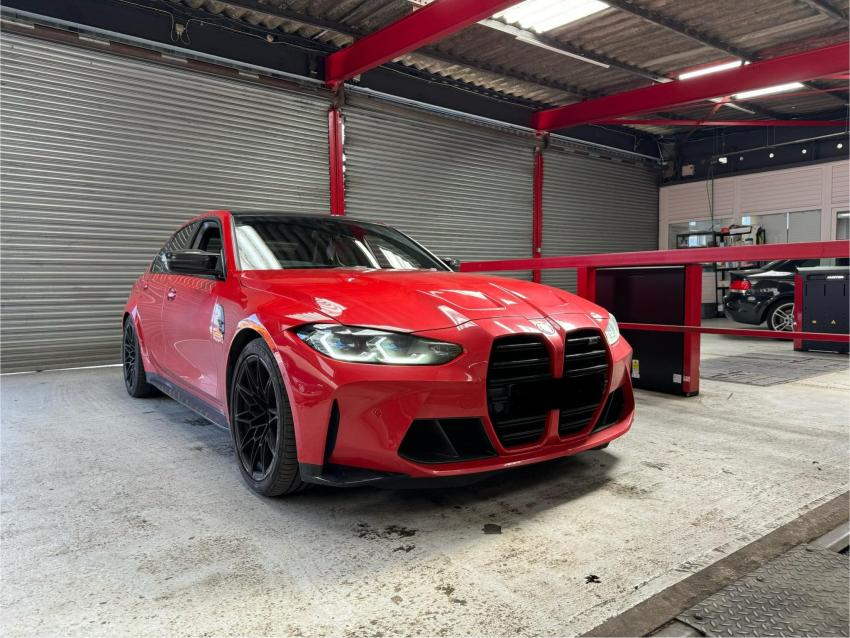
The manner in which we drive has a severe effect on their life expectancy. Most drivers understand that tyres go through wear and tear with time, but few consider how their particular driving mannerisms can cause premature tyre wear. Every sudden acceleration, heavy braking, and hard corner taken at speed adds to the pressure felt by your tyres. With this knowledge, you can adapt your driving style to potentially save a few hundred dollars on unnecessary tyre changes in North London besides enhancing fuel efficiency and road safety.
Aggressive Acceleration and Braking
Aggressive acceleration and braking are among the worst driving behaviours for tyre longevity. Fast take-off from a halt creates huge friction between the tyre and the road surface. The combination of high friction and heat causes accelerated wear of the rubber compounds of the tyre.
The very physics behind such wear is simple: the abrupt application of torque causes the tyre tread to scrub against the road surface, which in turn sands away some microscopic layers of rubber with every occurrence. The build-up of these small amounts of wear affects the overall life of the tyre considerably.
Similarly, harsh braking can create enormous amounts of friction as the tyre tread has to grip on the road surface in order to slow down the vehicle. During an emergency stop, the heat usually temporarily alters the rubber compounds, creating flat spots-these are areas on the tyres tread that have worn unevenly due to sliding against the road surface while locked or nearly locked.
Experts suggest that smoother acceleration and braking could lengthen tyre life by almost 15 to 20 percent. This means pressure incrementally applied to the accelerator while moving off and anticipating stops to allow for measured, controlled braking.
Cornering and Turning Habits
The manner in which a driver drives corners and turns impacts the extent of tread wear, particularly on the shoulders (outer edges) of the tyres, because the tyres will endure excessive lateral (sideways) forces if they are sped around corners. Toppling along a corner causes the weight of a car to transfer to the outside of the turn; this then applies disproportionate pressure, especially to the outer edges of the outer tyres. Cornering forces may be excessive and/or frequent, and this leads to uneven wear patterns of the tread across the tyre.
This effect is most felt upon the front tyres, which are responsible for steering and, in most cases, for driving. The combination of forces from turning (lateral forces) and acceleration or braking (longitudinal forces) invoke complex wear patterns that can significantly shorten the life of the tyre.
Motorists can help reduce this type of wear by:
- Moderate cornering
- Proper tyre pressure (under-inflated tyres flex more during cornering)
- Smooth steering inputs into tight intersections
Approaching roundabouts using steering inputs that are smooth and progressive
Stop-Start City Driving vs. Motorway Cruising
The wear patterns and longevity of tyres are greatly influenced by the environment in which they mainly work. British drivers are mostly subjected to differing forms of tyre wear due to adverse wear patterns met in cities with frequent lights, roundabouts, and congestion.
- City driving poses numerous wear factors:
- Frequent accelerating and braking cycles
- More turning manoeuvres (junctions, parallel parking)
- More exposure to road hazards (potholes, kerbs)
- Greater variation in road surface quality
In comparison, driving faster along the motorway tends to achieve high uniformity in tyre wear, due to relatively constant speeds and limited change of direction. During motorway driving, the main mode of tyre wear is continuous rolling friction between the road surface and tyres, which dulls down the centre portion of the tread more evenly.
Tyre wear caused by city driving can also be mitigated by consciously avoiding unnecessary braking and accelerating. An example of this is coasting to red traffic lights instead of accelerating and then braking hard. Steps to be taken for reduced wear and tear.
Practical Steps for Better Tyre Longevity
In light of the various impacts of driving style, there are ways by which UK drivers may be able to help prolong the life of their tyres:
- Smooth driving – Accelerate gently, brake progressively, and steer smoothly: these habits reduce stress on tyres.
- Inflation – Maintain proper tyre pressures by checking them monthly, or before a long journey, according to the manufacturer's recommendations.
- Tyre rotation – Every 6,000 to 8,000 miles, thus ensuring that wear is spread evenly.
- Alignment – If the car pulls to one side or if the steering wheel is off-centre while driving straight, get professional help for alignment.
- Weight – Use below the recommended weight, and compensate for the tyre pressure for heavy loads.
Conclusion
The driving habits indeed have a direct and significant relationship with tyre wear. Thus, every measure of an aggressive acceleration, harsh brake, or sharp cornering shortens the tyre's lifespan. By adopting a more moderate driving style, UK drivers can increase their tyre life by a good margin with the help of mobile tyre fitting Maidenhead. The best service provider will share prices before your appointment and list all needed repairs in detail.
Beyond generating savings, it also contributes to the safety of roads, fuel efficiency, and minimal environmental impact as a result of reduced tyre disposal frequency. Adjustments to driving style may be unpretentious in implementation yet consequential in value; thus, in some cases, it might be said that the smallest changes have the greatest impact.