Introduction
Saudi Arabia, a nation undergoing rapid industrialization and urban development, is witnessing a surge in infrastructure projects across the Kingdom. From the mega-projects under Vision 2030 to oil and gas ventures, real estate developments, and construction of smart cities, the demand for temporary yet functional administrative spaces is on the rise. One of the key elements supporting these vast undertakings is the site office—a temporary or semi-permanent facility installed directly at the project location to accommodate staff, engineers, supervisors, and administrative personnel.
This article delves into the evolving role of site offices in Saudi Arabia, their various types, construction materials, functional requirements, and how they cater to the needs of different industries across the Kingdom.
The Role of Site Offices in Construction and Development
Site offices play a critical role in the planning, execution, and management of projects. Their primary purpose is to serve as the central hub for project coordination, housing project managers, engineers, architects, and administrative staff. In Saudi Arabia, where many projects are situated in remote or underdeveloped areas, site offices offer a practical solution for on-site operations.
Key Functions:
Serve as administrative centers for documentation and reporting.
Provide a workspace for management and design teams.
House meeting rooms and communication infrastructure.
Support field coordination, material management, and scheduling.
Include staff amenities such as restrooms, kitchens, and prayer areas.
Types of Site Offices
In Saudi Arabia, various types of site offices are used depending on project scale, location, and environmental conditions. The most commonly deployed types include:
1. Prefabricated Site Offices
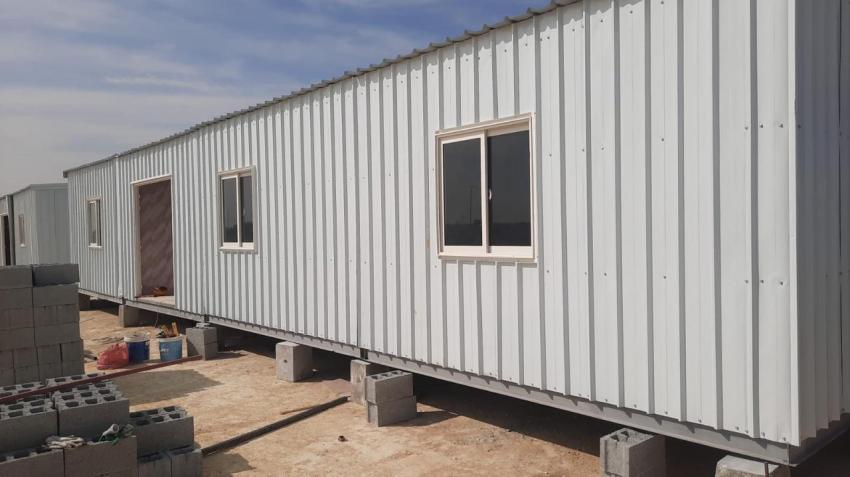
Prefabricated (or prefab) site offices are built off-site in factories and then transported to the project location. These units are modular, highly customizable, and can be installed quickly.
Advantages:
Quick installation.
Customizable layouts.
Cost-effective for short- to medium-term use.
2. Container Site Offices
Converted shipping containers are widely used due to their durability and mobility. These are especially popular in oil and gas sectors and remote construction areas.
Advantages:
Robust and weather-resistant.
Easily relocatable.
Long service life with minimal maintenance.
3. Modular Site Offices
These involve assembling pre-manufactured modules on-site. They offer scalability and can be expanded or downsized as per project requirements.
Advantages:
Flexible design options.
Quick assembly/disassembly.
Ideal for long-term usage.
4. Permanent Site Offices
In larger and more prolonged infrastructure projects like NEOM or The Line, developers sometimes opt for permanent or semi-permanent site offices constructed with concrete and steel.
Advantages:
Superior comfort and functionality.
Suitable for projects lasting several years.
Integrated utilities and infrastructure.
Core Features of Site Offices in Saudi Arabia
Given the extreme climate and regulatory framework in Saudi Arabia, site offices are designed with specific features tailored to regional needs.
1. Climate Control
Temperatures in Saudi Arabia can exceed 50°C in summer. Air conditioning, thermal insulation, and ventilation systems are essential components of any site office.
2. Dust and Sand Protection
Dust storms and sand intrusion can affect electronic equipment and general cleanliness. Site offices are fitted with sealed windows, dust-proof finishes, and heavy-duty doors to minimize contamination.
3. Prayer and Ablution Areas
Cultural and religious considerations are integral. Dedicated areas for prayer (Musallah) and ablution (Wudu) are commonly included in site office designs.
4. Safety and Compliance
Site offices must comply with occupational health and safety regulations. Fire exits, extinguishers, first-aid kits, and emergency plans are standard.
5. ICT and Communication Infrastructure
Wi-Fi, satellite communication, CCTV, and network cabling ensure seamless connectivity for operations and remote collaboration.
Industries Utilizing Site Offices in Saudi Arabia
Site offices are not confined to construction alone. A range of industries across the Kingdom employ them to support operations.
1. Construction and Civil Engineering
Every infrastructure project, whether a housing society or a megacity, requires an on-site command center for efficient management. This sector constitutes the highest demand for site offices.
2. Oil and Gas
With Aramco and other players operating in remote desert areas, containerized and modular site offices are essential for supporting exploration and drilling operations.
3. Mining
Saudi Arabia’s expanding mining sector uses site offices for logistics planning, worker coordination, and safety monitoring.
4. Renewable Energy
The Kingdom’s push toward solar and wind energy involves projects in remote desert zones where mobile site offices serve as control centers.
5. Transportation and Infrastructure
Major railways, highways, and airport expansion projects require site offices for multi-disciplinary coordination among civil, mechanical, and electrical teams.
Customization and Layout Options
Site offices in Saudi Arabia are designed to meet specific functional and aesthetic requirements. Layouts typically include:
Reception Areas
Executive Cabins
Workstations
Conference Rooms
Toilets and Showers
Storage Rooms
Prayer Rooms
Pantry or Kitchenette
Customization Options Include:
False ceilings for better aesthetics and insulation.
Double-glazed windows for noise and temperature control.
Raised flooring for electrical cabling and HVAC ducting.
Wall partitions for flexible space usage.
Advantages of Using Site Offices in Saudi Arabia
1. Operational Efficiency
With on-ground management, decisions are faster, issues are addressed promptly, and work is better coordinated.
2. Cost Savings
Modular and prefabricated units are far cheaper than building permanent structures from scratch and can be reused across projects.
3. Mobility
Especially in industries like mining and oil & gas, site offices can be disassembled and relocated to new sites with minimal effort.
4. Environmental Control
Climate-optimized designs help maintain a comfortable work environment, enhancing productivity.
5. Rapid Deployment
Quick setup means minimal delay in starting operations on a new project.
Compliance and Regulations
Saudi Arabia’s Ministry of Municipal and Rural Affairs and Housing (MoMRAH) and other regulatory bodies have clear standards regarding temporary site structures. These regulations ensure:
Adherence to zoning laws.
Compliance with health and safety norms.
Waste management and sanitation standards.
Fire safety and emergency protocols.
Failure to comply can lead to penalties, project delays, or even shutdowns, making it imperative for contractors to meet regulatory expectations.
Future of Site Offices in Saudi Arabia
With Saudi Arabia aggressively pursuing its Vision 2030, the demand for sophisticated site offices will continue to rise. Trends likely to shape the future include:
1. Smart Site Offices
Integration of IoT (Internet of Things) for monitoring utilities, foot traffic, and environmental conditions will become more common.
2. Green Construction
Eco-friendly site offices using recycled materials, solar panels, and water-saving fixtures are gaining popularity.
3. Hybrid Work Capabilities
Post-pandemic shifts are pushing for designs that support hybrid work models, with better connectivity and comfort.
4. Standardization
To reduce lead times and improve compliance, more firms are adopting standardized modular designs that can be replicated across multiple sites.
Challenges in Deploying Site Offices
Despite their many advantages, certain challenges exist:
1. Logistics
Transporting units to remote desert or mountainous areas can be complex and expensive.
2. Utility Access
Provision of electricity, water, and sewage systems in remote locations is often a bottleneck.
3. Durability
Extreme weather conditions require high-quality materials and engineering to ensure durability and low maintenance.
4. Cultural Adaptation
Site offices must be adapted to cultural norms, which can complicate design and planning, particularly for foreign contractors.
Conclusion
Site offices are indispensable to the landscape of Saudi Arabia's booming development sectors. Whether for oil exploration in the Eastern Province, construction in Riyadh, or megaprojects like NEOM in the northwest, site offices offer flexible, efficient, and cost-effective solutions for project management and workforce coordination.
As Saudi Arabia progresses toward its Vision 2030 goals, the importance of well-designed, regulatory-compliant, and technologically advanced site offices will only grow. Forward-thinking companies that invest in modern, adaptable, and sustainable site office infrastructure will be better equipped to meet the challenges and seize the opportunities of the Kingdom’s dynamic industrial future.