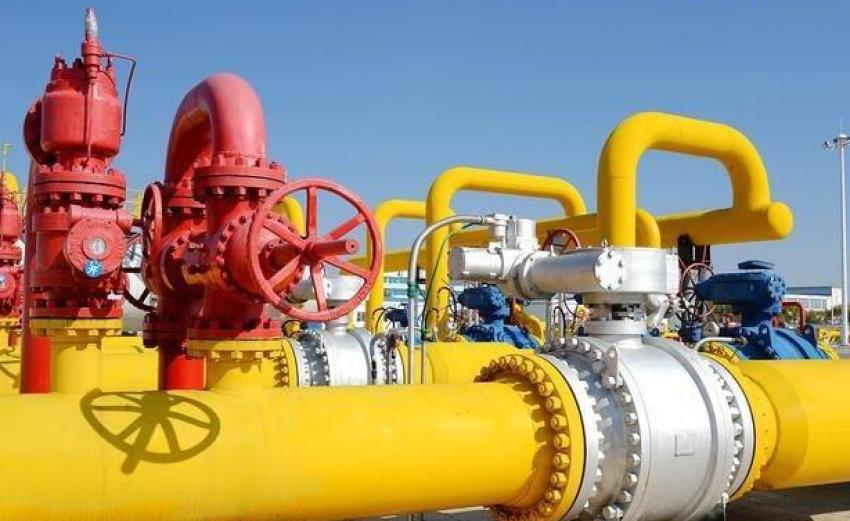
ERW (Electric Resistance Welded) pipes are widely used in gas pipelines, mainly because they are efficient, economical and can meet the safety and technical requirements of gas transportation. The following are the specific roles and key features of ERW welded pipes in gas pipelines:
1. The core role of ERW welded pipes
Gas transportation carrier:
As the core material of the main line, branch line or household pipeline, it safely transports natural gas, liquefied petroleum gas (LPG) and other gas media.
Pressure adaptability:
It can withstand the pressure of medium and low pressure gas systems (usually ≤4.0MPa) and meet the needs of urban pipelines, industrial users and other scenarios.
2. Why do gas pipelines prefer ERW welded pipes?
(1) Economic and efficiency advantages
Low cost: Compared with seamless steel pipes, ERW welded pipes have high production efficiency, high material utilization rate, and are 20%-30% lower in price.
Scaled production: Suitable for large-scale procurement of long-distance gas pipelines, shortening construction period.
(2) Performance meets gas requirements
Reliable strength: low alloy high strength steel (such as L245, L290) is used, and residual stress is eliminated through cold expansion process, and the strength is close to that of seamless pipe.
Good sealing: modern ERW process (such as high frequency welding) welds have no filler, the heat affected zone is narrow, and eddy current detection (ECT) is used to ensure no leakage.
Corrosion resistance: can be matched with anti-corrosion coating (such as 3PE anti-corrosion layer) or cathodic protection to adapt to the buried gas pipeline environment.
(3) Standard compliance
Comply with gas-specific standards:
National standard (GB/T 3091-2015 "Welded steel pipe for low pressure fluid transportation")
American standard (API 5L "Pipeline Steel Pipe Specification")
European standard (EN 10217-1)
3. Key technical requirements for ERW welded pipes for gas
Material selection:
Mainly carbon steel (Q235B, L245), sulfur content must be ≤0.02% (to prevent hydrogen-induced cracking).
Low-temperature toughness steel (such as L290N) is required in cold areas.
Weld quality control:
100% non-destructive testing (UT/RT) to ensure that there are no defects such as unfused and pores.
The weld excess height needs to be smoothed to reduce flow resistance.
Anti-corrosion treatment:
External anti-corrosion: 3PE (three-layer polyethylene), FBE (fusion-bonded epoxy powder) coating.
Internal anti-corrosion: epoxy resin coating (anti-corrosion of gas impurities).
4. Typical applications of ERW welded pipes in gas systems
Urban medium-pressure pipeline network: DN100-DN600 ERW pipes are the main transmission lines.
Branch lines for industrial and commercial users: DN50-DN200 pipelines, connecting the pressure regulating station and the terminal.
Household pipelines: small-diameter (DN15-DN40) ERW pipes, which must meet the requirements of thin-walled and lightweight.
5. Precautions
Prohibited use scenarios:
When high-pressure gas (such as gate station outlet > 4.0MPa) or acidic gas containing hydrogen sulfide is used, the applicability of ERW pipes needs to be evaluated.
Installation points:
Welding should be carried out with inert gas shielded welding (such as TIG) to avoid weld oxidation.
Sacrificial anode protection is required when laying underground to extend the service life.
Common market problems:
Beware of non-standard ERW pipes (insufficient wall thickness, material adulteration), and a third-party test report (such as CMA certification) must be requested.