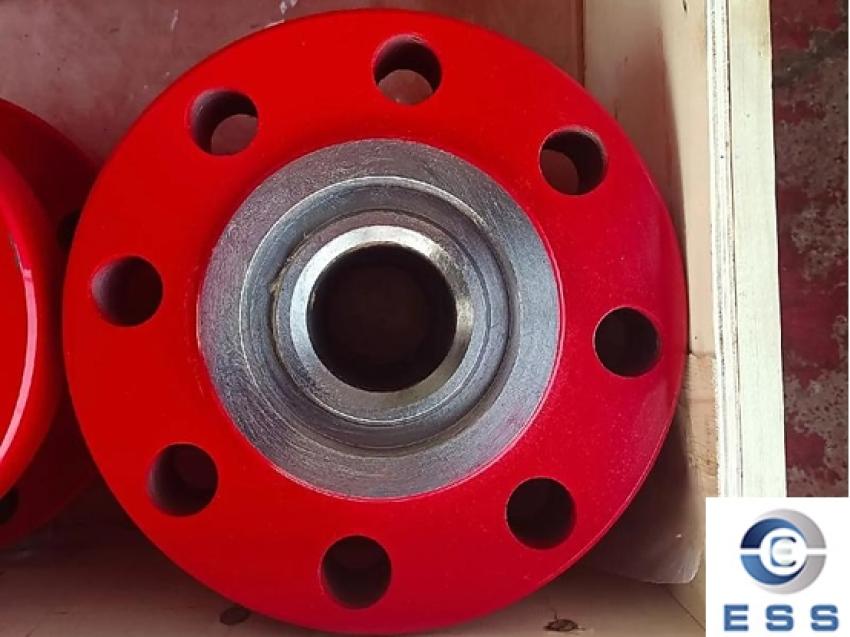
Double flange pup joints are common components for connecting pipes. It can connect two pipes and play a role in regulation and sealing. Double flange pup joint is usually composed of two flanges, two pup joints and a gasket in the middle. It is widely used in industries such as chemical, petroleum, water treatment, food, etc. In engineering applications, the size calculation of double flange pup joint involves multiple parameters, including flange size, pup joint length, sealing surface form, etc. In order to ensure the accuracy of installation and the sealing of the connection, multiple influencing factors need to be considered comprehensively during calculation.
Size calculation method
1. Calculation of flange size
The two flanges in the double flange pup joint are usually the same, and the size of the flange is determined according to the size and pressure level of the connected pipe. In general, you can find relevant standards or manuals to obtain the size and parameters of the flange.
2. Calculation of pup joint length
The calculation of pup joint length usually requires knowing the length of the pipe between two adjacent flanges, as well as the size and parameters of the flange. The length of the pup joint can be calculated by the following formula:
L=(L1+L2)-(C+K)
Wherein, L1 is the length of the previous section of the pipeline, L2 is the length of the next section of the pipeline, C is the total thickness of the two flange connections, and K is the flange spacing. It should be noted that the calculation of K needs to be determined based on the pressure level and flange diameter.
Key factors affecting the calculation of the size of the double flange pup joint
1. Flange standard (GB/T, ASME, DIN)
Flanges of different standards differ in outer diameter, thickness, bolt hole spacing, etc., which directly affect the calculation of the total length of the pup joint. For example, the thickness of the ASME B16.5 flange is usually thicker than that of the GB/T 9119 flange, and the length of the pup joint needs to be adjusted accordingly.
2. Pipeline nominal diameter (DN) and wall thickness (S)
The nominal diameter determines the outer diameter of the pup joint, and the wall thickness affects the welding method and installation matching of the flange. For example, large-diameter (DN ≥ 300) pipelines usually require thicker flanges, and the length of the pup joint should also be adjusted appropriately to ensure connection stability.
3. Nominal pressure (PN) or pressure class (Class)
The higher the pressure, the thickness of the flange and the wall thickness of the pup joint will increase to withstand greater pipe stress. For example, the thickness of the flange of PN40 or Class 600 is much greater than that of PN10 or Class 150, and the length of the pup joint L needs to be appropriately increased.
4. Flange sealing surface form (FF, RF, MFM, RTJ)
Different sealing surface forms determine the thickness C of the flange. For example, the raised face (RF) flange is thicker than the flat face (FF) flange, while the ring joint face (RTJ) flange needs to consider the thickness of the metal gasket, which will affect the total length of the pup joint.
5. Sealing gasket thickness (G)
The thickness of the gasket directly affects the spacing after the flange connection. For example, the non-metallic gasket (25mm) has little effect, while the metal gasket (510mm) may require an increase in the length of the pup joint to ensure sealing performance and installation matching.
Conclusion
The size calculation of double flange pup joint is relatively complicated and tedious. In actual engineering applications, it is necessary to select the appropriate double flange pup joint according to the specific situation and requirements, and perform size calculation and installation in accordance with relevant standards and requirements.