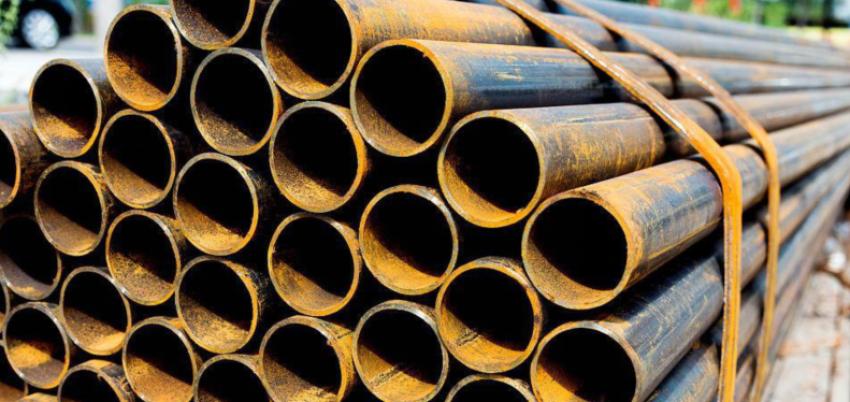
During the use of seamless steel pipes (SMLS), they are easily affected by oxidation and corrosion. The reasons why seamless steel pipes are easily corroded can be mainly attributed to the following aspects:
1. Chemical corrosion
Surface contamination: Substances such as oil, dust, acid, alkali and salt attached to the surface of seamless pipes may be converted into corrosive media under certain conditions, and react chemically with certain components in seamless pipes, resulting in chemical corrosion and rust.
Surface scratches: Scratches on the surface of seamless pipes will damage their passivation film, reduce their protective ability, and make seamless pipes more likely to react with chemical media and produce chemical corrosion.
Incomplete cleaning: During the production or maintenance of seamless pipes, if the cleaning is not thorough, residual acid, alkali and other liquids will remain on the surface, which may also cause chemical corrosion.
2. Electrochemical corrosion
Carbon steel pollution: When seamless pipes come into contact with carbon steel parts or corrosive media, they may form a primary battery due to scratches and other reasons, resulting in electrochemical corrosion.
Influence of cutting, welding and other processes: During the cutting, welding and other processing of seamless pipes, rust-prone substances (such as cutting slag and spatter) may be attached to the surface, or physical or chemical defects may be caused by improper processes, which will increase the risk of electrochemical corrosion.
Defects in the material itself: The chemical composition of the seamless pipe material is uneven, contains impurities such as S and P, or there are physical defects such as pores, sand holes, and cracks on the surface, which may form a primary battery in the corrosive medium and cause electrochemical corrosion.
Poor passivation: If the seamless pipe is improperly treated during the pickling and passivation process, resulting in an uneven or thin passivation film, it is also easy to cause electrochemical corrosion.
3. Environmental factors
Corrosive environment: The use of seamless pipes in corrosive environments, such as humid, acidic, alkaline or high-salt environments, will accelerate their corrosion process.
Temperature changes: Changes in temperature may also affect the corrosion rate of seamless pipes, especially under extreme temperature conditions, the corrosion resistance of seamless pipes may be reduced.
4. Improper use and maintenance
Improper installation: If the seamless pipe is not installed and fixed according to the specifications during the installation process, it may cause additional stress or vibration to the pipe, thereby accelerating corrosion.
Untimely maintenance: If the seamless pipe is not maintained and inspected in time during use, it may cause safety problems such as leakage due to corrosion problems.
Anti-corrosion treatment method for seamless steel pipes:
Seamless steel pipes are widely used in industrial production, but they are susceptible to corrosion during use. In order to extend the service life of seamless steel pipes, anti-corrosion treatment is very necessary. There are mainly the following methods for anti-corrosion treatment of seamless pipes:
1. Coating anti-corrosion: Anti-corrosion coating is applied on the surface of seamless pipes to prevent oxidation and corrosion.
2. Galvanizing anti-corrosion: A protective film is formed by coating a layer of zinc on the surface of the seamless pipe to prevent the steel from oxidizing and rusting when it comes into contact with the air.
3. Inner and outer wall anti-corrosion: Sandblasting, pickling and other treatments are performed on the inner and outer walls of the seamless pipe to remove surface oil and oxide scale, and then anti-corrosion coating is applied.