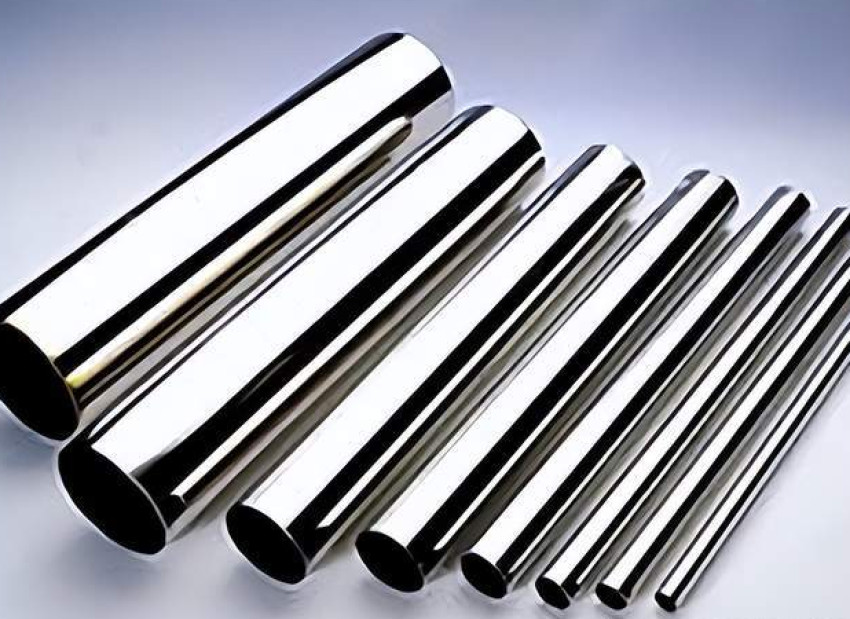
316 Seamless stainless steel pipe is a hollow long round steel, which is widely used in many fields due to its excellent performance. The following is a detailed introduction to 316 seamless stainless steel pipe.
Main characteristics of 316 seamless stainless steel pipe:
1. Strong corrosion resistance: 316 stainless steel pipe has strong corrosion resistance, especially in harsh environments. It can maintain a stable surface state. This is mainly due to the molybdenum element contained in its material, which makes the steel pipe more corrosion-resistant than 304 stainless steel in chloride environments. In addition, it is also resistant to erosion by marine and corrosive industrial atmospheres.
2. High strength: 316 stainless steel pipe has high strength and can withstand greater pressure and load-bearing weight.
3. Good heat resistance: 316 stainless steel has good oxidation resistance in intermittent use below 1600 degrees and continuous use below 1700 degrees. However, it is best not to use it continuously in the range of 800~1575 degrees, but the stainless steel has good heat resistance when used continuously outside this temperature range.
4. Excellent processing performance: 316 stainless steel pipes are easy to cut, weld, grind and process, and are light in weight, making them easy to transport and install.
Application areas of 316 seamless stainless steel pipes:
1. Industrial field: 316 stainless steel pipes are widely used in industrial pipelines such as petroleum, chemical, light industry, mechanical instruments and mechanical structural components.
2. Medical equipment: Due to its excellent corrosion resistance and high strength, 316 stainless steel pipes are also commonly used to manufacture medical equipment, such as surgical instruments and medical equipment pipelines.
3. Food processing equipment: In the food processing industry, 316 stainless steel pipes are often used to manufacture food canned packaging, food delivery equipment, etc. to ensure the hygiene and safety of food.
4. Construction field: 316 stainless steel pipes are also commonly used in the construction field, such as decorative parts, structural supports, etc.
Production process of 316 stainless steel pipe:
Production process of 316 stainless steel seamless pipe:
1. Select high-quality 304 and 316L stainless steel raw material billets that meet the standards and undergo hollowing, heading, annealing and other operations.
2. After completing the above operations, the multi-pass cold drawing (cold rolling) process is followed. The cold rolling of the pipe is carried out on a multi-roll rolling mill, and the stainless steel pipe is rolled in a ring-shaped hole formed by a variable-section circular hole groove and a stationary conical head.
3. After cold rolling, the stainless steel pipe will have a large yield coefficient and is not suitable for expansion and bending. In order to meet the sanitary standards of stainless steel pipes, the cold-rolled pipes also need to undergo bright annealing, demagnetization, pickling, straightening and other steps.
4. During the pickling process of stainless steel pipes, the pipe fittings can remove oil stains, rust spots, welding spots, oxide layers, free iron and other dirt on the surface of the workpiece while pickling and passivating. The surface becomes uniform silver-white after treatment, while preventing metal from excessive corrosion and hydrogen embrittlement and inhibiting the generation of acid mist.
5. After the above processes, the stainless steel pipe is polished. The standard of the inner and outer wall polishing is 400 mesh. The surface finish of the inner and outer surfaces of the polished pipe can reach the mirror standard (that is, the sanitary standard).
6. The polished stainless steel pipe needs to be inspected by a metal flaw detector (or water pressure test) and strictly hand-selected by steel pipe quality inspectors. Only qualified products can be packaged and shipped.
Production process of 316 stainless steel welded pipe: The production process of 316 stainless steel welded pipe includes a series of processes such as material selection, uncoiling, tube blank forming, continuous welding, weld leveling, heat treatment, sizing and finishing, cutting, straightening, pressure resistance testing, cleaning and drying, and finished product inspection and packaging. Among them, TIG welding equipment is often used in the welding process, and argon gas is introduced as a protective gas to prevent weld oxidation.
Precautions:
Choose a regular manufacturer: When purchasing 316 stainless steel pipes, you should choose products produced by regular manufacturers to ensure their quality and performance.
Pay attention to the material composition: The material composition of 316 stainless steel pipe has an important impact on its performance, so when purchasing, you should pay attention to whether its material composition meets the relevant standards.
Correct use and maintenance: During use, care should be taken to avoid excessive pressure or impact on 316 stainless steel pipes, and regular cleaning and maintenance should be performed to extend its service life.
In summary, 316 seamless stainless steel pipes are highly favored for their excellent performance and wide range of applications. During purchase and use, attention should be paid to issues such as quality, material composition, and correct use and maintenance.