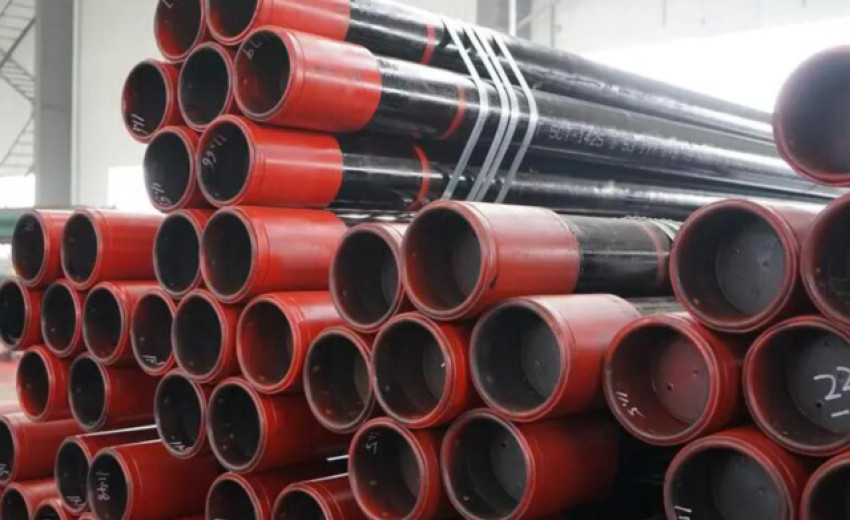
OCTG casing is a key component used in oil wells. It plays an important role in protecting the wellbore, controlling the wellbore, and realizing oil and gas production. Currently, the material selection for oil casing pipe mainly includes the following:
1. Carbon steel casing
Carbon steel casing (including seamless casing and erw casing) is one of the common petroleum casing materials. It has good strength and corrosion resistance and is suitable for most oil well environments. The advantages of carbon steel casing include lower cost, easy processing and installation, etc.
2. Chrome alloy casing
Chromium alloy casing is a high temperature and corrosion resistant material suitable for use in high temperature, high pressure or corrosive formation environments. It has good strength and durability and can withstand harsh working conditions for a long time.
3. Nickel alloy casing
Nickel alloy casing is also a commonly used petroleum casing material with excellent corrosion resistance and high temperature performance. Nickel alloy casing is suitable for acidic, alkaline or sulfur-containing formation environments to prevent corrosion and damage.
4. Stainless steel casing
Stainless steel casing is mainly composed of chromium, nickel and other elements and has good corrosion resistance and oxidation resistance. It is suitable for some oil well environments with special requirements, such as offshore oil fields or hydrogen-sulfur oil and gas wells.
5. Titanium alloy casing
Titanium alloy casing is a lightweight and high-strength material with good corrosion resistance and high temperature resistance. It is suitable for some oil well environments with high weight requirements, which can reduce the load of equipment and improve work efficiency.
6. Fiberglass casing
FRP casing is a casing made of fiberglass and resin composite materials with excellent corrosion resistance and mechanical properties. It is suitable for some special environments such as marine salt wells or acid oil wells.
7. Ceramic sleeve
Ceramic casing has high corrosion resistance and anti-wear properties and is suitable for formation environments. It can resist the corrosion of casing caused by factors such as high temperature, high pressure, acidity and wear.
8. Composite material casing
Composite casing is a casing composed of a variety of materials and can be designed and manufactured according to specific needs. It can take into account various performance requirements such as strength, corrosion resistance, temperature resistance, etc.
Conclusion:
The material selection of oil casing should be determined according to the characteristics and requirements of the oil well environment. Different materials have different advantages and scope of application. Engineers need to choose according to the actual situation to ensure the stability and reliability of the casing in the oil well. Material selection for oil casing is also constantly evolving and innovating to meet the increasingly complex needs of oil and gas extraction.