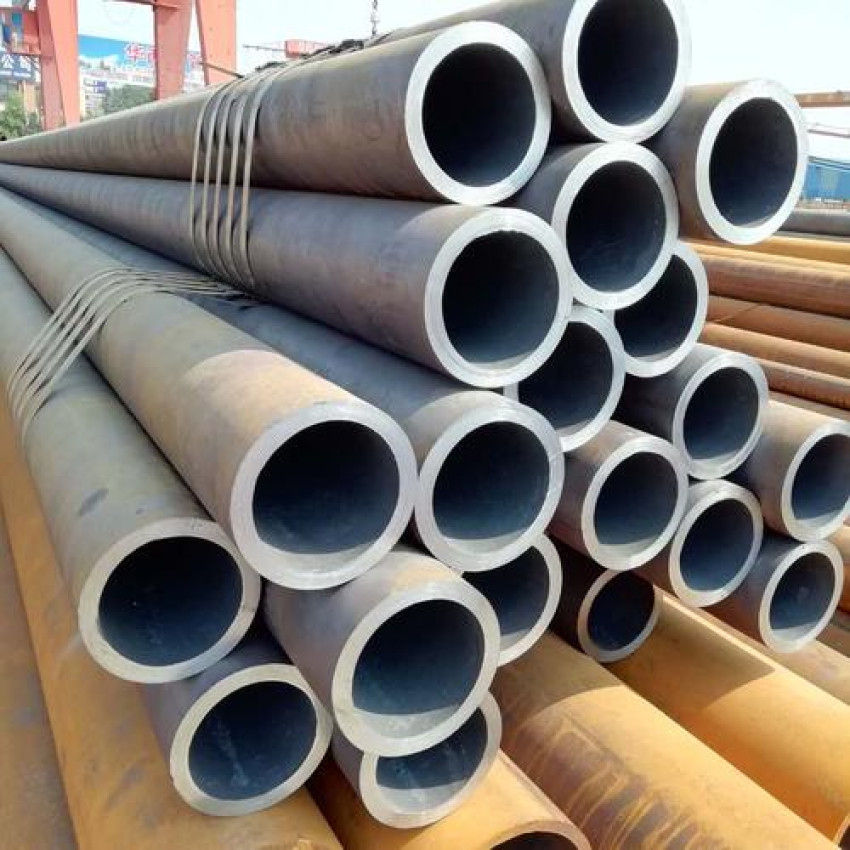
Seamless carbon steel pipe is a common pipeline material widely used in petroleum, chemical industry, electric power and other fields. Its size and specification standards are an important factor in ensuring the installation and use of pipelines. This article will introduce in detail the dimensional specifications of seamless carbon steel pipes.
Seamless carbon steel pipe dimensions
The size specifications of seamless carbon steel pipes usually include outer diameter, wall thickness, length and other parameters. According to different application fields and requirements, the size specifications of seamless carbon steel pipes also vary. The following are several common sizes of seamless carbon steel pipes:
1. Seamless carbon steel pipe with a diameter of DN15-DN300mm, a wall thickness of 2.5-12mm, and a length of 3-12m;
2. Seamless carbon steel pipe with a diameter of DN350-DN1000mm, a wall thickness of 6-25mm, and a length of 6-12m;
3. Seamless carbon steel pipe with a diameter of DN1200-DN2000mm, a wall thickness of 10-30mm, and a length of 8-12m.
Dimensional specifications of seamless carbon steel pipes
The size and specification standards of seamless carbon steel pipes mainly include the following aspects:
1. Outer diameter size standards: The outer diameter size of seamless carbon steel pipes should comply with the corresponding national standards or industry standards, such as GB/T 8163-2008, etc. Different models of seamless carbon steel pipes have different outer diameters, but they are usually designed in series to facilitate selection and production.
2. Wall thickness dimension standards: The wall thickness dimensions of seamless carbon steel pipes should comply with corresponding national standards or industry standards, such as GB/T 8163-2008, etc. On the premise of meeting the usage requirements, a thinner wall thickness should be chosen as much as possible to reduce cost and weight.
3. Length size standards: The length size of seamless carbon steel pipes should comply with the corresponding national standards or industry standards, such as GB/T 8163-2008, etc. Generally speaking, the length of seamless carbon steel pipes is between 6-12m, and can be customized under special circumstances.
4. Internal and external surface quality standards: The internal and external surfaces of seamless carbon steel pipes should be smooth, flat, and free of defects such as cracks, folds, and slag inclusions. For use occasions with special requirements, such as high temperature, high pressure, corrosion and other environments, corresponding internal and external surface treatment processes should be adopted to improve corrosion resistance and service life.
5. Mechanical performance standards: The mechanical properties of seamless carbon steel pipes should comply with corresponding national standards or industry standards, such as GB/T 8163-2008, etc. The main mechanical property indicators include tensile strength, yield point, elongation, impact toughness, etc. These indicators need to be selected and adjusted according to specific application situations.
6. Corrosion resistance performance standards: Seamless carbon steel pipes used in corrosive environments should have good corrosion resistance. Appropriate anti-corrosion treatment processes, such as coating, lining, stainless steel coating, etc., should be selected according to the specific corrosive medium and usage conditions to ensure the service life and safety of the pipeline.
7. Quality assurance standards: The production and use of seamless carbon steel pipes should comply with corresponding quality assurance standards, such as ISO 9001, etc. During the production process, strict quality control and inspection should be carried out to ensure that each batch of seamless carbon steel pipes meets the corresponding quality standards. During use, regular inspection and maintenance should be carried out as needed to ensure the safety and stability of the pipeline.
In short, the size and specification standards of seamless carbon steel pipes are an important factor in ensuring their quality and performance. When selecting and using seamless carbon steel pipes, full consideration should be given to their size and specification standards, and selection and installation should be carried out in strict accordance with the standards. At the same time, quality control and safety management should be strengthened during production and use to ensure the safety and stability of seamless carbon steel pipes.