Introduction
In the ever-evolving retail landscape, Point of Sale (POS) software stands at the forefront of innovation, driving significant changes in how businesses operate and interact with customers. With advancements in technology and shifts in consumer behaviour, the role of POS systems in retail has expanded beyond mere transactional functions.
Today, these systems are pivotal in enhancing customer experiences, streamlining operations, and providing invaluable insights into business performance. This article explores the key trends in POS software innovations that are shaping the future of retail in the digital era.
The Evolution of POS Software in Retail
The transformation of POS software from basic cash registers to sophisticated retail management systems reflects the broader digital revolution in the retail industry. Modern POS systems offer many functions, including inventory management, customer relationship management (CRM), sales reporting, and integrations with various digital platforms.
1. Integration with E-commerce Platforms
One significant trend is the seamless integration of POS software with e-commerce platforms. This synergy allows retailers to manage their online and offline sales channels effectively, providing a unified shopping experience for customers. Retailers can track inventory, sales, and customer data across all channels, ensuring consistency and efficiency.
2. Mobile POS Systems
The rise of mobile POS systems marks another pivotal trend. Retailers are adopting mobile solutions that allow sales transactions to be processed anywhere in the store, breaking the traditional boundary of the checkout counter. This mobility enhances customer service by reducing wait times and offers retailers flexibility in in-store layout and operations.
3. Enhanced Customer Experience
Today's retail POS systems are increasingly focused on improving the customer experience. Features like personalised marketing, loyalty programs, and targeted promotions are becoming standard. These tools enable retailers to create a more engaging and tailored shopping experience, fostering customer loyalty and repeat business.
4. Data Analytics and Insights
Advanced data analytics capabilities are a game-changer in POS software. Retailers can now leverage data collected through their POS systems to gain insights into customer behaviour, sales trends, and inventory management. This data-driven approach enables informed decision-making and strategic planning, which is essential in today's competitive retail environment.
5. Contactless Payments and Security
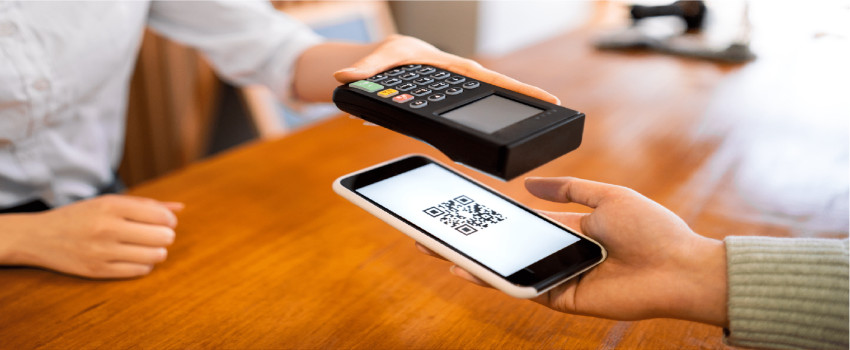
The adoption of contactless payments has accelerated, driven by consumer demand for quicker, more convenient payment options. Modern POS systems, including mobile wallets and NFC technology, support contactless payment methods. Alongside this, there is an increased focus on security, with POS systems incorporating advanced encryption and compliance with data protection regulations to safeguard customer information.
The Future of POS Software in Retail
The future of POS software in retail looks vibrant and is poised to revolutionise the industry further. Emerging technologies like Artificial Intelligence (AI) and the Internet of Things (IoT) are expected to play significant roles.
1. Integration of Advanced Technologies
Artificial Intelligence (AI) and Machine Learning (ML): AI and ML are set to revolutionise POS software by enabling more personalised shopping experiences, predictive inventory management, and efficient sales forecasting. AI algorithms can analyse customer data to offer tailored product recommendations and promotions, while ML can help predict stock requirements, thus reducing overstocking or stockouts.
Augmented Reality (AR) and Virtual Reality (VR): These technologies could be integrated into POS systems to enhance customer engagement. For example, AR can provide virtual try-ons or product demonstrations, enriching the in-store experience.
2. Enhanced Customer Experience
Seamless Omnichannel Experiences: The future POS systems will likely offer seamless integration between in-store, online, and mobile shopping, providing a unified experience across all channels. This integration ensures that the customer journey is fluid, whether shopping online from a mobile device, a laptop, or a brick-and-mortar store.
Personalisation: Leveraging customer data, future POS software will offer highly personalised shopping experiences, with product recommendations and promotions tailored to individual preferences and buying habits.
3. Expanded Payment Options and Security
Diverse Payment Methods: As digital wallets and cryptocurrencies gain popularity, POS systems must accommodate a broader range of payment options. This adaptability will be crucial in providing flexibility and convenience to customers.
Enhanced Security: With the increasing amount of data handled by POS systems, security will remain a paramount concern. Future POS software must incorporate advanced security protocols and comply with data protection regulations to safeguard customer information.
4. Data Analytics and Business Intelligence
Real-time Analytics: POS systems will provide real-time analytics, offering instant insights into sales trends, customer behaviour, and inventory levels. This real-time data can be used for making quick, informed decisions to enhance business operations.
Predictive Analytics: Using historical data, POS software will be able to forecast future trends, helping retailers in planning and strategizing for upcoming seasons or events.
5. Sustainable and Ethical Practices
Support for Sustainability: Future POS software might include features to track the sustainability of products and help retailers implement environmentally friendly practices. This aligns with the growing consumer demand for responsible and ethical retail.
6. Internet of Things (IoT) Integration
Intelligent Retail Environments: Integration with IoT devices will lead to more innovative retail operations. For example, sensors can track inventory in real-time, intelligent shelves can alert when stock is low, and IoT-enabled devices can enhance in-store customer interactions.
7. Customisation and Flexibility
Modular and Scalable Solutions: Future POS systems will likely be more modular, allowing retailers to choose and integrate features that meet their business needs. This flexibility will be crucial for businesses of all sizes to adapt to changing market conditions.
8. Cloud-based Systems and Remote Management
Cloud POS Systems: The shift towards cloud-based POS systems will continue, offering the benefits of remote management, real-time data access, and reduced need for on-site hardware. This will also facilitate more accessible software updates and maintenance.
Conclusion
The digital era has ushered in a wave of innovations in POS software, significantly impacting the retail industry. These advancements are about technological capabilities and creating value for retailers and consumers. As we look to the future, it is clear that POS software will continue to evolve, playing a crucial role in shaping the retail landscape.
Retailers who embrace these innovations will be well-positioned to thrive in this dynamic environment, offering enhanced customer experiences, efficient operations, and a deeper understanding of their business through data-driven insights. The future of retail is here, and the advancements in POS software are writing it.