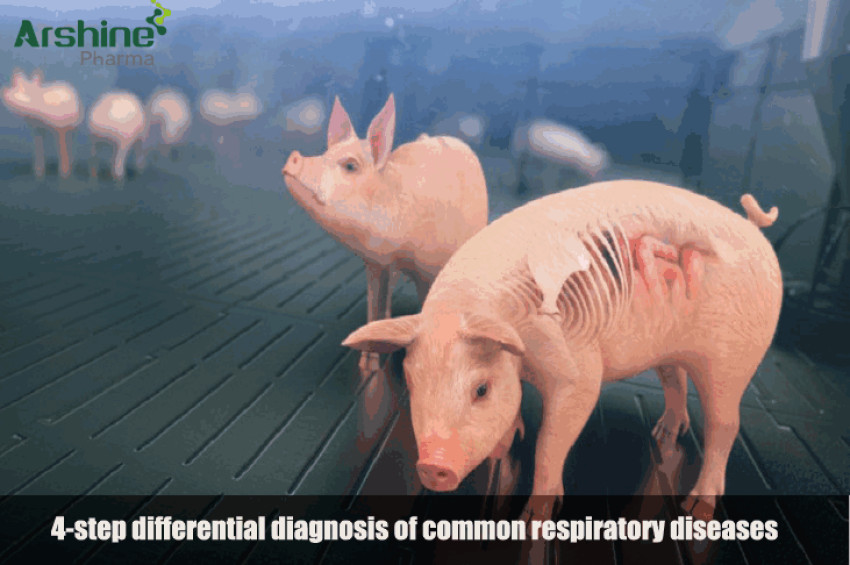
Porcine respiratory disease is a complex problem that plagues pig farmers, and some diseases are even named after respiratory syndrome, because there are many pathogens that cause respiratory diseases, which makes clinical differential diagnosis more difficult. In fact, respiratory diseases are very common in pig farms, especially in autumn and winter and spring when the temperature is relatively cold. Then when respiratory diseases occur in pig farms, it is the time for us to make effective differential diagnosis. Today we will talk about the methods for the initial diagnosis of these common respiratory diseases in pig farms.
Diagnosis method 1: Remember the law of onset. The law of
everything in the world is the most important. The occurrence of diseases also has its laws to follow. Academically, one of the occurrences of a certain disease is epidemiology, which means that the disease occurs in a certain region, Pig herds are prone to appear at a certain stage. The occurrence of common respiratory diseases generally has the following rules:
weaned piglet stage: the onset is mainly piglets and chain balls;
13-week-old stage: the onset is mainly mycoplasma, and it is also related to blue-eyed black hands behind the scenes; 18-week-old stage: the onset is mainly infectious Sexual pleuropneumonia is the main cause, and it is also related to pseudorabies behind the scenes.
Generally, the incidence of these respiratory diseases in pig farms is roughly the same. Different pig farms have slight differences according to their blue-eared, pseudo-crazy stability and management conditions. The incidence of disease is recorded, and the law of this incidence can be more accurately grasped. This can be used as one of the important basis for our initial differential diagnosis, but more is to use this rule as a reference for early prevention.
Diagnosis Method 2: Listening and Seeing
TCM regards seeing, smelling and inquiring as the main diagnostic method. We use the senses as a diagnostic method. Maybe Western medicine thinks this method is too low. In fact, the author thinks that it is using our senses to feel things (including diseases) Because pigs are infected with different diseases, causing certain physiological or pathological changes, it will inevitably lead to its external behaviors such as eating, drinking, pulling, and spreading, as well as its body surface characteristics and even odors. Differences are the characteristic manifestations of pathogens, and our human senses mainly include hearing, and vision.
For example, pigs with atrophic rhinitis show a skewed mouth and nose, which can be seen at a glance; another example is that pigs infected with respiratory diseases have important clinical manifestations such as coughing (listening) and panting (seeing). For example, we may often cough up phlegm when we have a cold; while panting is mostly when the lungs cannot exchange gas effectively, the body tries to speed up the depth and frequency of oxygen exchange between the lungs and the outside world, such as severe Panting during exercise, pathological thoracic breathing changes to abdominal breathing; in the
early stage of mycoplasma infection in the picture, the main manifestation is the infection of the upper respiratory tract by the pathogen, generally coughing more, and in the late stage of infection, the lungs become shrimp-like changes, because the lungs Oxygen exchange becomes limited, pigs will show that the dog sits to expand the chest cavity as much as possible, and deepen the breathing depth through abdominal breathing (panting); from the name of infectious pleuropneumonia, we need to realize that the main pathological change is pleuropneumonia, When the pleura is inflamed, every breath will cause the chest to tear, so the pig will not take a big mouthful of breath, and dare not cough loudly, and the pig will also relieve the pain of chest breathing through abdominal breathing; so we can see: panting cough Powerful, but pleuropneumonia cough is weak; mycoplasma has a long course of disease, and thoracic transmission has a short course. The long course of the disease leads to chronic digestion. We see that pigs suffering from mycoplasma often appear thin and pale, while thoracic transmission generally does not have this kind of performance.
Therefore, we can initially see the clinical manifestations of certain diseases through patient observation and summary.
Diagnosis method 3:
Different pathological changes in tissues and organs will appear after a period of time after different pathogens are infected. Different characteristics can be seen through autopsy. When respiratory diseases occur, we can representatively conduct autopsy. For further identification, although autopsy is not recommended in the context of ASF, it is also feasible under the premise of biosafety as long as it is conducive to disease diagnosis.
The specific necropsy steps will not be described in detail, but it should be noted that when the pigs have respiratory diseases not long ago, we try to select pigs with symptoms for a long time for necropsy, because the newly infected pigs generally do not show pathological changes; When the respiratory disease occurs in a group for a long time, we try to select pigs with clinical symptoms not too long for necropsy, because the infection of the pathogen is too long, and the pig may be infected with other pathogens.
Diagnostic method four: explore
Exploration means tentative diagnosis. When we cannot grasp the cause of the disease, in order to control the disease as soon as possible, we can make a tentative diagnosis with drugs. This is also allowed in diagnostics, but the premise is that we know the sensitive drugs and solutions of the suspected pathogen. Medication indiscriminately.
Summary
Correct and effective differential diagnosis is the prerequisite for successful prevention and control! It can allow us to make timely and accurate differential diagnosis, grasp the best timing of treatment, reduce the cost of medication, and reduce the loss of pig farms.
https://www.arshinepharma.com/info/4-step-differential-diagnosis-of-common-respir-77145212.html