

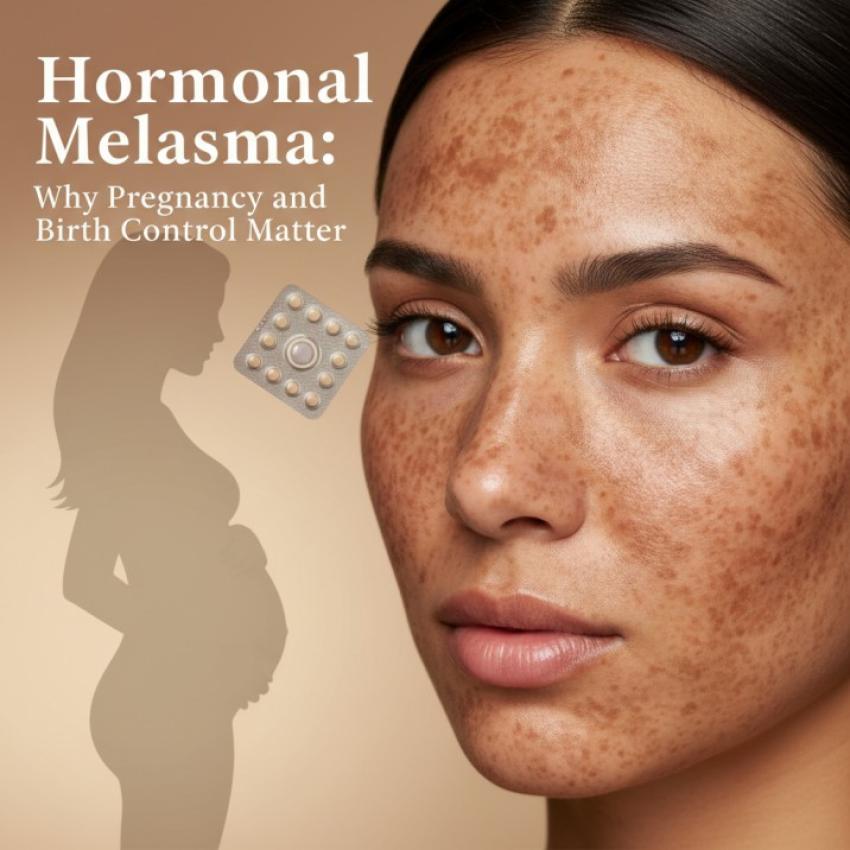
Many women first notice dark patches on their face during pregnancy or a few months after starting birth control pills. They look in the mirror and wonder what changed. The answer, in most cases, is hormones. This type of skin change is often called hormonal melasma, and it is much more common than people think.
Let us look at why it happens, why pregnancy and birth control play such a big role, and what you can do to take care of your skin.
What Is Hormonal Melasma?
Melasma is a skin problem that shows up as flat brown or grey patches. You will usually see them on the cheeks, forehead, nose, and above the lip. They do not hurt or itch. They just change the way your skin looks.
When hormones are the main reason behind these patches, we call it hormonal melasma. Your body has certain hormones, like estrogen and progesterone, that can wake up the pigment cells in your skin. When these cells become more active, they make extra color, and that color gathers in patches.
Why Pregnancy Can Cause Melasma
During pregnancy, hormone levels go up a lot. Estrogen and progesterone rise to support the baby, and your skin feels the effect of this too. That is why melasma is often called the mask of pregnancy.
For many women, the patches show up in the second or third month. For some, they come later. The darkness can grow as the pregnancy moves on, especially if the skin gets a lot of sun.
The good news is that, for many women, the patches slowly fade a few months after delivery. But this is not the same for everyone. In some women, the patches stay for longer and need proper care.
How Birth Control Pills Come Into the Picture
Birth control pills have hormones that act a lot like the ones made in your body. For some women, this can push the pigment cells in the same way pregnancy does.
Not every woman who takes the pill will get melasma. But if you already have a family history of it, or if you spend a lot of time in the sun, the chance becomes higher. The same can happen with hormone shots, patches, or other hormone based treatments.
If you notice dark patches after starting any such method, do not stop it on your own. Talk to your doctor first. They can guide you on whether a change is needed.
The Role of Sun and Heat
Hormones start the problem, but the sun often makes it worse. Sunlight tells your pigment cells to make even more color. This is why melasma can look darker in summer and lighter in winter.
Heat can also play a part. Hot kitchens, long hours outdoors, and very warm weather can make patches look darker for some women.
So even if hormones are the main cause, daily sun care is a must.
Simple Habits That Can Help
You do not need a complicated routine. A few small steps done every day can help your skin a lot.
Cover your face with a hat, scarf, or umbrella when you go out. Try to stay in the shade during the middle of the day when the sun is strongest.
Use a mild face wash and avoid scrubbing. Rough rubbing makes skin sore, and sore skin can leave darker marks behind.
Stay away from home remedies like lemon juice, baking soda, or harsh pastes. They may seem natural, but they often irritate the skin and make patches darker.
Sleep well, eat fresh food, and try to keep stress low. A calm body usually means calmer skin.
Be careful about trying many new products at once. Your skin needs time to adjust.
When to Talk to a Skin Doctor
If your patches are not fading, or if they are getting darker, it is a good idea to see a skin doctor. They can check your skin and tell you what kind of melasma you have. They can also tell you which treatment is safe for you, especially if you are pregnant or feeding a baby.
Some creams are made just for pigmentation. For example, Tretinoin & Fluocinolone Acetonide Cream for Melasma is a combination that doctors often suggest for stubborn patches. It is meant to help lighten dark areas and bring a more even skin tone. But it should be used only when a doctor advises it, and it is not meant for use during pregnancy. Always follow the directions you are given.
Why a Trusted Brand Matters
When you are caring for pigmentation, the quality of the product matters a lot. That is why it is wise to choose from a reliable melasma treatment manufacturing brand that follows proper quality checks and clearly shares what is inside each product. Read the label, ask questions, and never start a new cream without proper advice.
Be Patient With Your Skin
Hormonal melasma does not go away fast. Most people need weeks or even months of steady care before they see a change. Some days it may look better and some days it may look the same. That is normal.
The most important thing is to stay regular and protect your skin from the sun every single day.
Final Words
Hormonal melasma is common, harmless, and manageable. Pregnancy and birth control can trigger it, but that does not mean you did anything wrong. Once you understand the cause, you can take better care of your skin. Be gentle, stay out of strong sun, talk to your doctor, and give your skin time. With patience and the right care, your skin can look clearer and more even again.