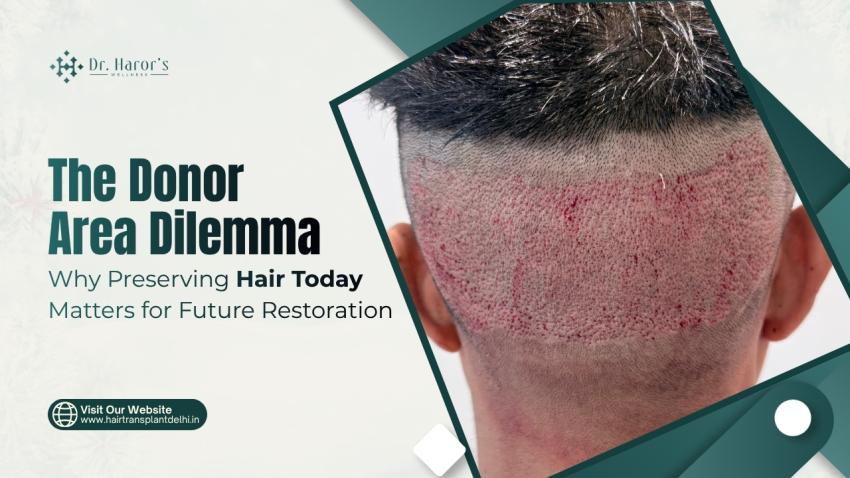
A hair transplant works by moving grafts from the donor area to the parts of the scalp affected by thinning and baldness. Many people looking into hair restoration treatment in Delhi assume that more grafts mean better results. It's really about using the right number of grafts, at the right angle, direction and depth, so they blend in with the hair around them.
Protecting donor hair is one of the most overlooked parts of the procedure. The donor area holds a limited supply of follicles, so every follicular unit has to be used wisely, with future hair loss in mind.
What Is the Donor Area in a Hair Transplant?
The donor area is usually the back and sides of the head, which are often less affected by DHT (dihydrotestosterone). Follicles are harvested from there and implanted in the areas where hair is thinning or gone. But that supply is limited. Everyone has a different donor density, scalp condition and number of grafts that can safely be taken. And once a follicle has been removed, it can't naturally grow back in its original spot.
Why Is Donor Area Preservation So Important?
Many people expect maximum coverage after their first procedure. But hair loss keeps progressing in the surrounding areas, so more of your scalp may thin out over time. If too many grafts are taken in the first procedure, it can limit your chances of having another transplant later.
That's why you should see the best dermatologist in Delhi, someone with solid hair transplant experience who can judge how many grafts you actually need. They'll weigh up your scalp condition, the severity of your hair loss, your facial proportions and your age.
Here's why preserving donor hair matters:
Future hair loss. You may lose hair in the surrounding areas later, which can create the need for another transplant.
Limited graft supply. Overharvesting can reduce donor density and leave visible thinning at the back of the scalp.
Natural appearance. Keeping enough donor density helps the whole scalp look natural.
Future repair work. A well-preserved donor area gives you more flexibility if a previous transplant needs correcting.
How Can You Protect Your Donor Area?
For long-term results, choosing the right surgical technique matters a great deal. A qualified surgeon should weigh up your donor density, hair thickness, scalp condition and the likely progression of your hair loss before any grafts are extracted.
Here are some things to keep in mind:
Don't take unnecessary grafts. The number of grafts should come from a sensible coverage plan.
Plan for future hair loss. Treatment planning should allow for further thinning.
Extract follicles evenly. Taking them in a balanced way prevents gaps and patchy areas in the donor zone.
Choose a skilled surgeon. Look for the best dermatologist in Delhi who specialises in hair transplantation, so you understand your treatment options and your future hair growth potential.
Conclusion
A successful hair transplant shouldn't only give you an instant cosmetic benefit. It should also protect your donor supply for the risk of future hair loss in the surrounding area. An individualised approach to hair restoration treatment in Delhi matters most for younger people and anyone with progressive hair loss.
If you're looking for the best dermatologist in Delhi, book a consultation at Dr. Haror's Wellness. Their experienced hair specialists take a patient-centric approach and offer personalised treatment aimed at your specific concerns.