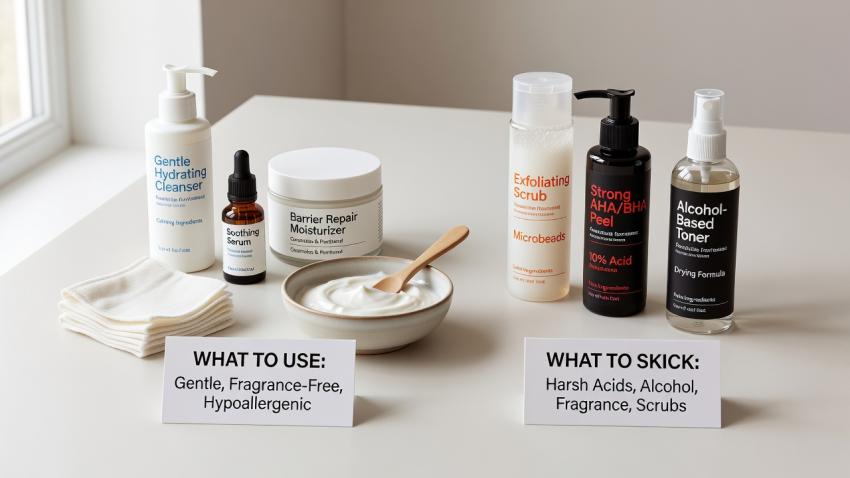
Irritated skin can feel like it is under attack. It may look red, feel hot, sting when you apply a product, or turn rough and flaky in patches. Most people react by trying something new, a stronger cream, a scrub, or a quick home fix. But with irritated skin, doing less almost always works better.
This guide will help you sort out what your skin needs right now and what it is better off without.
Why Skin Gets Irritated
Your skin has an outer layer that works like a shield. It keeps water in and keeps irritants out. When this shield gets weak, the skin starts to react to things that never bothered it before.
The usual causes are simple. Washing with hot water, scrubbing, over-exfoliating, and using too many strong products at once all wear the shield down. Sun, wind, dry air, and stress can add to it. Once the barrier is damaged, even a basic cream can sting.
What to Use: A Gentle Cleanser
Cleansing should be soft and quick. Choose a mild, creamy cleanser with no strong fragrance. Your face should feel clean but comfortable afterward, never tight or squeaky.
Wash twice a day with lukewarm water. Massage for about twenty seconds, rinse well, and pat dry with a clean, soft towel. If your skin is very sore in the morning, a splash of water is enough.
What to Use: A Barrier-Friendly Moisturizer
This is the most important product for irritated skin. A good moisturizer gives your skin water and helps the barrier heal. Look for ceramides, glycerin, hyaluronic acid, panthenol, and oat extract. Calming plant ingredients like Centella Asiatica, also known as Gotu Kola, help settle redness.
Apply it to slightly damp skin, morning and night. A coin-sized amount is enough for the whole face.
What If You Get Rough Skin After Applying Face Moisturizer?
Some people notice rough skin after applying face moisturizer, which feels confusing, since the cream is meant to make skin soft. There are a few common reasons.
The cream may have an ingredient your skin does not like, such as fragrance or alcohol. You may be using too much, which can leave a film that feels bumpy. Or your skin may be dry underneath and need a gentler, richer formula. Sometimes dead skin sits on the surface, and the cream makes it more visible for a while.
Try using a smaller amount, apply it on damp skin, and switch to a fragrance-free cream with ceramides. If the roughness stays for more than a couple of weeks, or comes with itching or redness, stop the product and speak with a skin doctor.
What to Use: Sunscreen
Irritated skin is more sensitive to the sun, and sun damage slows healing. Use a broad-spectrum sunscreen with SPF 30 or higher every morning. Mineral formulas with zinc oxide or titanium dioxide are usually gentler than chemical ones. Wear a hat or stay in the shade when the sun is strong.
What to Use: Soothing Extras
You do not need many extras, but a few can help. A cool compress, made with a clean cloth dipped in cold water, calms heat and redness. Aloe vera gel made for the face can feel cooling. A plain, fragrance-free balm over dry patches at night can help hold in moisture. Keep it simple and use only one extra at a time.
What to Skip: Scrubs and Harsh Exfoliants
Rough scrubs and strong acids are the first things to put away. They scratch and strip the skin, and this only makes the damage worse. Skip peels, cleansing brushes, and rough washcloths too. Once your skin feels normal again, you can bring back a mild exfoliant, but only once a week.
What to Skip: Strong Actives
Retinol, high-strength vitamin C, benzoyl peroxide, and strong acids can all sting irritated skin. They are not bad products, but they are too much for a damaged barrier. Pause them for three to four weeks, and bring them back slowly, one at a time, when your skin feels calm.
What to Skip: Fragrance and Alcohol
Strong perfume, essential oils, and drying alcohols are common triggers. They may smell nice or feel fresh, but they can cause stinging and redness. Check labels and choose products that say fragrance-free. Remember that natural does not always mean gentle, since some plant oils can irritate sensitive skin too.
What to Skip: Home Remedies
Lemon juice, baking soda, toothpaste, and sugar scrubs are very harsh on the skin. They can cause burns, dark marks, and more irritation. If you want to try something natural, stick to cool water and simple products made for the face.
What to Skip: Too Many Changes
Changing products every few days confuses your skin and makes it hard to know what works. Adding many new things at once makes it worse. Add one new product at a time, and wait at least two weeks before judging it.
A Simple Daily Plan
In the morning, cleanse or rinse, moisturize, and apply sunscreen. At night, cleanse and moisturize. That is all. It takes about three minutes, and it gives your skin the quiet it needs to heal.
Habits That Help
Use lukewarm water for your face and shower. Change your pillowcase and towel often. Keep your hands off your face, and do not pick at flaky patches. Drink enough water, sleep seven to eight hours, and take short breaks when you feel stressed, since stress can show up on the skin.
How Long Until It Feels Better?
Mild irritation can calm down within one to two weeks. A badly damaged barrier can take four to six weeks. Be patient, and do not rush back to your old routine. Add other products only when your skin feels comfortable.
When to See a Skin Doctor
If your skin stays red, itchy, or painful after a few weeks of gentle care, or if you see swelling, rashes, or small bumps, please see a skin doctor. Conditions like eczema, rosacea, and allergies can look like simple irritation and need proper treatment.
Final Thoughts
Irritated skin does not need more products. It needs fewer, gentler ones and some time. Use a mild cleanser, a barrier-friendly moisturizer, and sunscreen, and skip anything that scrubs, stings, or smells strong. Stay patient and consistent, and your skin will slowly settle, leaving it softer, calmer, and much more comfortable.