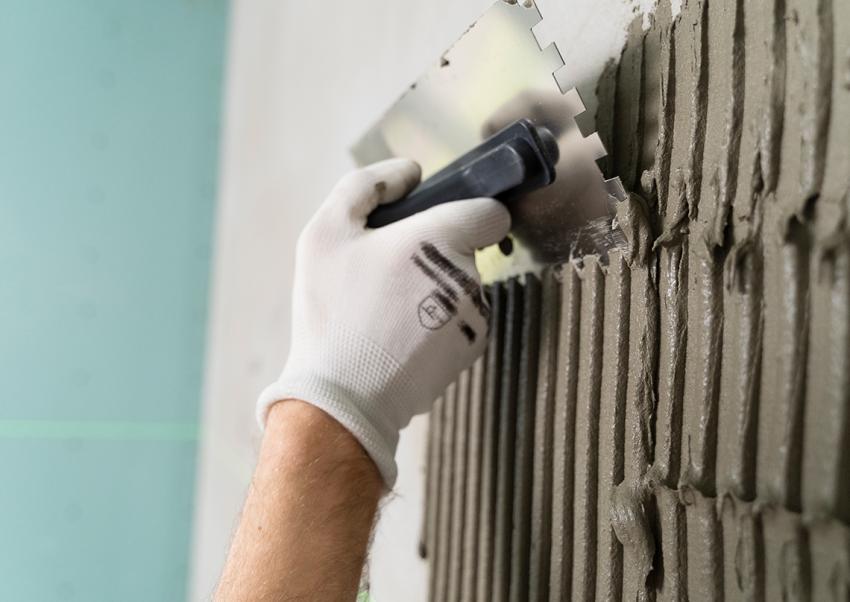
The quality of plaster sand has a direct influence on the workability, consistency and finish of cement plaster. While sand may appear uniform when examined visually, its actual characteristics can vary significantly depending on the size and distribution of its particles. These differences can affect how the sand behaves when mixed with cement and water.
One of the most widely used methods for evaluating the particle-size distribution of sand is sieve analysis. It is a laboratory test that separates sand particles into different size ranges using a series of sieves with progressively smaller openings. The results are recorded in a sieve analysis report, which provides useful information about the grading characteristics of the material.
For builders, contractors, engineers and construction material suppliers, understanding this report is important when assessing whether a particular sand sample is suitable for plastering applications. It helps identify variations in grading, excessive fine or coarse particles and inconsistencies that may not be apparent through visual inspection alone.
What Is Sieve Analysis of Plaster Sand?
Sieve analysis is a test used to determine the distribution of different particle sizes in a sand sample.
The process involves passing a measured quantity of dry sand through a stack of standard sieves arranged from the largest opening at the top to the smallest at the bottom. Each sieve retains particles that are larger than its openings while allowing smaller particles to pass through.
After the test, the quantity of sand retained on each sieve is measured and expressed as a percentage of the original sample weight.
The results provide a particle-size distribution profile, showing how much of the sand consists of relatively coarse, medium-sized and fine particles.
For plaster sand, this information is particularly useful because the material must have grading appropriate for the intended plaster application. Sand that is excessively coarse may affect surface finish, while an unsuitable concentration of very fine particles may increase water demand and influence mortar behaviour.
Sieve analysis provides an objective way to assess these characteristics.
1. Understanding the Different Components of a Sieve Analysis Report
A sieve analysis report generally contains several measurements that describe how the sand particles are distributed across different size ranges.
The most important parameters include:
Sieve size: This refers to the size of the openings in each sieve, generally expressed in millimetres or micrometres. Larger openings retain larger particles, while smaller openings separate finer particles.
Weight retained: This is the actual weight of sand remaining on an individual sieve after the sample has been passed through the sieve stack.
Percentage retained: This indicates the proportion of the original sample weight retained on a particular sieve.
Cumulative percentage retained: This represents the total percentage of the sample retained on that sieve and all the sieves above it.
Percentage passing: This indicates the proportion of the sample that has passed through a particular sieve. It is calculated by subtracting the cumulative percentage retained from 100.
Together, these measurements help describe the grading characteristics of plaster sand and make it possible to compare different samples.
2. How Percentage Retained and Percentage Passing Are Calculated
Understanding percentage retained and percentage passing is essential for interpreting a sieve analysis report.
Consider a hypothetical sand sample weighing 1,000 grams.
After sieving, the following quantities are retained on different sieves:
Sieve size
Weight retained
4.75 mm
0 g
2.36 mm
50 g
1.18 mm
150 g
600 microns
250 g
300 microns
300 g
150 microns
200 g
Pan
50 g
Total
1,000 g
The percentage retained on each sieve is calculated using:
Percentage retained = (Weight retained ÷ Total sample weight) × 100
For example, the percentage retained on the 600-micron sieve is:
(250 ÷ 1,000) × 100 = 25%
The cumulative percentage retained is obtained by adding the percentages retained on that sieve and all the sieves above it.
Percentage passing is then calculated as:
Percentage passing = 100 − Cumulative percentage retained
These calculations help establish the proportion of sand particles within different size ranges.
The total weight recovered after sieving should also be checked against the original sample weight. Significant discrepancies may indicate material loss or testing errors.
3. What Particle-Size Distribution Reveals About Plaster Sand
Particle-size distribution is one of the most important pieces of information provided by a sieve analysis report.
It shows whether the sand contains a suitable combination of particle sizes or whether it is concentrated within a narrow size range.
A well-graded sand generally contains particles of different sizes in proportions appropriate for the intended application. Smaller particles can occupy spaces between larger particles, influencing the packing characteristics of the aggregate.
This can affect the amount of cement paste required to fill the spaces between particles and produce a workable mortar.
In plastering, grading also influences surface texture, finishing characteristics and the consistency of the mortar.
A sand sample containing too many coarse particles may produce a relatively rough surface and may not be suitable for finer plaster finishes. Conversely, an excessive proportion of very fine material can increase the surface area that needs to be coated with cement paste and may raise water demand.
The objective is not simply to obtain the finest possible sand. It is to achieve a particle-size distribution suitable for the specified plastering work.
4. Identifying Excessively Fine or Coarse Particles
A sieve analysis report helps identify whether a sand sample contains an unsuitable proportion of fine or coarse particles.
Excessively coarse particles
If a large proportion of the sample is retained on larger sieves, it indicates that the sand contains relatively coarse particles.
Depending on the intended application, this may affect:
- Smoothness of the plastered surface.
- Ease of application and finishing.
- Uniformity of the mortar.
- Suitability for thinner plaster coats.
Coarse particles are not automatically unsuitable, but their proportion must be evaluated against the relevant grading requirements.
Excessively fine particles
If a large percentage of the sample passes through smaller sieves, it indicates a higher proportion of fine material.
This may increase the total surface area of the aggregate, potentially increasing the amount of water and cement paste required to achieve the desired workability.
Excessive fines can also influence shrinkage and the risk of surface cracking, depending on their nature, quantity, mix proportions and curing conditions.
It is important to distinguish fine sand particles from silt and clay. Sieve analysis alone may not adequately identify or quantify all very fine and cohesive impurities. Additional tests may be necessary.
5. Understanding Fineness Modulus in the Report
Some sieve analysis reports also include a value known as the fineness modulus (FM).
Fineness modulus is an empirical index calculated by adding the cumulative percentages retained on a specified series of standard sieves and dividing the total by 100.
It provides a general indication of the relative coarseness or fineness of an aggregate.
A higher fineness modulus generally indicates a coarser aggregate, while a lower value indicates a finer aggregate.
However, fineness modulus does not describe the complete particle-size distribution. Two sand samples can have similar fineness modulus values while having different proportions of particles across individual sieve sizes.
For this reason, fineness modulus should not be used as the only criterion for evaluating plaster sand.
The percentage retained and percentage passing on individual sieves must also be examined to understand the actual grading characteristics.
6. How Sieve Analysis Helps Assess Plaster Workability
Workability refers to how easily fresh plaster mortar can be mixed, applied, spread and finished.
Sand grading influences workability because particle sizes affect the way the aggregate packs together and interacts with cement paste and water.
A suitable particle-size distribution can help produce a mortar with consistent handling characteristics.
When grading is unsuitable, several problems may arise:
- Mortar may feel harsh or difficult to spread.
- Excessive fines may increase water demand.
- Poor particle distribution may affect cohesion.
- Variations in sand grading may produce inconsistent batches.
- Finishing may become more difficult.
However, workability is not determined by sand grading alone. Cement content, water-cement ratio, sand moisture, admixtures and mixing procedures also play important roles.
Sieve analysis therefore provides useful information about one important component of mortar performance rather than predicting workability on its own.
7. Why Consistent Grading Matters Between Sand Batches
Consistency is particularly important in large construction projects where plastering work is carried out across multiple rooms, floors or buildings.
If the grading of sand changes significantly between deliveries, the resulting mortar may behave differently even when the nominal mix proportions remain unchanged.
For example, one batch may contain a higher proportion of fine particles, while another may contain more coarse material.
These differences can influence water requirements, mortar handling and surface finishing.
A consistent grading profile helps contractors maintain more predictable material characteristics during plastering operations.
Periodic sieve analysis can therefore be used as part of incoming material inspection and supplier quality control.
It is especially useful when sand is sourced from different locations or processed through different screening and washing operations.
8. What a Sieve Analysis Report Cannot Tell You
Although sieve analysis is an important quality-control test, it does not provide a complete assessment of plaster sand quality.
It primarily measures particle-size distribution. Several other material characteristics must be evaluated separately.
Silt and clay content: Very fine particles and cohesive impurities may require additional tests to establish their presence and quantity.
Organic impurities: Sieve analysis cannot establish whether the sand contains harmful organic matter. Appropriate impurity testing is required.
Particle shape and surface texture: The test does not directly describe whether particles are rounded, angular or irregular.
Chemical characteristics: It does not establish whether the sand contains potentially harmful soluble salts or other chemical contaminants.
Moisture content: The test does not independently determine the moisture content of the supplied sand.
For a comprehensive evaluation, sieve analysis should be considered alongside other relevant aggregate tests and applicable material specifications.
9. How to Use a Sieve Analysis Report When Purchasing Plaster Sand
For construction professionals and material buyers, a sieve analysis report can help establish whether a sand sample meets the required grading specifications.
The following checks are useful when evaluating a report:
- Check the sieve sizes: Confirm that the report includes the sieve series relevant to the applicable grading specification.
- Review percentage passing: Compare the percentage passing through each sieve with the permitted limits.
- Examine the distribution: Check whether the sample has an appropriate balance of fine and coarse particles.
- Look for excessive fines: Review the results on smaller sieves and arrange additional testing where necessary.
- Compare different batches: Check whether successive deliveries maintain reasonably consistent grading.
- Verify the test method: Confirm that the report identifies the applicable testing standard and procedure.
In India, IS 1542, covering sand for plaster, is an important reference for assessing plaster sand specifications. The relevant sieve grading requirements should be checked against the applicable edition of the standard and the intended application.
A report should ideally identify the sample, test date, test method, sieve sizes, weights retained and percentage calculations. This makes the results easier to verify and compare.
Conclusion
A sieve analysis report provides valuable information about the particle-size distribution of plaster sand. By showing the percentage of material retained and passing through different sieve sizes, it helps assess whether the sand has grading suitable for plastering applications.
The results can reveal excessive fine or coarse particles, variations between batches and differences in grading that may influence mortar workability and surface finish.
However, sieve analysis should not be treated as a complete measure of sand quality. Properties such as silt content, organic impurities, moisture and particle shape require additional evaluation.
For builders, contractors and construction material buyers, understanding sieve analysis is an important step towards selecting consistent plaster sand. When interpreted alongside relevant material specifications and other quality-control tests, the report provides a more reliable basis for assessing the suitability of sand for plastering work.