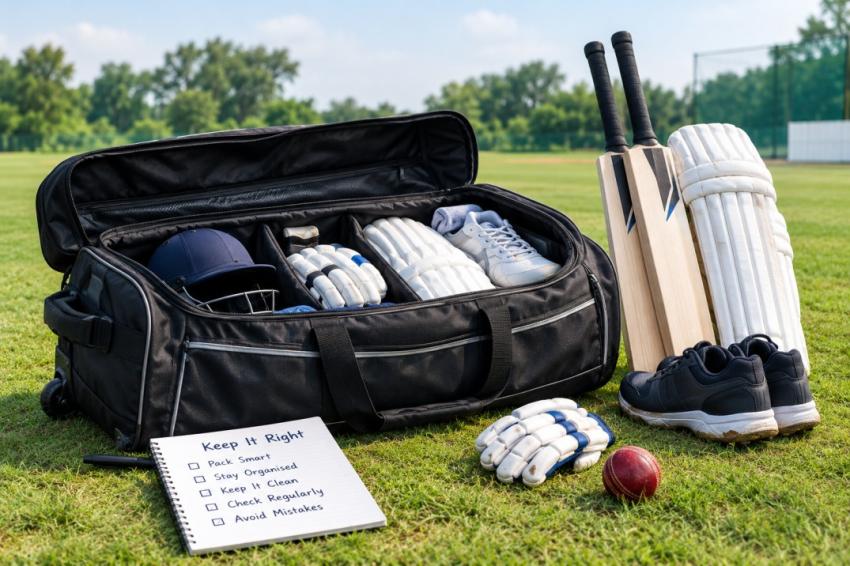
A cricket kit bag contains all that one needs for practice and playing games. Bats, gloves, pads, shoes, and other protective equipment require space as well as appropriate care. But players end up making tiny mistakes in packing, using, and taking care of the cricket bag. This is bound to affect their equipment as well as create clutter.
Regardless of whether you are new to the game or play cricket regularly, you could benefit from organising your equipment. Here are some cricket kit bag mistakes that you should avoid and ways to take care of your equipment.
1. Choosing the Wrong Bag Size
One of the mistakes that people make is purchasing a bag without taking into consideration what equipment they will require to put inside the bag. If one purchases a small bag, then it will be hard to accommodate items such as batting pads, gloves, and shoes. Too large a bag can make it cumbersome to carry when full of excess baggage.
Things to take into account before purchasing the bag:
Number of bats you take with you.
Whether you need space for pads, gloves, and helmet.
Whether you need space for shoes.
Frequency of your match tours.
Make sure you purchase a bag of appropriate size depending on your game.
2. Packing Everything Without Organisation
Although it might appear easier to store everything in one compartment, it will make it harder for you to find what you need. The gloves might be hidden under the clothing, while small accessories can fall into the corners. The safety equipment can also get entangled with other things.
Thus, you should assign a special place to everything. Keep the smaller accessories in a special pocket and keep the clothes apart from the shoes.
Proper organization will save you much time before the game and help avoid forgetting something important.
3. Putting Wet Equipment Straight Into the Bag
After a long practice session, players may pack their equipment quickly and head home. However, putting wet or sweaty items into a closed bag can cause unpleasant smells and allow moisture to remain trapped.
After returning home, take out damp items and allow them to dry naturally in a well-ventilated area. Wipe down equipment when needed and make sure everything is dry before packing it again.
Remember these simple steps:
Remove wet clothing and towels as soon as possible.
Allow gloves and pads to air-dry before storing them.
Clean muddy shoes before putting them away.
Leave the bag open for ventilation when it is not in use.
Avoid leaving equipment in direct sunlight for extended periods, as excessive heat may affect some materials.
4. Ignoring the Condition of the Bag
Players often focus on maintaining their bats and protective gear but forget to check the bag itself. A damaged zip, loose stitching, worn-out strap, or torn compartment can make carrying equipment difficult.
Check the handles, zips, seams, wheels, and straps from time to time. Clean dirt from the exterior and avoid dragging the bag over rough surfaces unnecessarily. If you notice damage, repair it early or consider replacing the bag when it can no longer carry your equipment safely.
5. Overloading the Bag With Unnecessary Items
Carrying extra equipment can be useful during tournaments. However, packing items you rarely use adds weight and makes the bag harder to manage.
Some players carry old accessories, extra clothing, multiple water bottles, and damaged equipment without checking whether these items are needed.
To avoid overpacking:
Keep your regular match-day essentials together.
Remove broken or unusable accessories.
Carry extra clothing only when necessary.
Check the bag before leaving for practice or a match.
A lighter, well-organised bag is easier to transport between home, the practice ground, and the changing area.
6. Storing Shoes With Clean Equipment
Cricket shoes often collect mud, grass, and dust during outdoor matches. Placing them directly beside clean clothing, gloves, or other equipment can transfer dirt and moisture.
Whenever possible, use a separate shoe compartment or a washable shoe pouch. Remove excess mud before storing footwear and allow damp shoes to dry properly.
This approach supports better cricket gear storage and helps keep the rest of your equipment cleaner, particularly during the rainy season or after playing on wet grounds.
7. Not Checking the Equipment After Each Game
Rushing through the process of packing up your stuff after each game may result in forgetting something or damaging your equipment.
Spend some time inspecting your equipment after each game. In this way, you will be able to assess whether there is any damage to your protective equipment, clean the dirty items, and mark those items that should be repaired or replaced.
Below is a list of some items that can serve as your post-game inspection list:
Inspect for any damage on the bat.
Check gloves and pads for any loose strings or stitches.
Clean the dirty shoes and protective equipment.
Make sure that all the little things have been counted.
Separate the things that need cleaning and repair.
This will be quite helpful for athletes training several times a week.
8. Keeping Valuables and Personal Items Loose
Keys, wallets, mobile phones, and other personal belongings should not be mixed carelessly with cricket equipment. Loose items can get lost among the gear or become damaged when the bag is moved around.
Use a separate zipped pocket for personal belongings. Keep sharp tools, such as scissors or cutters used for equipment maintenance, in a secure pouch rather than placing them loosely inside the main compartment.
It is also sensible to avoid leaving valuables unattended in changing rooms or near the boundary during practice sessions.
9. Carrying a Bag That Is Difficult to Transport
A bag may offer plenty of storage space but still be uncomfortable to carry. Heavy equipment, poorly positioned shoulder straps, and unsuitable handles can make travelling to and from the ground tiring.
When selecting a bag, consider how you usually travel. A backpack-style option may suit players who walk or use public transport, while a duffel bag with wheels may be more practical for those carrying several bats and protective items.Try to distribute the weight evenly and avoid carrying more than you need.
10. Buying a Bag Without Checking Its Features
The appearance of a bag should not be the only factor in your decision. Players sometimes choose a design they like without checking its material, storage layout, padding, or overall build quality.
Use the following table to compare important features before making a purchase.
Bag feature
Size and capacity
Compartments
Material
Zips and stitching
Shoulder straps
Ventilation
Wheels and handles
What to look for
Enough room for regular equipment
Separate sections for shoes and accessories
Durable, easy-to-clean fabric
Strong zips and reinforced seams
Comfortable and adjustable straps
Airflow or ventilated sections where available
Suitable for your travel needs
Why it matters
Prevents overcrowding
Keeps items organised
Supports regular use
Helps with everyday handling
Makes carrying easier
Helps manage damp equipment
Improves portability
Before purchasing, think about your playing level, equipment requirements, travel habits, and budget. The right choice should make carrying and organising your gear easier rather than simply adding more storage space.
Keep Your Cricket Equipment Ready for Every Match
Having a cricket kit bag that has been well taken care of will assist in the process of organising equipment, finding out what has been left behind, and getting ready for the next match. Making sure that you do not fall victim to common mistakes in packing and maintenance of the cricket kit bag may help to ensure your gear remains intact.
Develop a simple routine for yourself:
Ensure that you check your equipment after each session.
Make sure that you dry all the wet gear before storage.
Clean your cricket kit bag regularly.
Make sure that there are no signs of damage to the zippers, handles, and straps.
You should aim to carry what is necessary and not what is extra.
It’s important to remember that the aim isn’t to have more equipment but to have your equipment packed in a manner that ensures it remains accessible to you at all times.