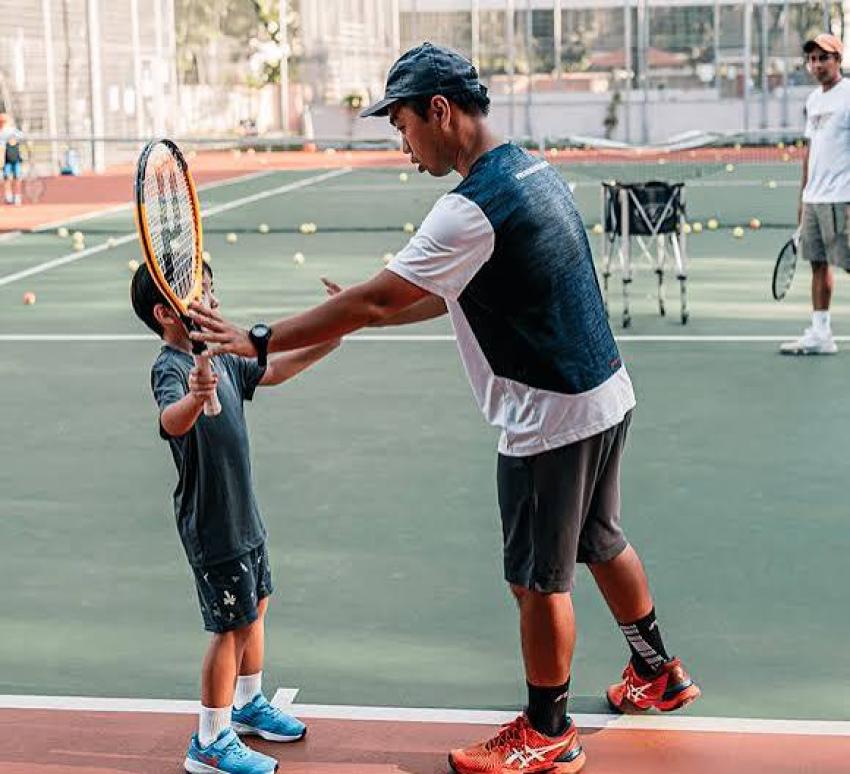
Spending more time on the tennis court does not always lead to better results. Some players attend training regularly, practise their shots and follow their coach’s instructions, yet their performance seems to stay at the same level. They may continue making the same errors, struggle against familiar opponents or find it difficult to use their practice skills during a match. This can be frustrating, especially when a player is putting in genuine effort. However, reaching a plateau does not necessarily mean they lack talent or are not practising enough. Sometimes, the way they practise needs to change.
Understanding what is holding back progress can help players make better use of their training time and work towards their next level.
1. Practising Familiar Shots Can Hide Weaknesses
Players naturally enjoy practising shots they can already perform well. A forehand that consistently lands inside the court or a serve that feels comfortable can make a training session satisfying. However, repeating familiar shots may not address the weaknesses that are limiting overall performance. For example, a player might have a reliable forehand during a predictable rally but struggle when the ball arrives close to the baseline or pulls them wide. If practice rarely includes these situations, the player may not develop the adjustments needed to handle them. Progress often requires spending time on uncomfortable parts of the game. This might mean practising backhand returns, recovering after a wide shot, or controlling the ball when moving backwards.
A useful training session should not only reinforce what a player does well. It should also identify what happens when conditions become less predictable.
2. Improving Technique Without Applying It in Matches
A player may develop a better serve, cleaner groundstrokes, or more consistent contact during coaching sessions but see little improvement in match results. This can happen because executing a shot in a controlled drill is different from choosing and hitting that shot during a point. During a match, players must react to the incoming ball, judge their opponent's position and decide where to play their next shot. They have less time to think through every movement. Consider a player who can practise cross-court forehands accurately when feeding is consistent. During a match, the same player may rush the shot or attempt a risky winner because the ball arrives at an awkward height. To bridge this gap, training should gradually include more realistic situations. Players can practise starting points from different positions, responding to varied shots and making decisions rather than simply repeating a movement.
The aim is to make improved technique useful during actual play, not just during practice.
3. Playing the Same Type of Opponent Too Often
Regular matches are valuable, but always playing against the same type of opponent can limit development. A player who usually faces someone with a similar playing style may become comfortable with a familiar pace and pattern. When facing an opponent who hits with more topspin, sends the ball deep, or uses unexpected angles, that player may struggle to adjust. Different opponents expose different weaknesses. A defensive player may test patience, while an aggressive player may leave little time to prepare for the next shot. Someone who varies the height and speed of the ball can reveal problems with timing and positioning. Players do not need to win every practice match to benefit from it. They should pay attention to what each opponent makes difficult and use those observations to guide their next training session.
Keeping a short note after a match can help. For example, a player might record that they repeatedly lost points when pulled wide or became impatient during longer rallies. These observations give the coach something specific to work on.
4. Focusing on Power Instead of Shot Selection
When progress slows, some players respond by trying to hit harder. They may believe that more powerful groundstrokes or faster serves will help them win more points. Power can be useful, but it does not solve every problem. A player who chooses the wrong shot at the wrong moment may continue losing points regardless of how hard they hit the ball. For instance, attempting a winner from a defensive position can lead to unnecessary errors. In that situation, a controlled shot that gives the player time to recover may be the better decision. Players should learn to recognise when to attack, when to keep the rally going, and when to defend. Court position, the height and depth of the incoming ball, and the opponent's position all influence the choice.
This is one reason tactical practice matters. Players need opportunities to understand why a particular shot works in one situation but creates problems in another.
5. Receiving Feedback Without Knowing What to Change
A player may hear instructions such as “move your feet earlier,” “recover faster,” or “keep the ball deep” during lessons. These comments can be helpful, but they may not lead to improvement if the player does not understand when or how to apply them. Too many corrections at once can also make it difficult to focus. A player who is thinking about grip, footwork, swing path, and court position simultaneously may become hesitant instead of playing naturally. A more practical approach is to work on one or two priorities at a time. If the main problem is recovering after a forehand, for example, the player can practise returning to a balanced position after each shot before adding more complicated drills. Coaches can also help players connect feedback to match situations. Rather than simply correcting a movement, they can explain how it affects the next shot or why it makes certain balls harder to reach.
When players understand the purpose of an adjustment, they are more likely to recognise the problem and correct it independently.
6. Training Consistently but Without a Clear Goal
Attending lessons regularly is important, but attendance alone does not guarantee progress. If every session consists of similar drills without a specific development goal, players may find themselves repeating the same work without addressing their main difficulties. A useful goal should be clear enough to guide practice. Instead of aiming to “become a better player,” someone might work on returning to the centre of the court after wide shots or reducing errors when receiving a deep ball. The goal should also be realistic. Trying to change several established habits in a short period can make training confusing and difficult to evaluate. Players can review their progress every few weeks with their coach. They might look at whether a particular weakness appears less frequently, whether they can handle a wider range of shots, or whether a skill is becoming more reliable during matches.
Progress is not always reflected in wins. Sometimes, a player is developing better habits even before the results begin to improve.
7. Physical Fatigue Can Affect Performance More Than Expected
Not every plateau is caused by poor technique or tactics. Fatigue can affect how well players move, react, and maintain control throughout a session or match. When tired, a player may arrive late to the ball, lose balance during a shot, or make rushed decisions. These problems can resemble technical weaknesses, even when the player's underlying skills have not changed. Training too intensely without enough recovery can make the situation worse. Players balancing tennis with school, work or other commitments may also find that sleep and recovery receive less attention than practice itself. A sensible training schedule should consider the player's age, current fitness, workload and experience. Rest days, adequate sleep, hydration and appropriate physical conditioning all support consistent performance.
If performance repeatedly drops towards the end of sessions, it may be worth reviewing the training load rather than simply adding more practice.
How Can the Right Tennis Training Help Players Move Forward?
When a player stops improving, the answer is not necessarily to spend more hours on court. It is to identify what is preventing progress and make training more purposeful. A suitable Tennis academy in Singapore can provide a structured environment where players work on technical skills, movement, tactical decisions, and match situations. The important consideration is whether the training addresses the player's actual needs rather than following the same routine regardless of ability. When comparing Tennis classes in Singapore, players and parents can look beyond the schedule and location. It is worth asking how coaches identify individual weaknesses, how progress is reviewed, and whether sessions give players opportunities to apply their skills in realistic match situations. Group training can help players adapt to different playing styles, while individual feedback may be useful when a specific technical or tactical problem needs closer attention. The most suitable approach depends on the player's current level, goals, and areas for improvement.
Players can also contribute by discussing recurring problems with their coach, keeping track of match patterns and arriving at each session with a clear objective.
Final Thoughts
A tennis plateau can be discouraging, but it does not mean that months of training have been wasted. The player may have developed a solid foundation and now needs a different approach to continue progressing. Sometimes the missing piece is more varied practice. In other cases, it may be better shot selection, improved recovery, clearer feedback, or a more balanced training schedule. The key is to look beyond how often someone practises and examine what they are learning from each session. With specific goals, useful feedback and opportunities to apply new skills during matches, players can identify the habits holding them back and work towards more consistent performance.