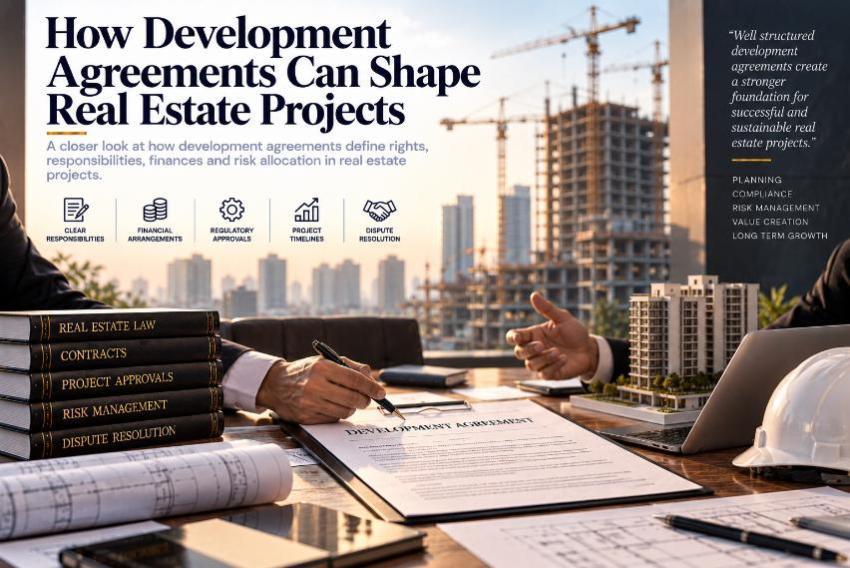
Real estate development often involves several parties with different financial interests, responsibilities and expectations. A landowner may contribute the property while a developer provides funding, expertise and project management. A development agreement can provide the legal framework for bringing these interests together.
A well structured development agreement can influence how a project is financed, developed and completed. It can also establish responsibility for approvals, construction, expenses, revenue sharing and potential disputes. Clear contractual terms can therefore reduce uncertainty during the project lifecycle.
What Is a Development Agreement?
A development agreement is a contract between parties involved in the development of real estate. It commonly sets out the rights and responsibilities of the landowner and developer.
The exact structure can vary depending on the project. A typical agreement may address:
Development rights
Project scope
Construction responsibilities
Financial arrangements
Revenue sharing
Project timelines
Regulatory approvals
Marketing responsibilities
Allocation of completed units
Termination rights
Dispute resolution
The agreement should reflect the commercial understanding between the parties and comply with applicable laws.
How Development Agreements Allocate Responsibilities
One of the main purposes of a development agreement is to establish who is responsible for each aspect of the project.
For example, the developer may be responsible for obtaining approvals, arranging construction and managing contractors. The landowner may be responsible for providing possession of the property and cooperating with documentation or regulatory requirements.
Clearly defining these responsibilities can reduce confusion during the project.
If an agreement simply states broad obligations without explaining how they will be performed, disagreements may arise later.
Financial Arrangements Between Landowners and Developers
Financial terms are often central to development agreements.
The parties may agree to share revenue, divide completed units or follow another commercial arrangement. The agreement should clearly explain how payments or other financial benefits will be calculated.
Important provisions may cover:
Payment schedules
Revenue sharing
Construction expenses
Taxes and statutory charges
Financing costs
Marketing expenses
Cost overruns
Accounting and reporting
Clear financial provisions can make it easier to assess each party's obligations throughout the project.
Development Rights and Use of the Property
A development agreement should clearly establish the rights granted to the developer.
This may include the right to develop the property, obtain approvals, appoint contractors and undertake construction activities within the agreed scope.
The agreement should also identify the permitted use of the property and any restrictions applicable to the development.
Unclear development rights can create disputes, particularly where the project's scope changes during construction.
Importance of Land Title Due Diligence
Before entering into a development agreement, parties should establish whether the landowner has the legal right to enter into the arrangement.
Title due diligence may involve examining ownership records, previous transactions, encumbrances, mortgages and existing litigation.
Real Estate dispute lawyers can be relevant when parties need to assess property related disputes or potential title concerns connected with a development project.
Resolving ownership questions at an early stage can reduce the risk of disruption once development begins.
Approvals and Regulatory Responsibilities
Real estate projects may require several approvals before construction or sale can proceed.
A development agreement should establish which party is responsible for obtaining relevant permissions and meeting applicable requirements.
These responsibilities may include:
Planning permissions
Building approvals
Environmental permissions
Project registrations
Local authority approvals
Utility connections
Completion related approvals
The agreement should also address what happens if an approval is delayed or refused.
Construction and Project Timelines
Development agreements can shape how construction responsibilities and timelines are managed.
The contract may specify milestones for obtaining approvals, commencing construction and completing different stages of the project.
It may also address circumstances such as delays caused by regulatory authorities, contractors, funding problems or events beyond the parties' control.
Clear provisions can help establish responsibility when the project does not proceed according to the original schedule.
Managing Cost Overruns
Construction costs can change due to increases in material prices, labour expenses, design changes or unexpected site conditions.
A development agreement should therefore explain how additional costs will be handled.
The parties may agree on who bears specific expenses or establish procedures for approving variations.
Without clear provisions, disagreements over cost increases can affect the progress of the project.
Revenue Sharing and Allocation of Units
Where a project involves revenue sharing or allocation of completed units, the agreement should provide a clear mechanism for determining each party's entitlement.
The contract may specify how units will be identified, how sales proceeds will be distributed and how expenses will be accounted for.
It should also address what happens if the final project differs from the original plan.
Detailed financial and allocation provisions can reduce disputes once units are completed or sold.
Dispute Resolution Provisions
Disputes can arise even when parties have carefully negotiated their commercial arrangement.
Development agreements should therefore contain a clear dispute resolution mechanism.
Depending on the agreement, parties may consider negotiation, mediation or arbitration. Court proceedings may also be relevant where appropriate.
Domestic arbitration lawyers can assist parties in understanding arbitration arrangements and the contractual framework governing domestic commercial disputes.
The clause should clearly address the scope of disputes covered and the applicable procedure.
Termination and Exit Arrangements
A development agreement should also explain when and how the relationship can come to an end.
Termination provisions may address:
Material breach
Failure to obtain approvals
Prolonged project delays
Insolvency
Failure to provide funding
Unauthorised transfer of rights
The agreement should also establish the consequences of termination.
For example, it may address possession of the property, outstanding payments, work already completed and rights relating to documents or approvals.
Why Clear Documentation Matters
A development project can continue for several years. During this period, circumstances may change and the parties may have different interpretations of their original arrangement.
Clear documentation can provide a reference point when disagreements arise.
Parties should ensure important decisions, amendments and variations are properly recorded. Informal arrangements can create uncertainty, especially when they differ from the written contract.
Questions to Consider Before Signing a Development Agreement
Before entering into a development arrangement, parties should consider:
Is ownership of the property properly established?
Are development rights clearly defined?
Who will obtain the necessary approvals?
How will construction costs be handled?
How will revenue or completed units be divided?
Who bears responsibility for delays?
How will cost overruns be managed?
What happens if one party breaches the agreement?
Is there a clear termination mechanism?
How will disputes be resolved?
These questions can help parties identify potential areas of uncertainty before the project begins.
Conclusion
Development agreements can shape almost every major aspect of a real estate project. They establish responsibilities, financial arrangements, development rights, timelines and procedures for handling potential disputes.
A carefully drafted agreement can provide greater clarity between landowners and developers while helping manage commercial and legal risks. Proper title due diligence, clearly defined obligations and suitable dispute resolution provisions can also contribute to more predictable project management.
For this reason, development agreements should be considered more than simple commercial contracts. They form an important part of the legal framework governing the development and future of a real estate project.