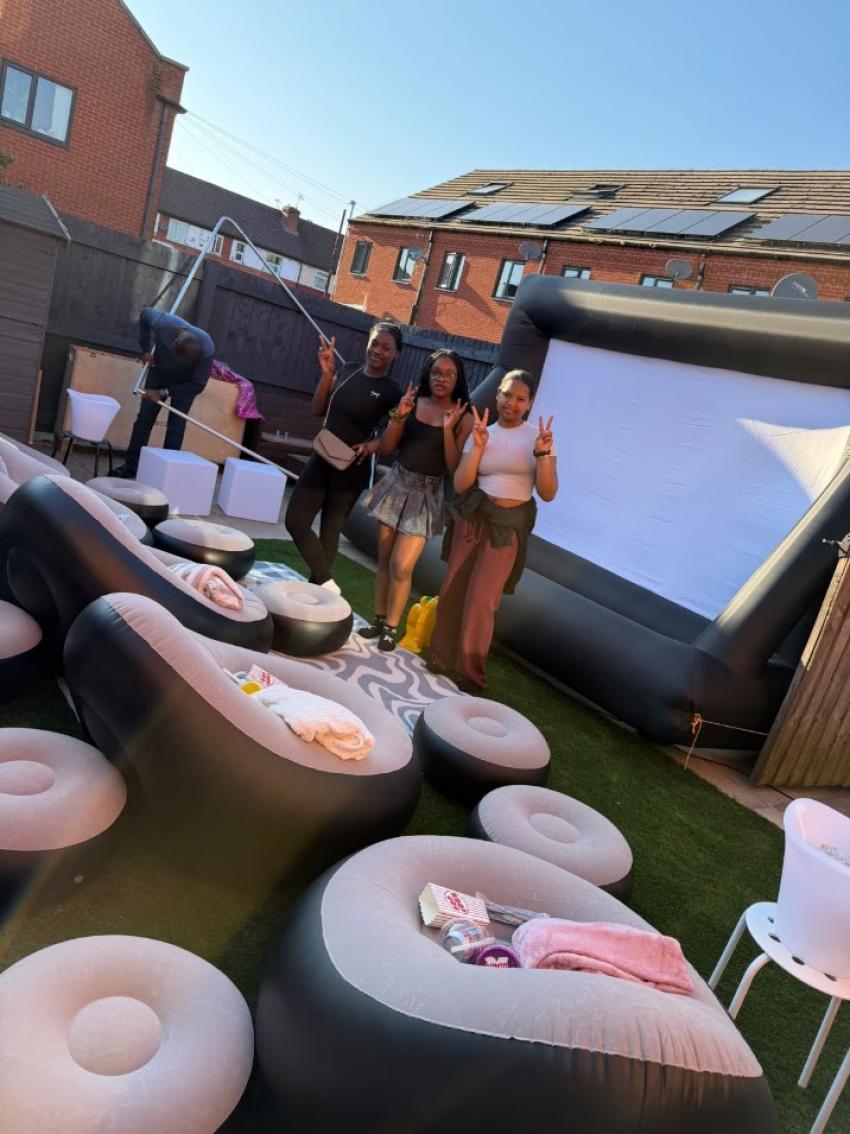
A film night outdoors sounds simple. Then the sun sets late, the grass turns damp, and the picture washes out against a bright sky. Setting up an outdoor inflatable cinema screening correctly in Greater Manchester takes more planning than pointing a projector at a bedsheet. Most of the problems that ruin a screening are avoidable. They just need checking before booking day, not during setup.
1. Confirm the Screen Size Suits the Audience
Inflatable screens for outdoor use commonly range from a few metres wide to considerably larger. The right size depends on the garden or field dimensions. It also depends on how far back the furthest row of chairs or blankets will sit. A screen that looks large in a supplier's photo can appear surprisingly small once guests spread across a lawn twenty metres back. Confirming the screen dimensions and the recommended viewing distance before booking avoids a disappointing result on the night.
2. Check the Site for Level, Dry Ground
An inflatable screen and projector stand need firm, level ground. That keeps them stable once the evening breeze picks up. Soft or sloped grass, gravel, and uneven paving can all cause problems. Walking the intended site in daylight beforehand is worth the time. Check for dips, tree roots, or drainage issues that only show up after rain. A private garden also needs enough room for the screen and the seating. Leave a safe gap between guests and the inflatable structure itself.
3. Plan Around Sunset, Not the Clock
An outdoor inflatable cinema only works once it is properly dark. Sunset times in the UK shift by hours between June and October. A fixed seven o'clock start in July will likely still be light outside. That means an hour of activities is needed before the film starts. The same start time in September could already be near dark. Checking the actual sunset time for the event date keeps the schedule realistic. A standard evening slot will not suit every month.
4. Decide on Seating and Layout Early
Rows of chairs, bean bags, or picnic blankets all work for an outdoor screening. Each option changes how much space is needed, though. Chairs in rows suit a larger audience and give everyone a clear sightline. Bean bags and blankets suit a smaller, more relaxed gathering. They take up an uneven amount of ground once guests spread out. Deciding on the layout before the day avoids guests crowding too close to the screen. It also stops guests blocking each other's view on arrival.
5. Ask About the Sound System, Not Just the Screen
Sound is easy to overlook next to a large screen. Poor audio still undermines the whole event, though. Ask whether outdoor projector rental packages include a dedicated sound system rated for outdoor use. A small built-in speaker struggles once guests sit more than a few metres back. Wind can also carry sound away from a weak speaker entirely. Providers running dedicated outdoor inflatable cinema services, such as Bee Moments N Experience's outdoor cinema package, typically include external speakers as standard. That removes the guesswork over whether the projector's own audio will be loud enough.
6. Arrange a Wet-Weather Backup Plan
British weather rarely cooperates with an outdoor schedule. A workable backup matters as much as the screening itself. Moving indoors to a garage, marquee, or large room is one option. Rescheduling to a backup date is another. It is also worth checking whether the inflatable screen and equipment can safely run under a covered structure instead. Deciding on a backup plan before the event, rather than during a sudden downpour, keeps the evening from being cancelled outright.
7. Confirm Power Access on Site
Projectors, sound systems, and inflatable fans all need a power source. Gardens do not always have an outdoor socket near the screening area. Confirm whether the supplier brings a generator or needs access to household power. Check the cable run distance from the nearest socket too. A cable stretched across a walkway is both a trip hazard and a fire-safety concern. Sorting this out early avoids a last-minute scramble for extension leads on the day.
8. Check Licensing for Public Screenings
A private garden screening for family and friends generally does not need a licence. A public or ticketed outdoor cinema event usually does. It typically needs public performance rights. A temporary events notice from the local council may also apply, depending on the venue. Anyone planning a larger community or charity screening should check licensing requirements well before advertising the event. Contacting the local council early, rather than close to the date, also gives enough time to sort out any access or noise restrictions for the site.
9. Book Early for Weekend Dates
Outdoor cinema equipment is seasonal. Weekend dates through spring and summer get booked first. Birthdays and anniversaries falling on a Saturday are especially popular. Confirming a date several weeks ahead, rather than the week before, gives the best chance of securing the equipment. It also gives the best chance of getting a preferred time slot.
What Makes a Screening Feel Professional Rather Than Improvised
A handful of smaller details separate a polished outdoor screening from a makeshift one. Seating arranged in clear rows helps everyone see the screen without craning around a neighbour, more so than scattered blankets. A short pre-show playlist while guests arrive fills the gap before it gets dark enough to start. Blankets and low lighting near the seating area add comfort without washing out the picture, as long as they stay away from the screen itself. None of these need extra equipment. They just take a little planning on the day.
What's Usually Included in an Outdoor Cinema Package
A typical package brings together several pieces of equipment rather than a single item. The inflatable screen itself is the centrepiece, paired with an HD-capable projector and a dedicated sound system. Delivery, setup, and collection are usually part of the same booking, so the host does not need to transport or assemble any of it. Exact contents can vary between suppliers, so it is worth asking for a specific list rather than assuming every package includes the same equipment. Seating, blankets, and refreshments are almost always left for the host to arrange separately, since they are not part of the cinema equipment itself.
Choosing Between a Big-Screen Night and Other Outdoor Entertainment
An inflatable cinema works best as the single main activity of an evening. It rarely suits sitting alongside several other competing attractions. A birthday or anniversary with a dedicated film slot gives guests a clear reason to settle down for an hour or two. Light refreshments or a fire pit during the arrival period work well alongside it. A separate loud activity running at the same time as the screening tends to split the audience's attention instead. Larger events sometimes run the cinema as a wind-down activity after a more active earlier programme. That works well once younger guests are ready to sit still.
Which Events Suit an Outdoor Screening Best
A big-screen outdoor night suits a wider range of occasions than most people first assume. Milestone birthdays and anniversaries are the most common bookings, usually as an evening activity once daytime celebrations wind down. Engagement parties and proms also fit well, since a shared film gives a large group something to do together rather than standing around in small clusters. Family gatherings and reunions benefit too, especially where children and older relatives are both present and need a low-effort activity that suits everyone at once. Corporate family days occasionally use the format as a closing activity, giving staff and their families a relaxed end to the event before people head home.
Getting the Screening Right
A successful outdoor inflatable cinema night comes down to a handful of practical checks rather than luck with the weather. Confirming screen size, ground conditions, timing, sound, and a backup plan before booking turns a potentially stressful setup into a straightforward evening. That holds true whether it is a birthday in the back garden or a larger community screening on a field.